All Items
27,432 items
|
Title
|
Images
|
Item Comment
|
Prefix
|
Number
|
In set
|
Set
|
Set Comment
|
Type
|
Artist
|
Author
|
Size
|
Topics
|
Set Covers
|
Reference
| |
|---|---|---|---|---|---|---|---|---|---|---|---|---|---|---|---|
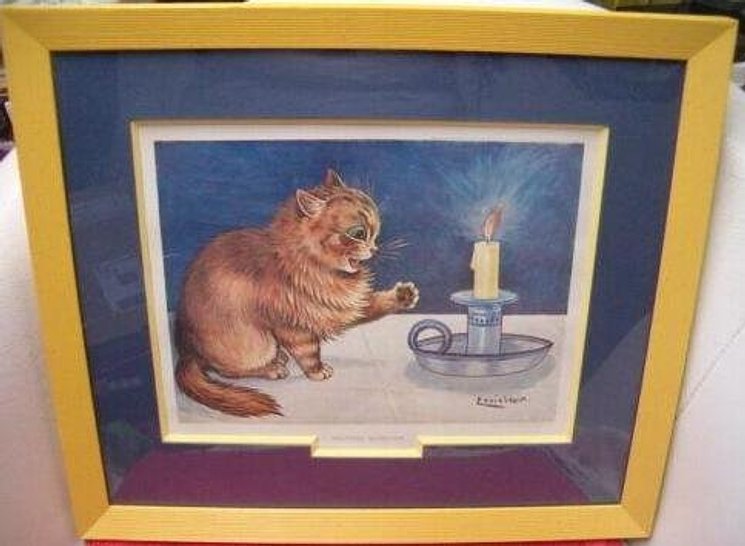
| 25241 |







|
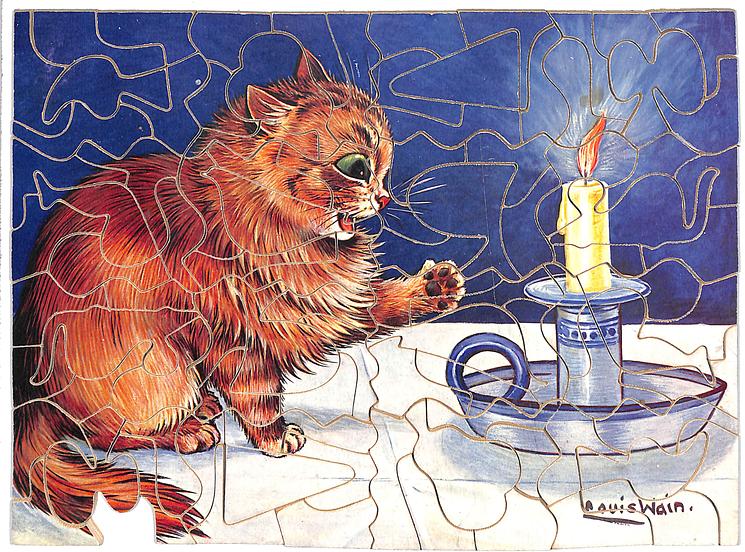
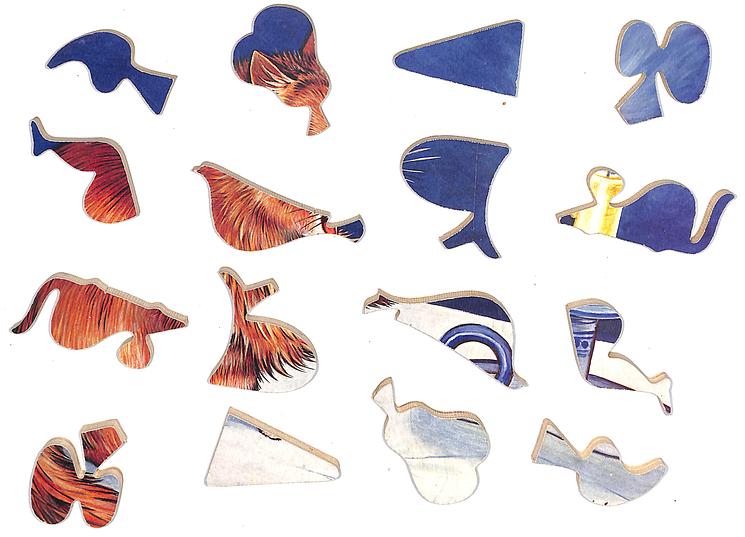
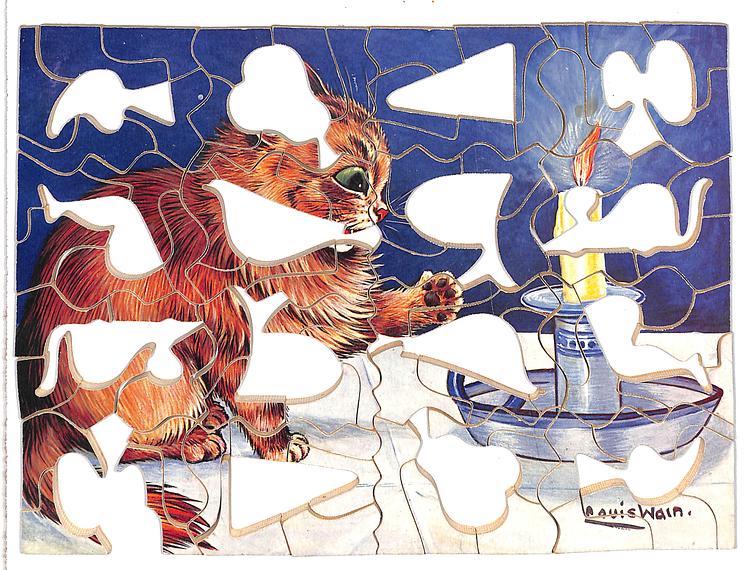
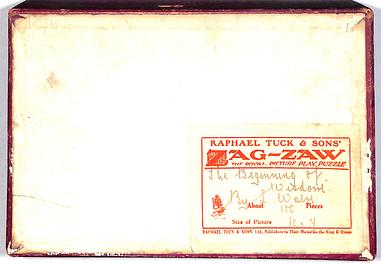
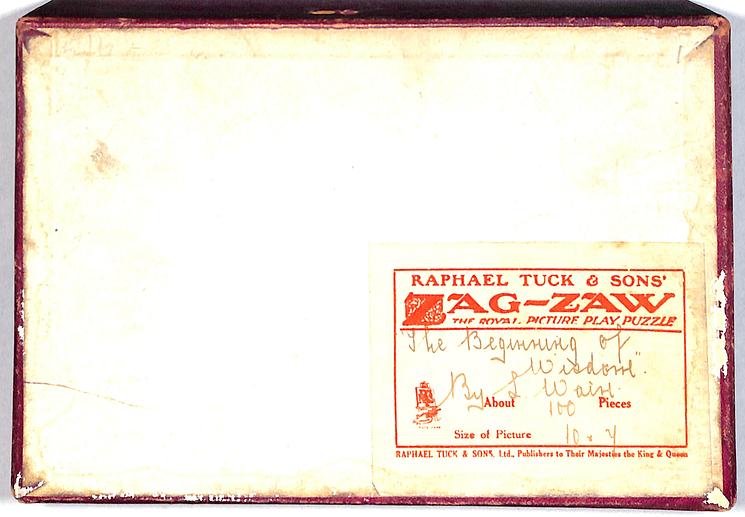
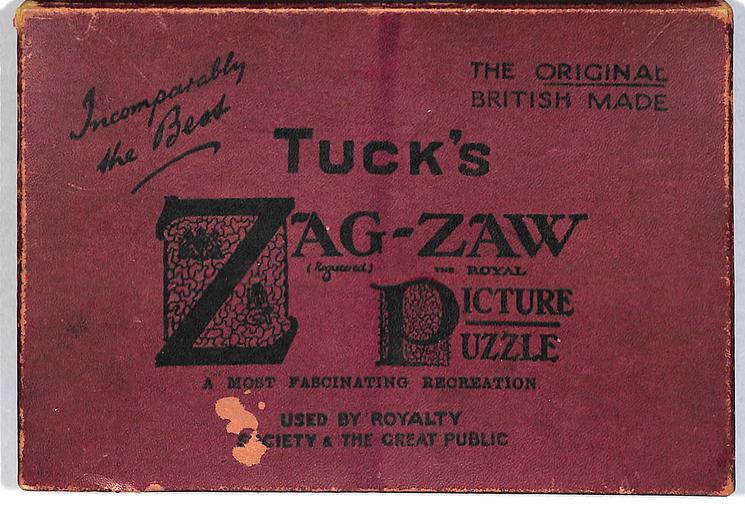
about 100 pieces, wooden, figurals, with box, missing one piece, push fit style, also comes as a Tuck print
|
|
|
|
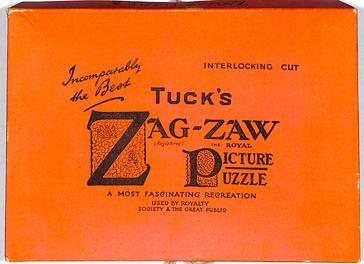
Zag-Zaw line of puzzles was first produced in 1909, most incorporate figurals or whimsies, sold in red, orange, or occasionally green boxes with labels on the side or bottom of the box, most without guide pictures. Initially cut non-interlocking but by 1930's became more so. Puzzles have a different cuts so that the same image will come in several versions which means that missing pieces can not be taken from other puzzles with the same image. The puzzle labels are often hand written and come with minor variations in titles and details. Some have a DESIGN category on the label. From my readings this refers to the style of cut, wavy lines, figurals, etc. See also Bob Armstrong's website on old jigsaw puzzles
|
LOUIS WAIN
|
|
10 x 7 1/2 in.
|
|
| ||||
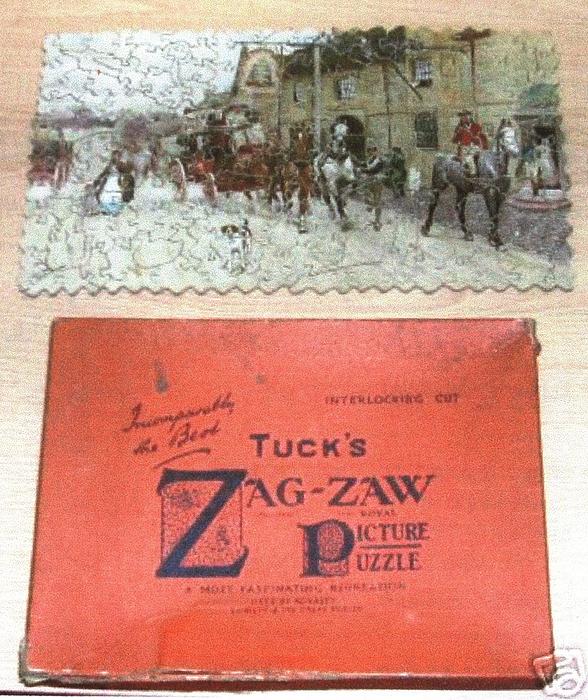
| 25242 |

|
165 pieces, wooden, figurals, complete with box, DISGUISED EDGES, interlocking style
|
|
|
|
Zag-Zaw line of puzzles was first produced in 1909, most incorporate figurals or whimsies, sold in red, orange, or occasionally green boxes with labels on the side or bottom of the box, most without guide pictures. Initially cut non-interlocking but by 1930's became more so. Puzzles have a different cuts so that the same image will come in several versions which means that missing pieces can not be taken from other puzzles with the same image. The puzzle labels are often hand written and come with minor variations in titles and details. Some have a DESIGN category on the label. From my readings this refers to the style of cut, wavy lines, figurals, etc. See also Bob Armstrong's website on old jigsaw puzzles
|
CECIL ALDIN
|
|
|
|
| ||||
| 25243 |











|
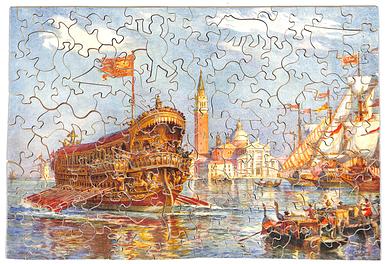
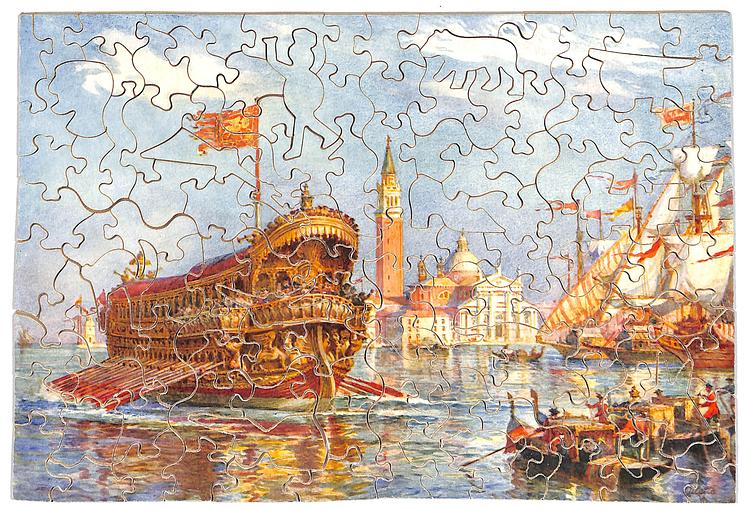
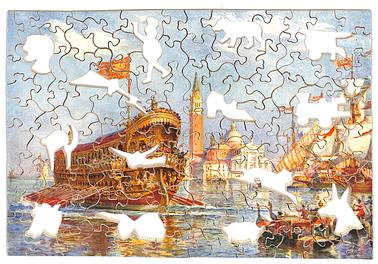
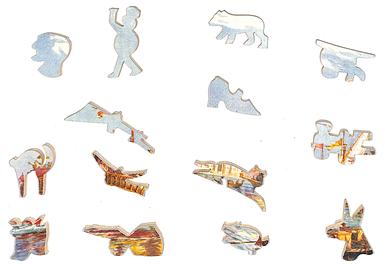
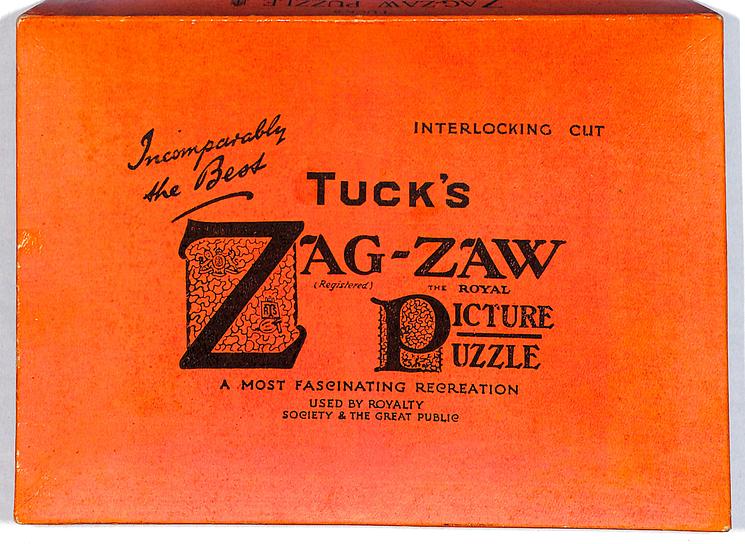
115 pieces, wooden, figurals, complete with box, title and artist to be confirmed as illegible on box label, interlocking style
|
|
|
|
Zag-Zaw line of puzzles was first produced in 1909, most incorporate figurals or whimsies, sold in red, orange, or occasionally green boxes with labels on the side or bottom of the box, most without guide pictures. Initially cut non-interlocking but by 1930's became more so. Puzzles have a different cuts so that the same image will come in several versions which means that missing pieces can not be taken from other puzzles with the same image. The puzzle labels are often hand written and come with minor variations in titles and details. Some have a DESIGN category on the label. From my readings this refers to the style of cut, wavy lines, figurals, etc. See also Bob Armstrong's website on old jigsaw puzzles
|
|
|
10 x 6 1/2 in.
|
|
| ||||
| 25244 |



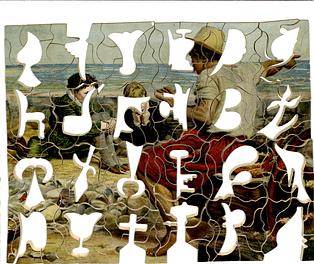
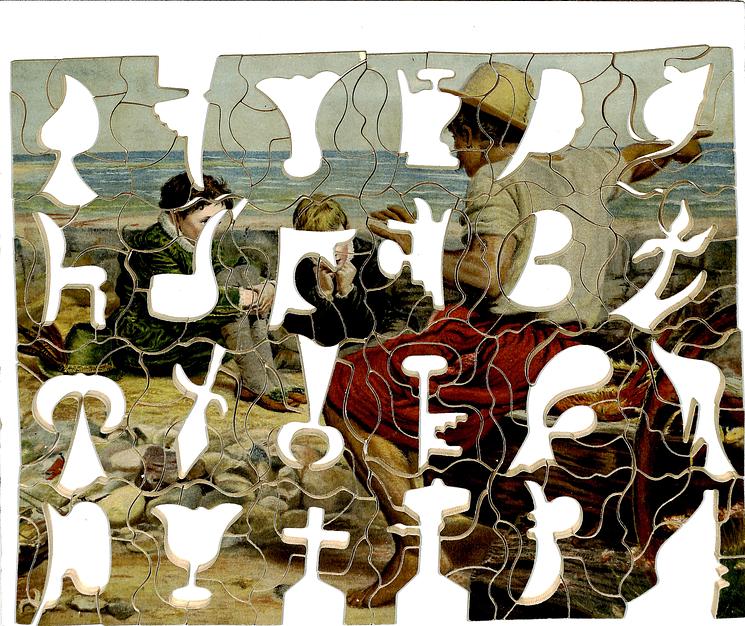

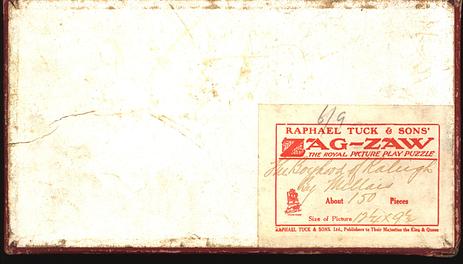


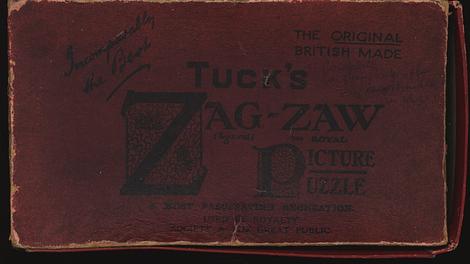


|
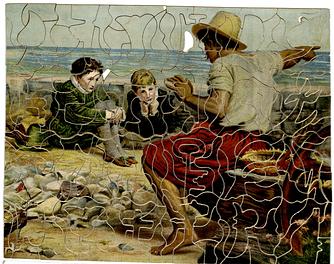
about 150 pieces, wooden, figurals, two broken but present pieces, two pieces with missing parts, push fit style, listed and described in the catalogs as 622
|
|
|
|
Zag-Zaw line of puzzles was first produced in 1909, most incorporate figurals or whimsies, sold in red, orange, or occasionally green boxes with labels on the side or bottom of the box, most without guide pictures. Initially cut non-interlocking but by 1930's became more so. Puzzles have a different cuts so that the same image will come in several versions which means that missing pieces can not be taken from other puzzles with the same image. The puzzle labels are often hand written and come with minor variations in titles and details. Some have a DESIGN category on the label. From my readings this refers to the style of cut, wavy lines, figurals, etc. See also Bob Armstrong's website on old jigsaw puzzles
|
MILLAIS
|
|
12 1/4 x 9 3/4 in.
|
|
|
| |||
| 25245 |
















|
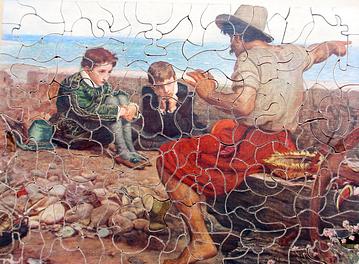
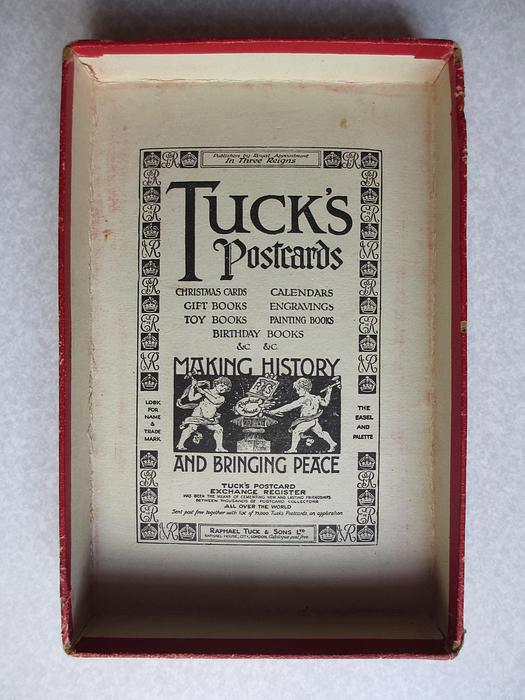
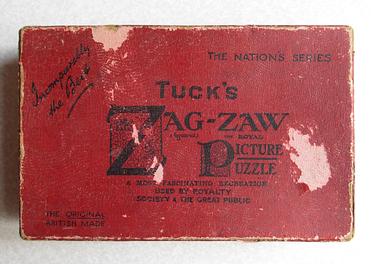
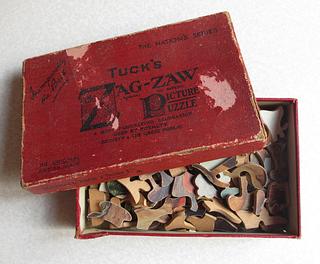
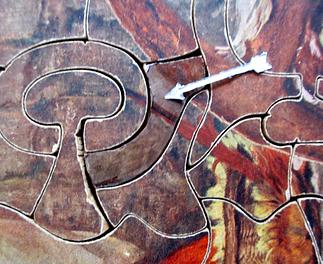
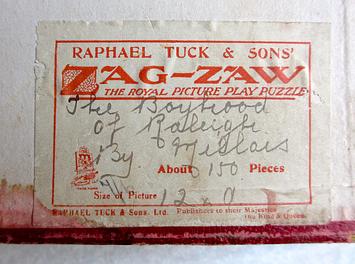
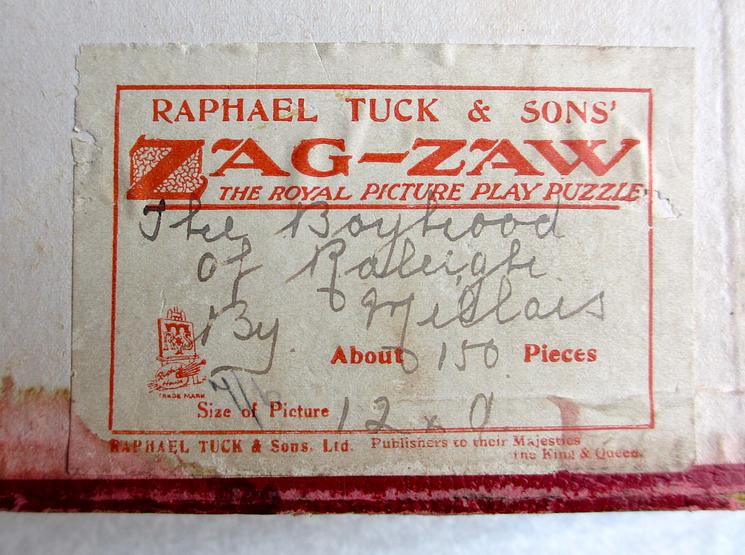
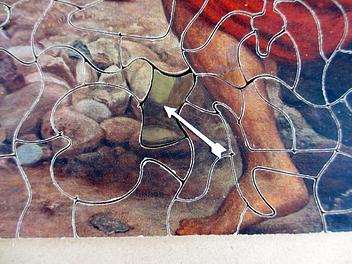
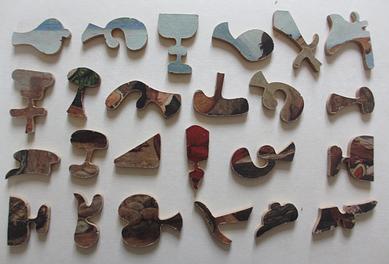
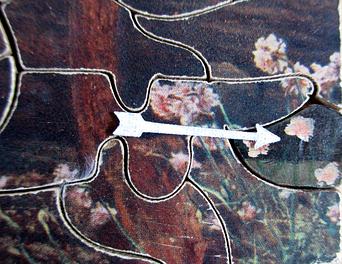
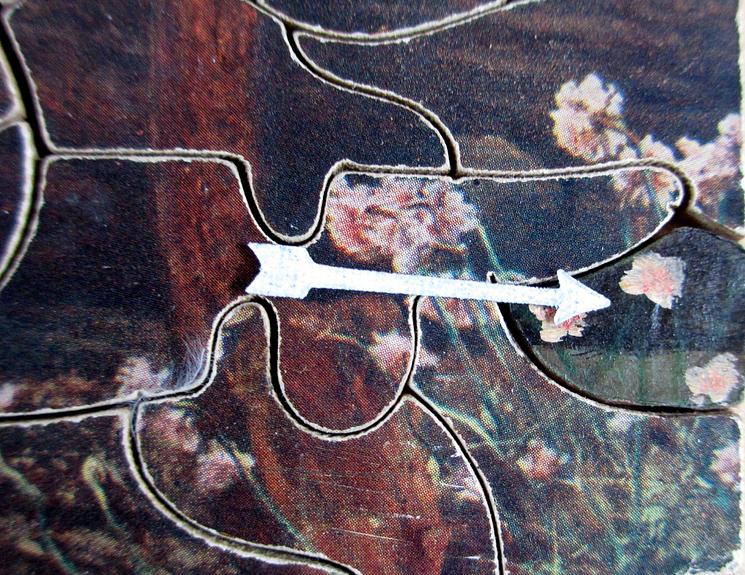
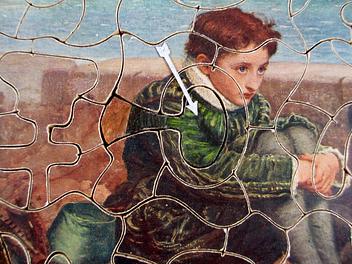
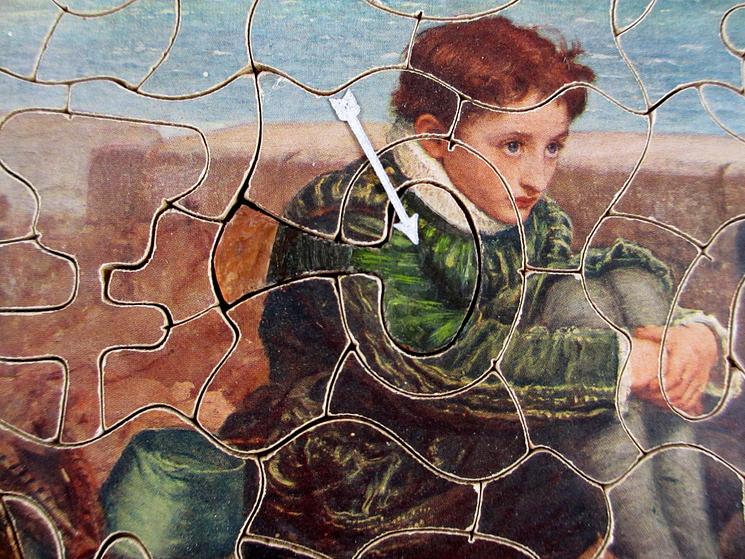
About 150 pieces, including 24 whimsies. Cut in wood in a pushfit style. Complete with four replacement pieces, boxed and labelled. Puzzle information and photos from his collection posted by Grenville Oliver.
|
|
|
|
Zag-Zaw line of puzzles was first produced in 1909, most incorporate figurals or whimsies, sold in red, orange, or occasionally green boxes with labels on the side or bottom of the box, most without guide pictures. Initially cut non-interlocking but by 1930's became more so. Puzzles have a different cuts so that the same image will come in several versions which means that missing pieces can not be taken from other puzzles with the same image. The puzzle labels are often hand written and come with minor variations in titles and details. Some have a DESIGN category on the label. From my readings this refers to the style of cut, wavy lines, figurals, etc. See also Bob Armstrong's website on old jigsaw puzzles
|
MILLAIS
|
|
12" x 9"
|
|
|
| |||
| 25246 |







|
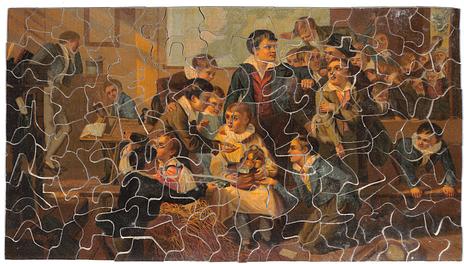
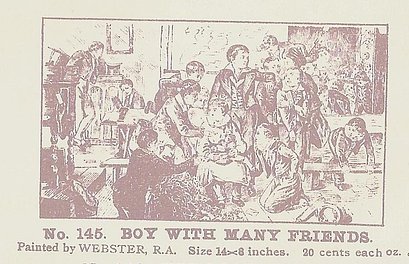
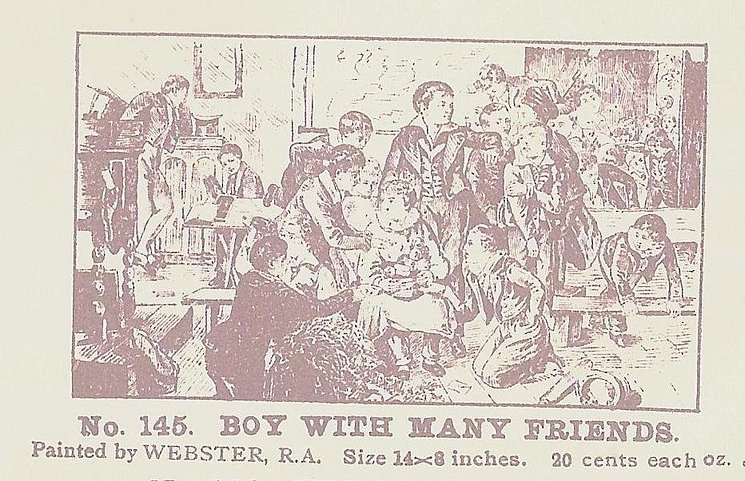
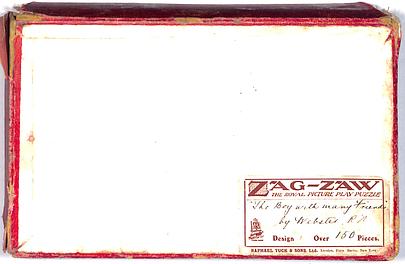
over 150 pieces, wooden, no figurals, with box, three pieces broken but glued, push fit style, the same image also comes as an Oleograph print
|
|
|
|
Zag-Zaw line of puzzles was first produced in 1909, most incorporate figurals or whimsies, sold in red, orange, or occasionally green boxes with labels on the side or bottom of the box, most without guide pictures. Initially cut non-interlocking but by 1930's became more so. Puzzles have a different cuts so that the same image will come in several versions which means that missing pieces can not be taken from other puzzles with the same image. The puzzle labels are often hand written and come with minor variations in titles and details. Some have a DESIGN category on the label. From my readings this refers to the style of cut, wavy lines, figurals, etc. See also Bob Armstrong's website on old jigsaw puzzles
|
WEBSTER R. A.
|
|
13 1/2 x 7 3/4 in.
|
|
|
| |||
| 25247 |








|
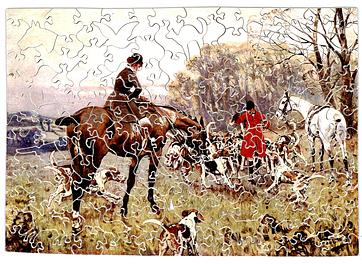
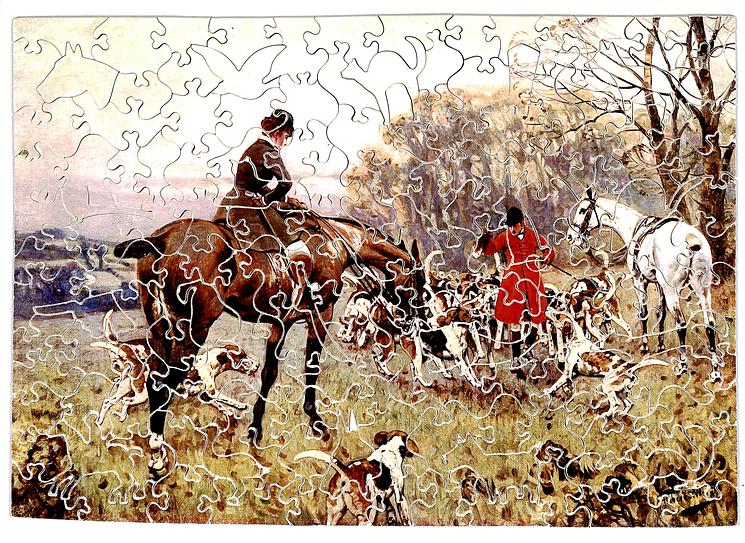
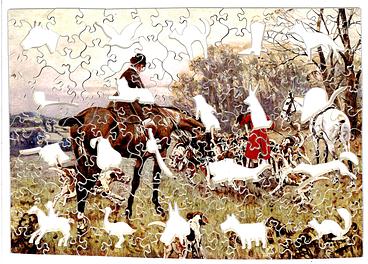
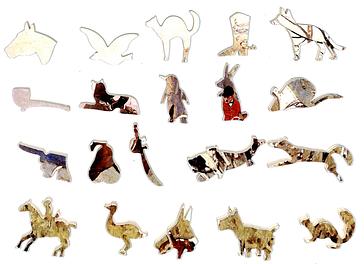
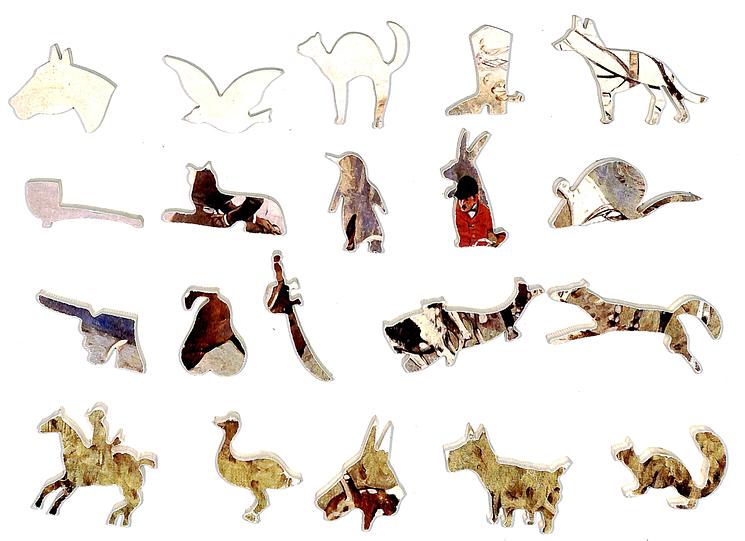
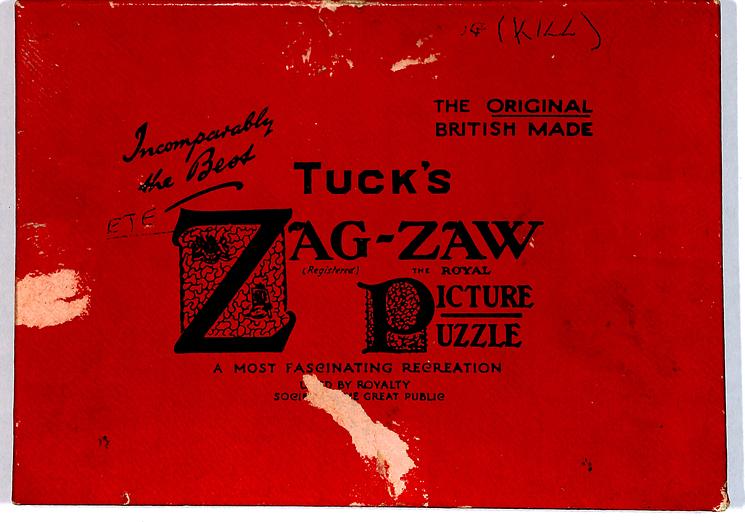
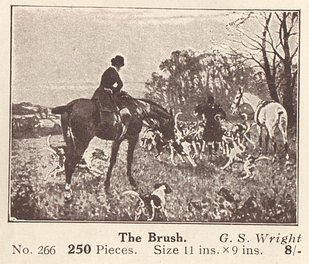
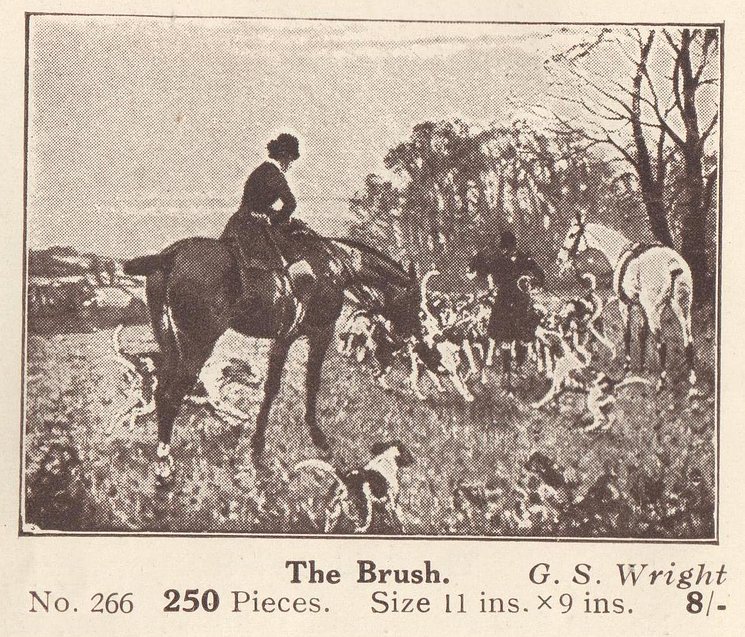
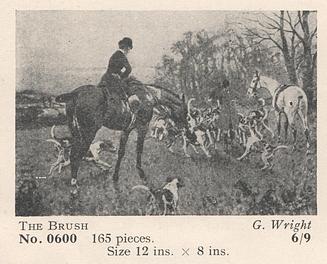
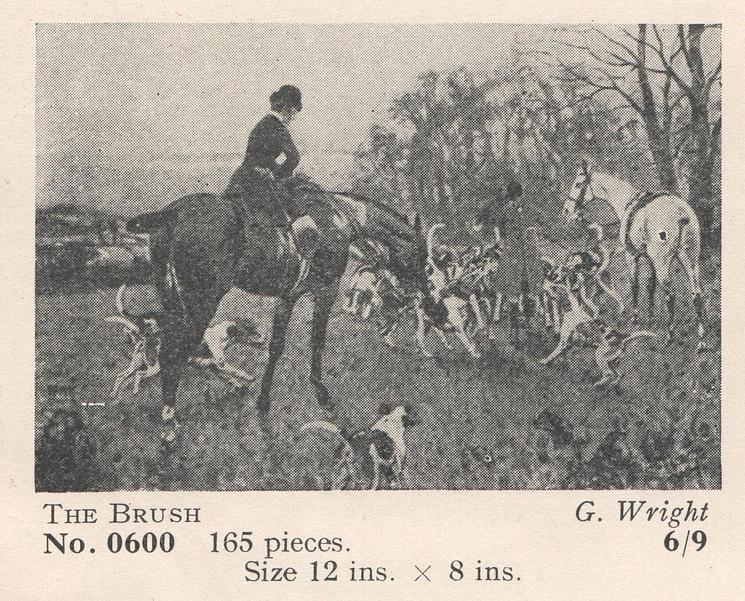
165 pieces, wooden, figurals, complete with box(no title or details on box), one figural broken but glued (mouse), one nib with wood damage and one with some paper loss, interlocking style, also comes with disguised edges and as a Tuck postcard 9575, described in the catalogs as numbers 0600 and 266(with 250 pieces) with straight edges
|
|
|
|
Zag-Zaw line of puzzles was first produced in 1909, most incorporate figurals or whimsies, sold in red, orange, or occasionally green boxes with labels on the side or bottom of the box, most without guide pictures. Initially cut non-interlocking but by 1930's became more so. Puzzles have a different cuts so that the same image will come in several versions which means that missing pieces can not be taken from other puzzles with the same image. The puzzle labels are often hand written and come with minor variations in titles and details. Some have a DESIGN category on the label. From my readings this refers to the style of cut, wavy lines, figurals, etc. See also Bob Armstrong's website on old jigsaw puzzles
|
GILBERT S. WRIGHT
|
|
11 3/4 x 8 1/4 in.
|
|
| ||||
| 25248 |











|
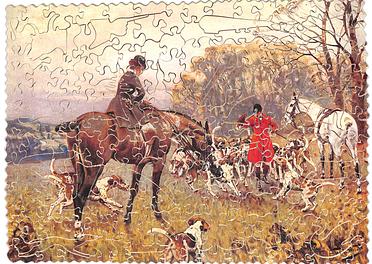
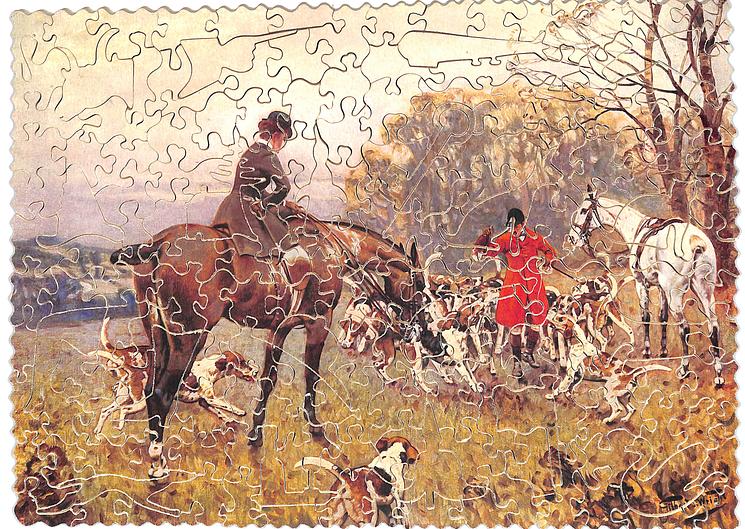
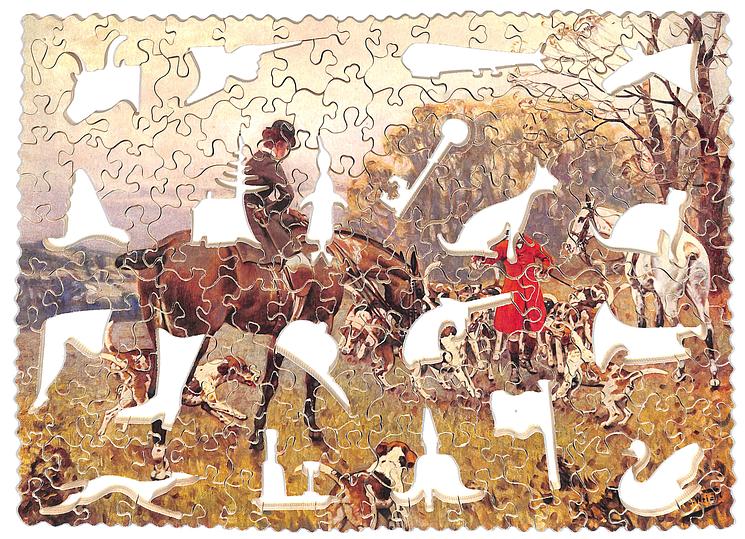
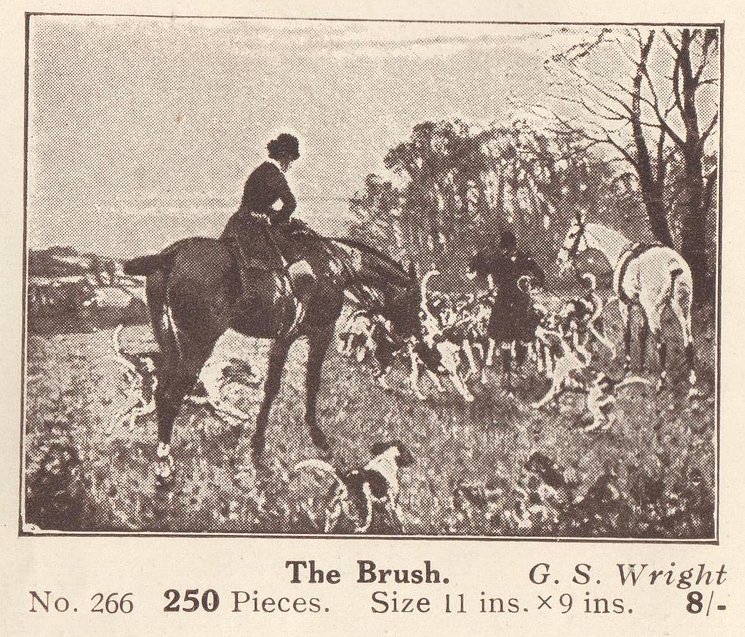
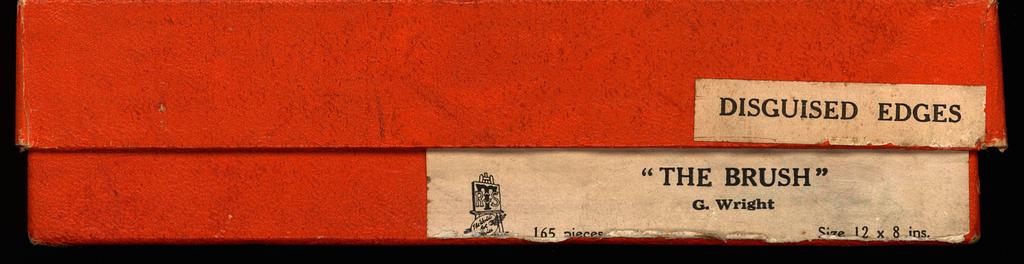
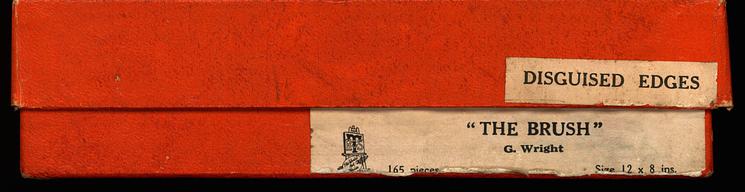
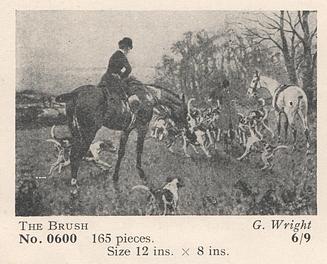
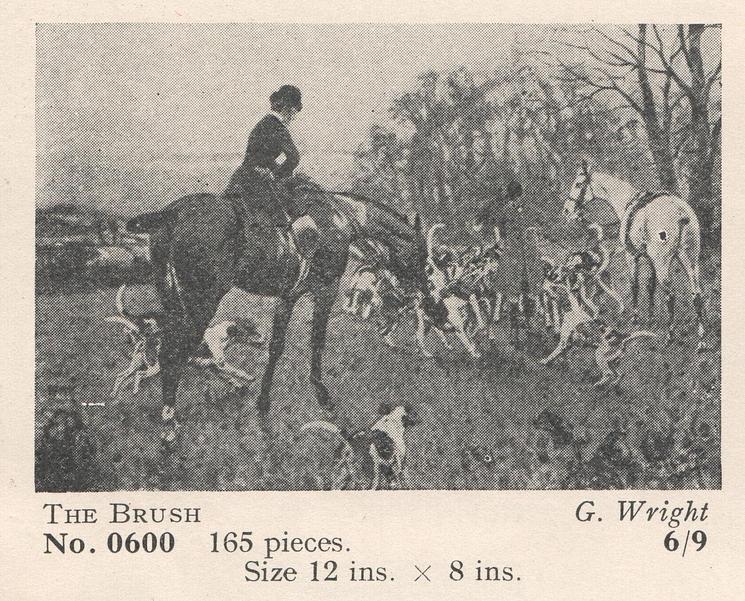
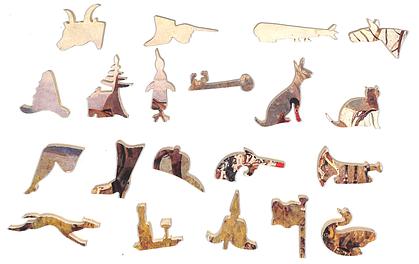
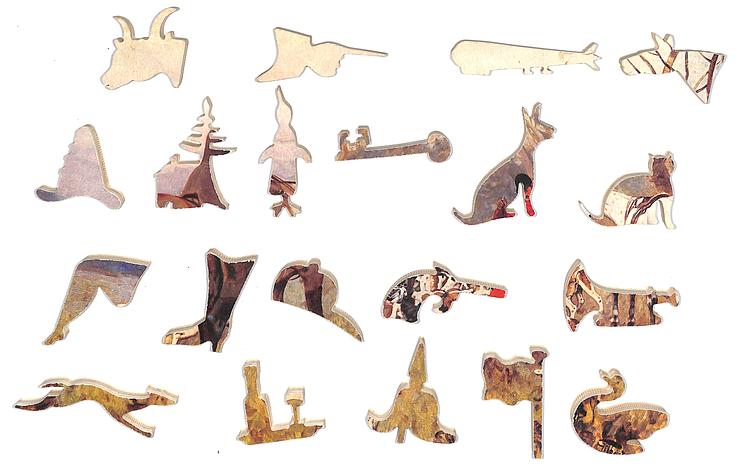
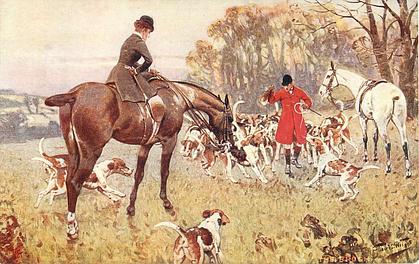
165 pieces, DISGUISED EDGES, wooden, figurals, complete with box, interlocking style, described in the catalogs as numbers 0600 and 266 (with 250 pieces) but with straight edges, also comes as Tuck postcard 9575
|
|
|
|
Zag-Zaw line of puzzles was first produced in 1909, most incorporate figurals or whimsies, sold in red, orange, or occasionally green boxes with labels on the side or bottom of the box, most without guide pictures. Initially cut non-interlocking but by 1930's became more so. Puzzles have a different cuts so that the same image will come in several versions which means that missing pieces can not be taken from other puzzles with the same image. The puzzle labels are often hand written and come with minor variations in titles and details. Some have a DESIGN category on the label. From my readings this refers to the style of cut, wavy lines, figurals, etc. See also Bob Armstrong's website on old jigsaw puzzles
|
G. WRIGHT
|
|
12 x 8 in.
|
|
| ||||
| 25249 |









|
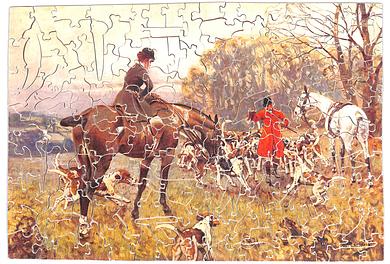
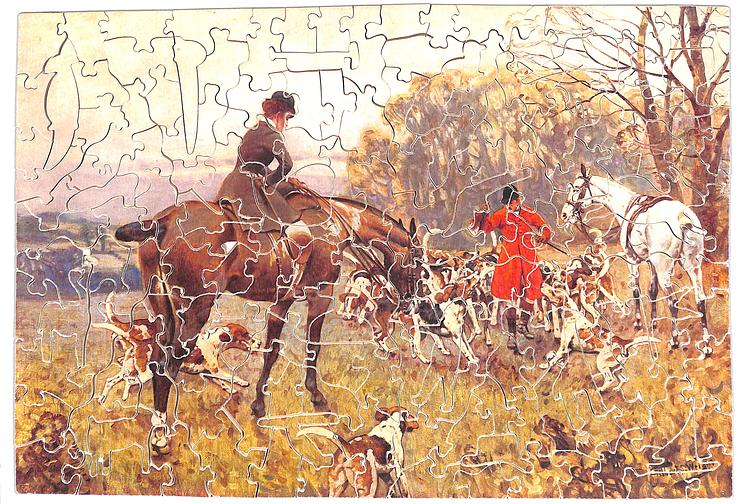
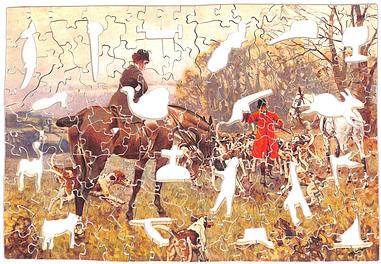
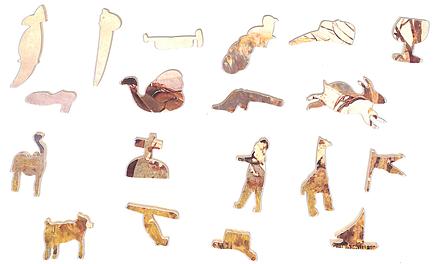
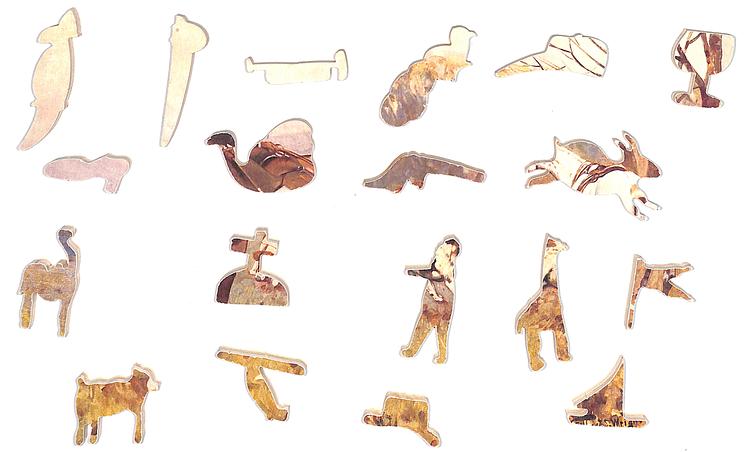
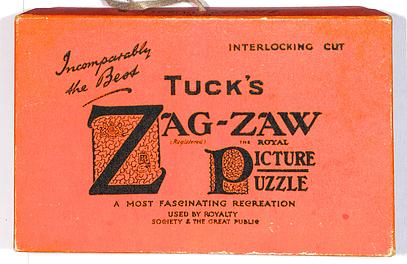
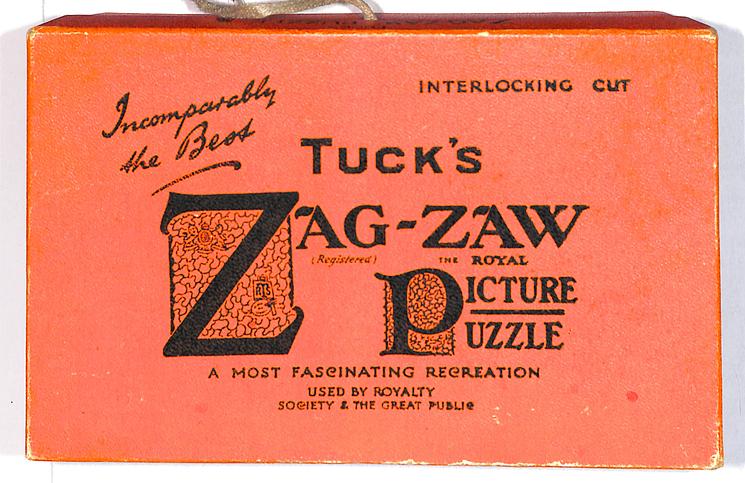
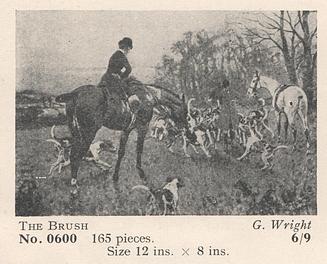
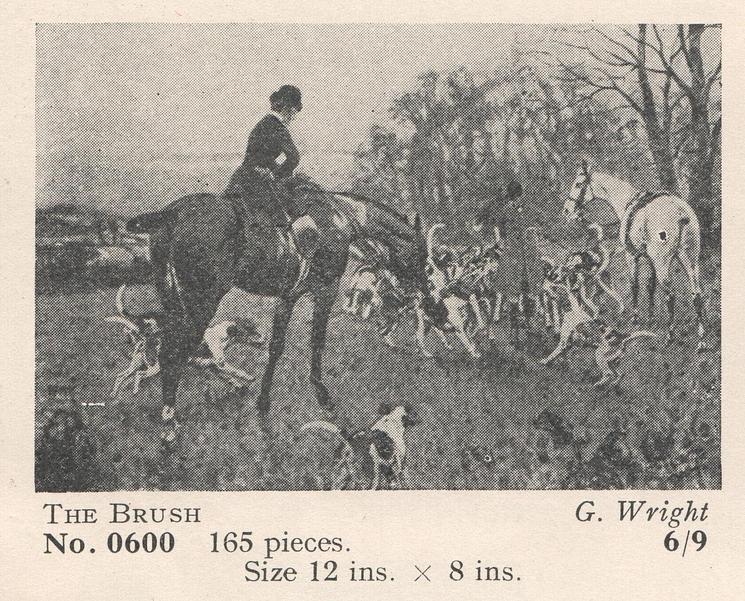
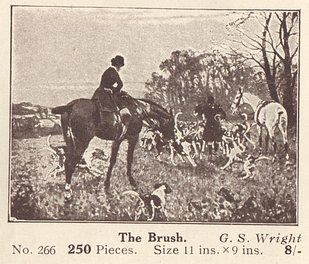
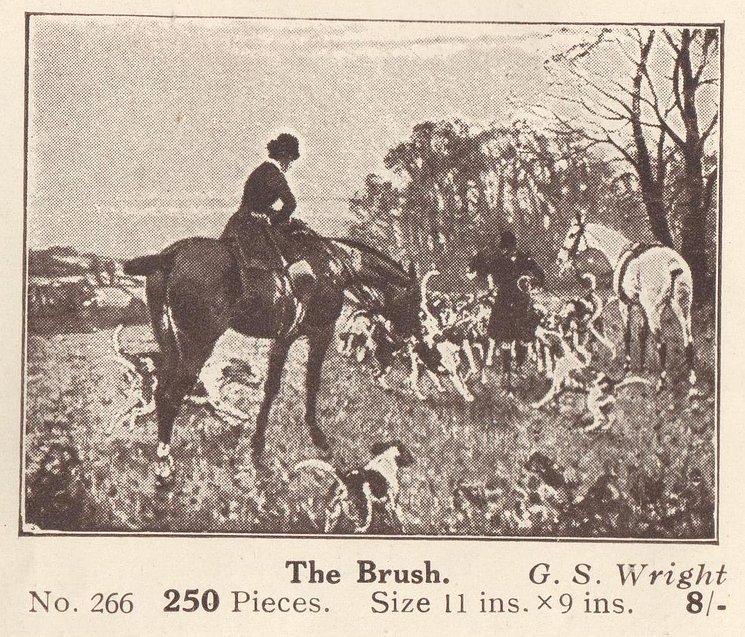
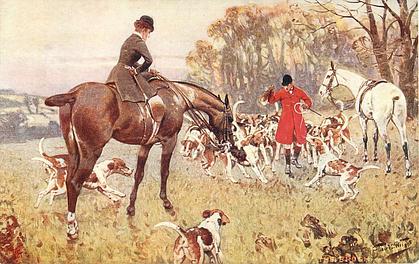
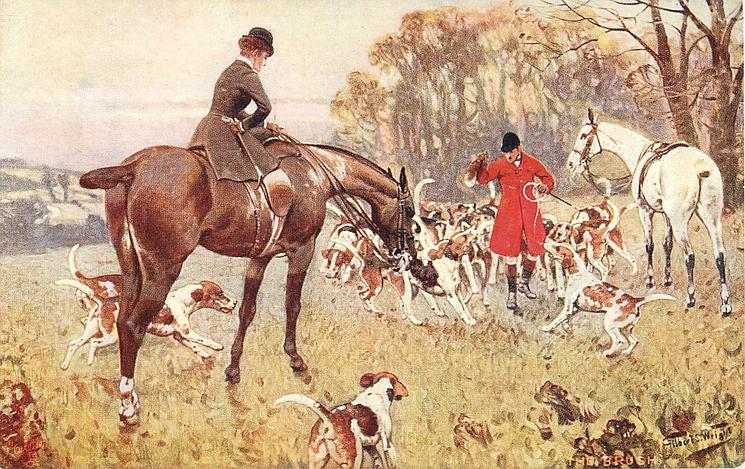
165 pieces, wooden, figurals, complete, with box, listed and described in the catalogs as numbers 0600 and 266 (with 250 pieces), also comes with disguised edges, also comes as Tuck postcard 9575
|
|
|
|
Zag-Zaw line of puzzles was first produced in 1909, most incorporate figurals or whimsies, sold in red, orange, or occasionally green boxes with labels on the side or bottom of the box, most without guide pictures. Initially cut non-interlocking but by 1930's became more so. Puzzles have a different cuts so that the same image will come in several versions which means that missing pieces can not be taken from other puzzles with the same image. The puzzle labels are often hand written and come with minor variations in titles and details. Some have a DESIGN category on the label. From my readings this refers to the style of cut, wavy lines, figurals, etc. See also Bob Armstrong's website on old jigsaw puzzles
|
G. WRIGHT
|
|
11 3/4 x 8 in.
|
|
| ||||
| 25250 |














|
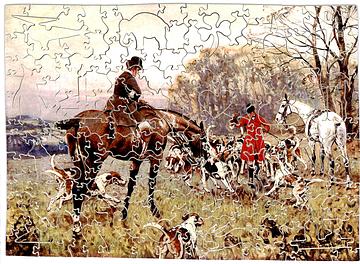
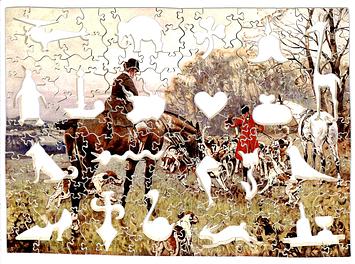
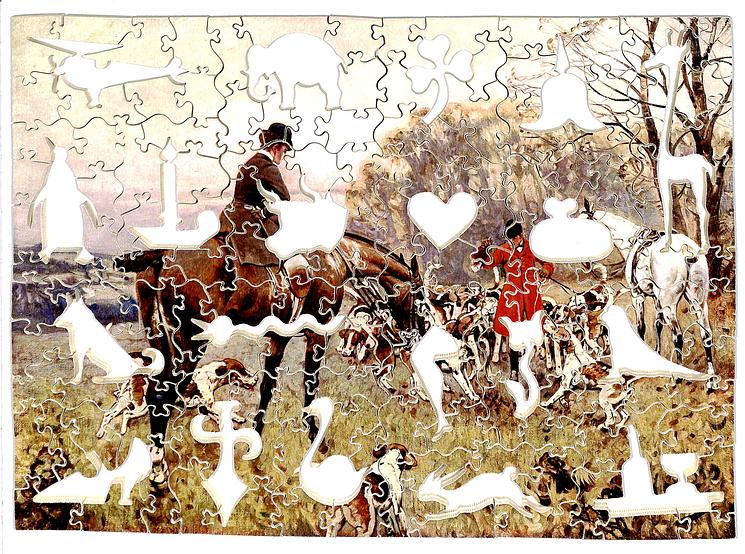
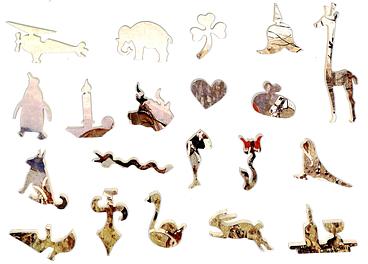
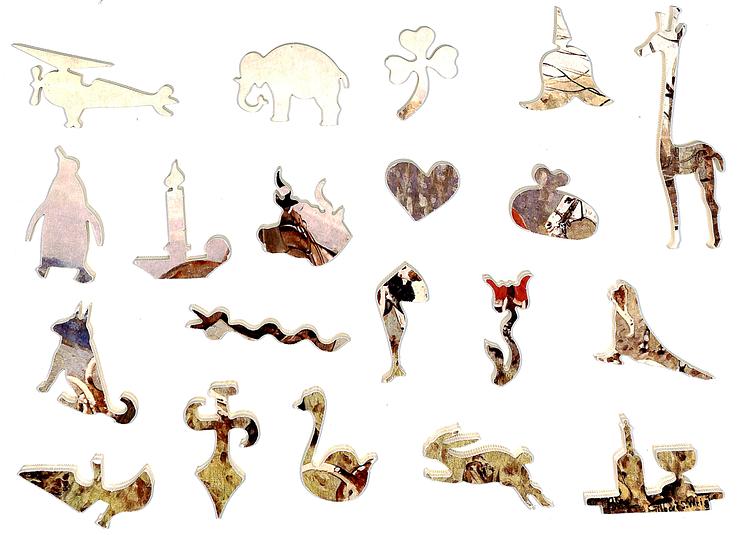
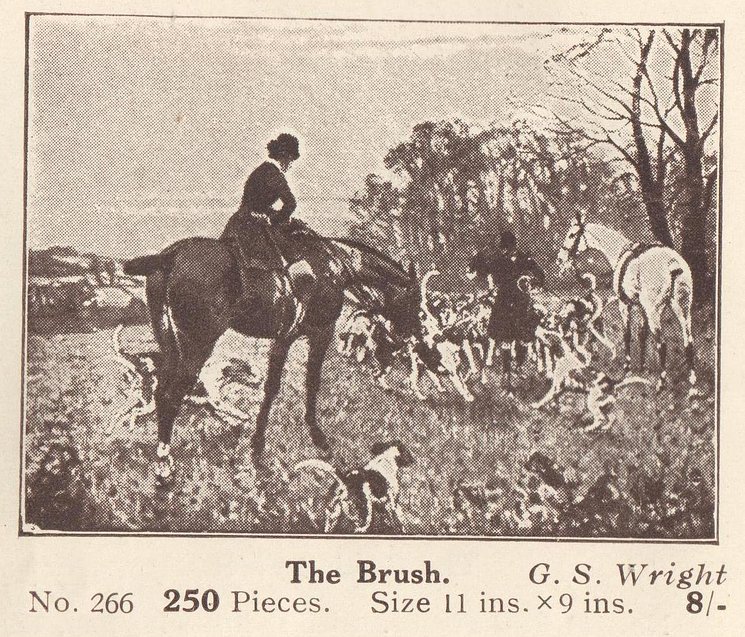
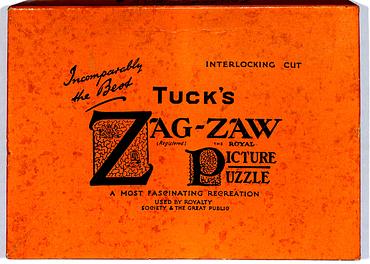
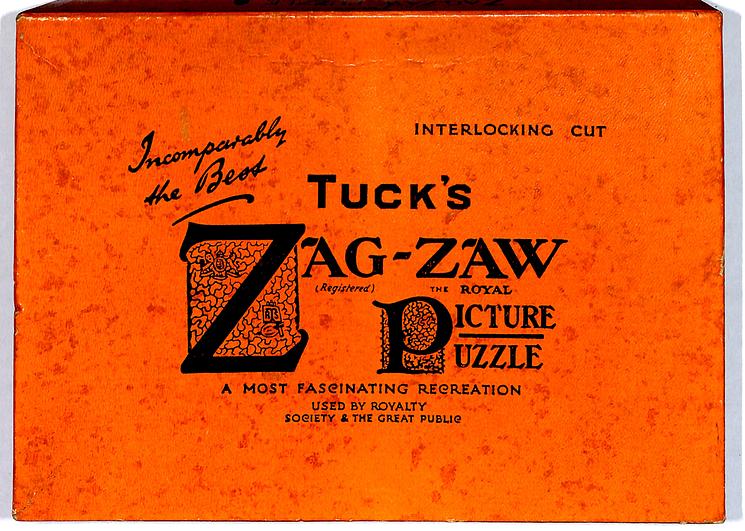
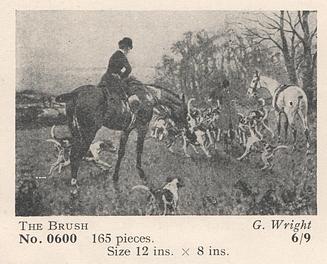
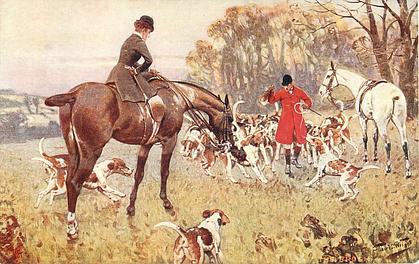
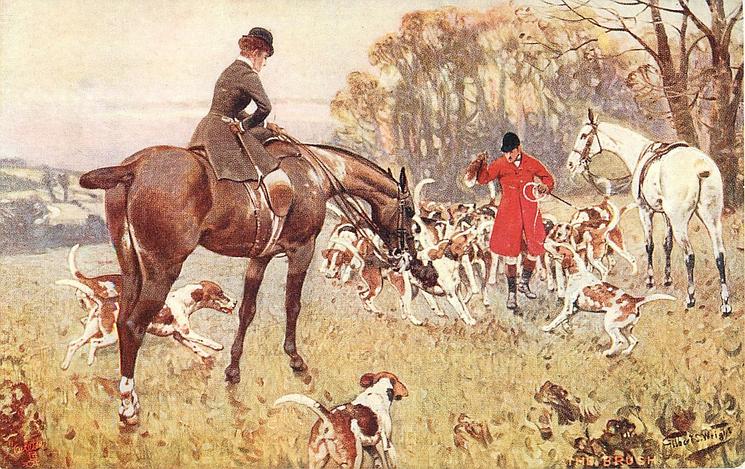
about 165 pieces, wooden, figurals, complete with box, interlocking style, also comes with disguised edges and as a Tuck postcard 9575, described in the catalogs as numbers 0600 and 266(with 250 pieces) with straight edges
|
|
|
|
Zag-Zaw line of puzzles was first produced in 1909, most incorporate figurals or whimsies, sold in red, orange, or occasionally green boxes with labels on the side or bottom of the box, most without guide pictures. Initially cut non-interlocking but by 1930's became more so. Puzzles have a different cuts so that the same image will come in several versions which means that missing pieces can not be taken from other puzzles with the same image. The puzzle labels are often hand written and come with minor variations in titles and details. Some have a DESIGN category on the label. From my readings this refers to the style of cut, wavy lines, figurals, etc. See also Bob Armstrong's website on old jigsaw puzzles
|
GILBERT WRIGHT
|
|
12 x 8 1/2 in.
|
|
| ||||
| 25251 |












|
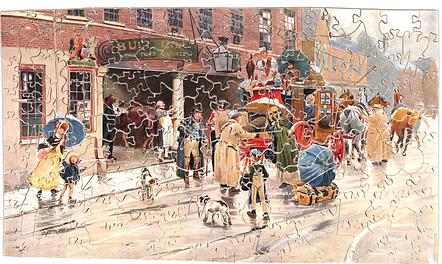
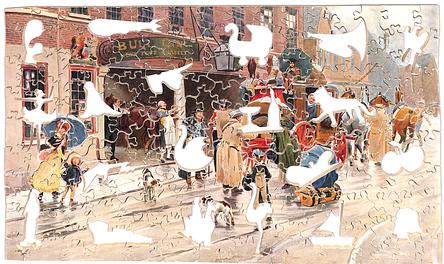
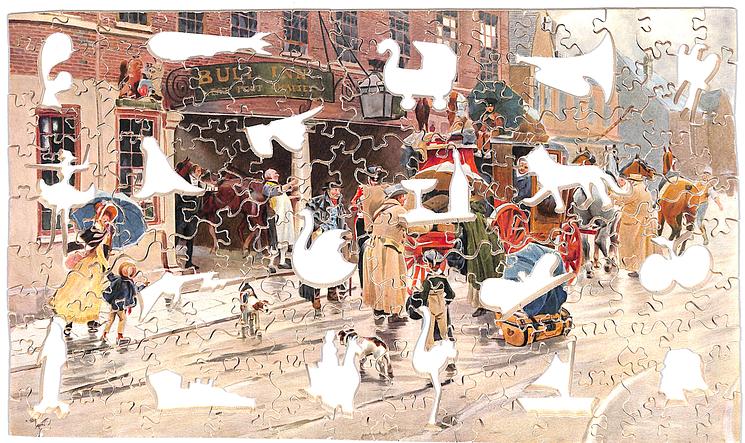
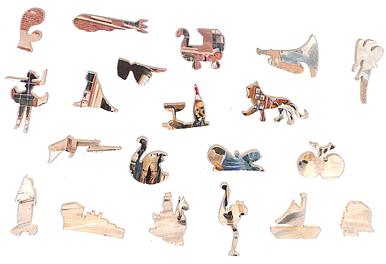
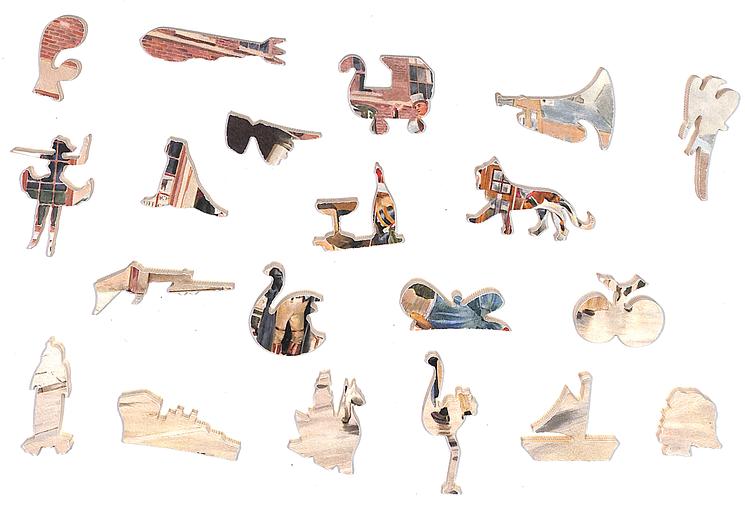
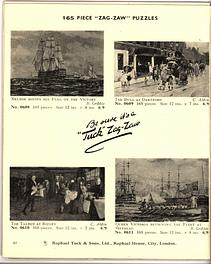
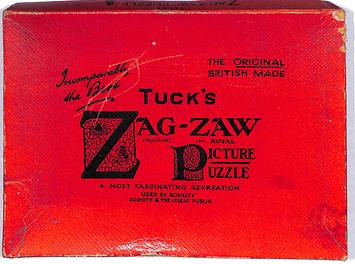
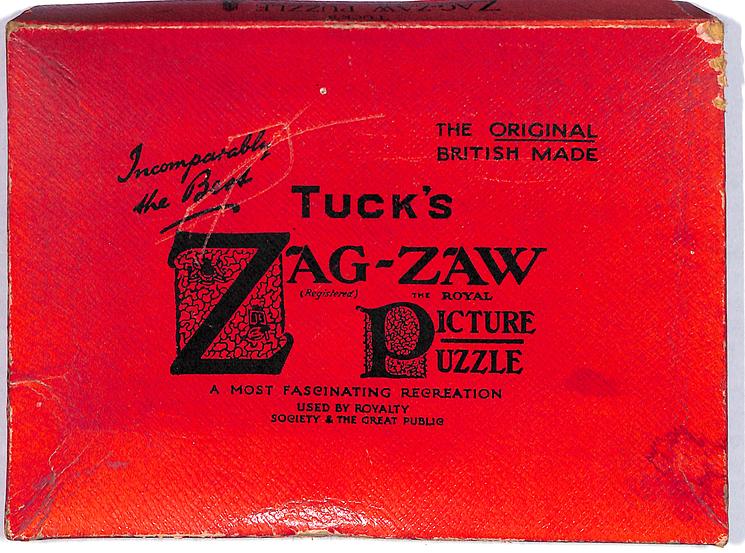
165 pieces, wooden, figurals, complete with box, interlocking cut, listed and described in the catalogs as number 609
|
|
|
|
Zag-Zaw line of puzzles was first produced in 1909, most incorporate figurals or whimsies, sold in red, orange, or occasionally green boxes with labels on the side or bottom of the box, most without guide pictures. Initially cut non-interlocking but by 1930's became more so. Puzzles have a different cuts so that the same image will come in several versions which means that missing pieces can not be taken from other puzzles with the same image. The puzzle labels are often hand written and come with minor variations in titles and details. Some have a DESIGN category on the label. From my readings this refers to the style of cut, wavy lines, figurals, etc. See also Bob Armstrong's website on old jigsaw puzzles
|
CECIL ALDIN
|
|
11 3/4 x 6 3/4 in.
|
|
|
| |||
| 25252 |









|
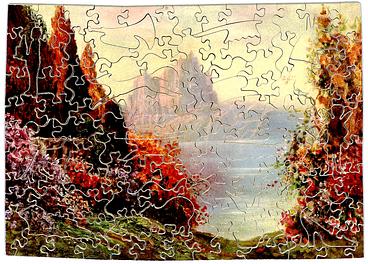
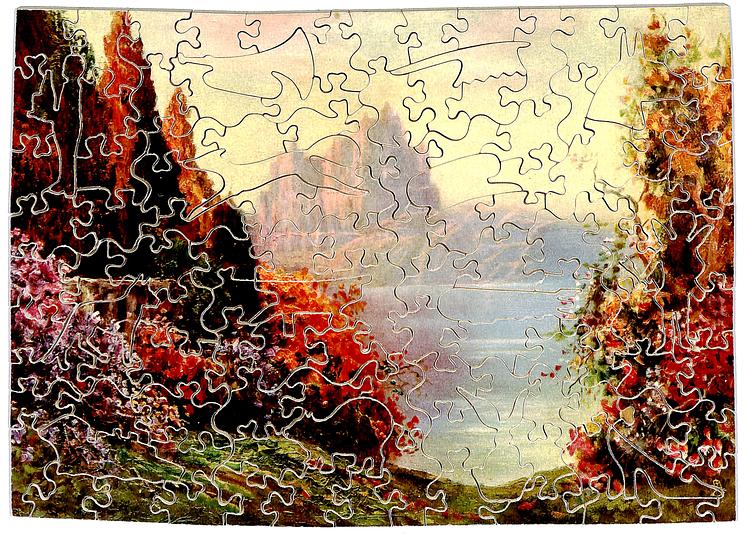
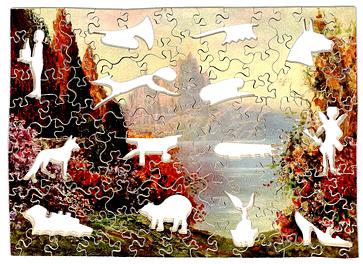
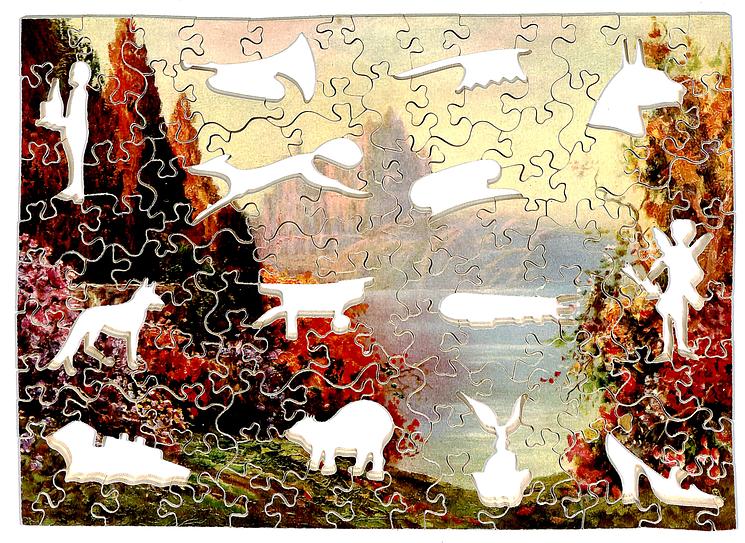
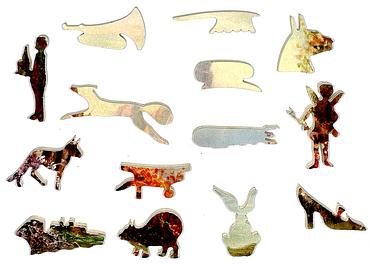
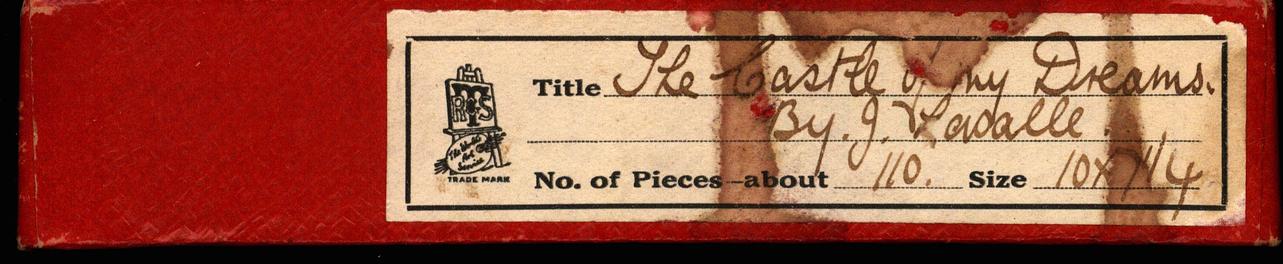
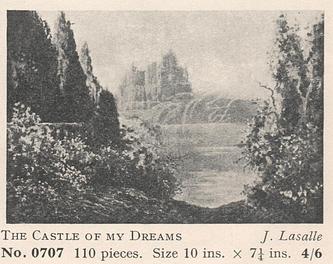
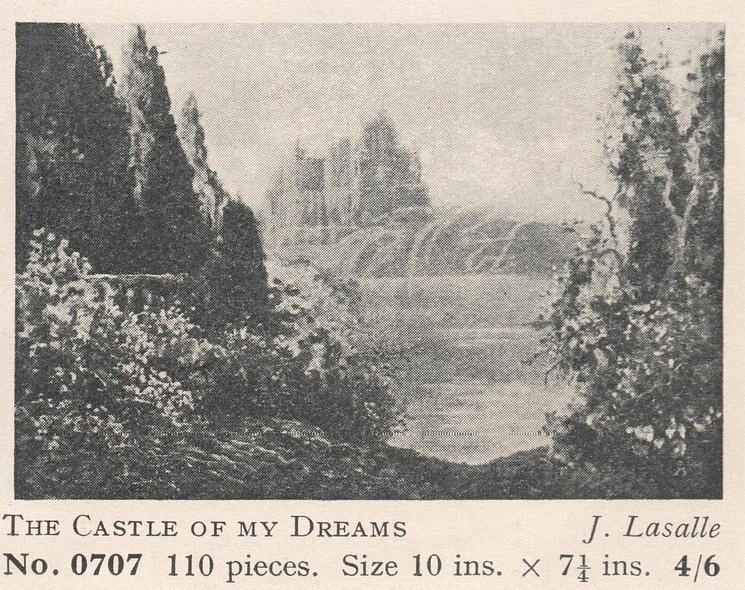
about 110 pieces, wooden, figurals, complete with box, one nib missing colour paper, listed and described in the catalogs as number 0707
|
|
|
|
Zag-Zaw line of puzzles was first produced in 1909, most incorporate figurals or whimsies, sold in red, orange, or occasionally green boxes with labels on the side or bottom of the box, most without guide pictures. Initially cut non-interlocking but by 1930's became more so. Puzzles have a different cuts so that the same image will come in several versions which means that missing pieces can not be taken from other puzzles with the same image. The puzzle labels are often hand written and come with minor variations in titles and details. Some have a DESIGN category on the label. From my readings this refers to the style of cut, wavy lines, figurals, etc. See also Bob Armstrong's website on old jigsaw puzzles
|
J. LASALLE
|
|
10 x 7 1/4 in.
|
|
|
| |||
| 25253 |









|
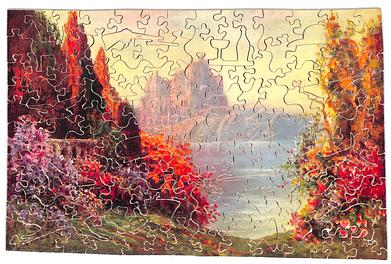
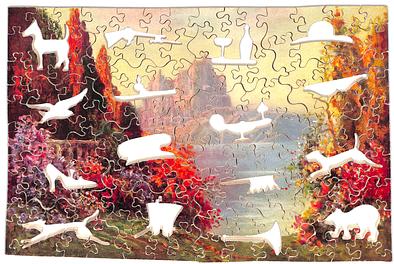
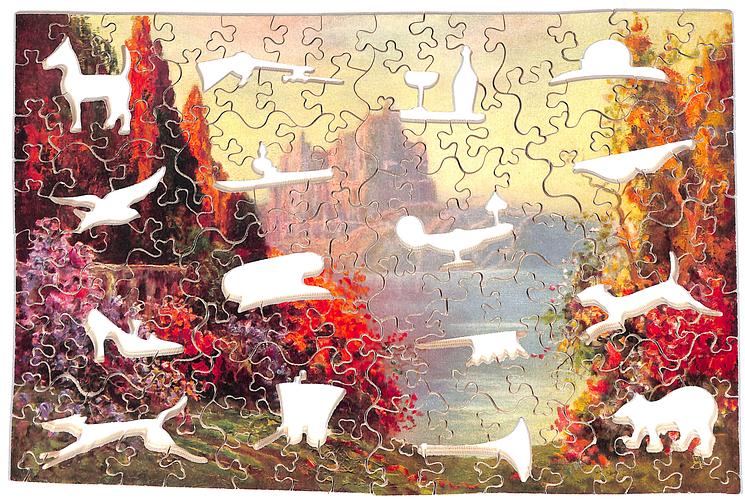
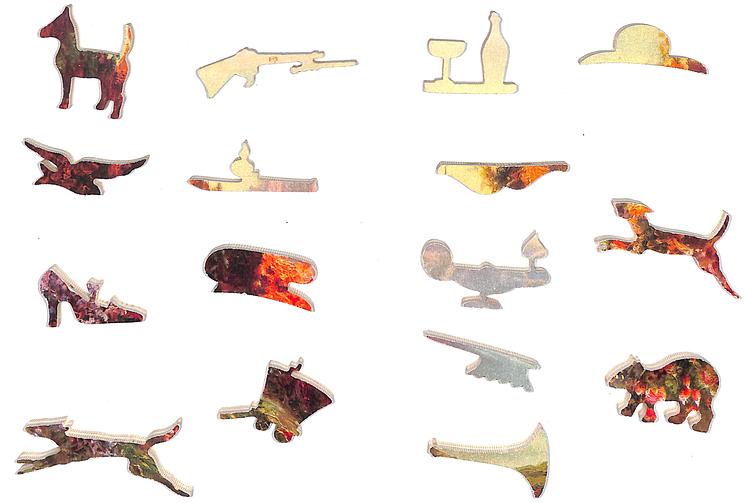
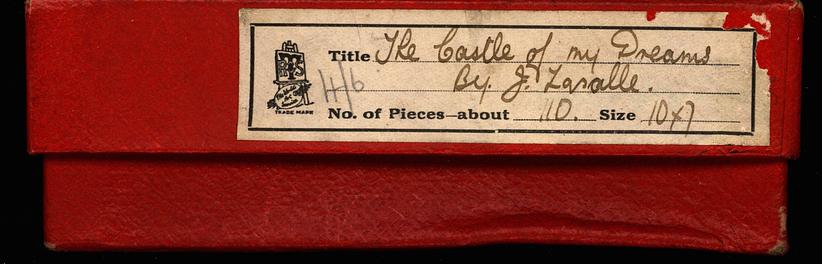
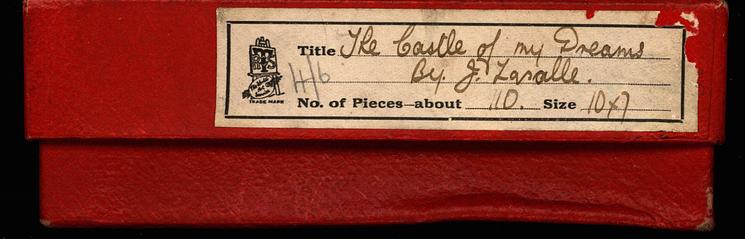
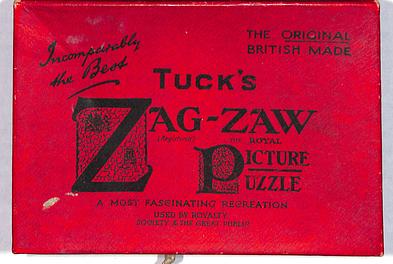
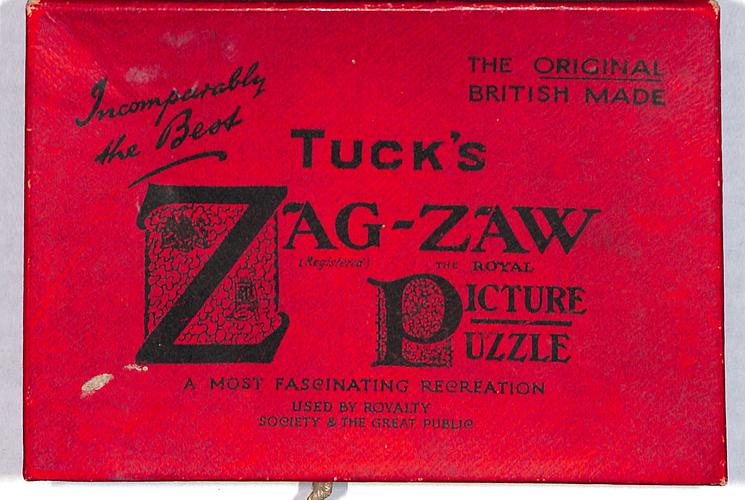
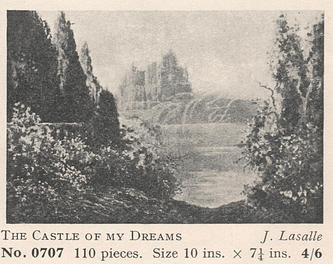
about 110 pieces, wooden, figurals, complete with box, interlocking style, listed and described n the catalogs as 0707
|
|
|
|
Zag-Zaw line of puzzles was first produced in 1909, most incorporate figurals or whimsies, sold in red, orange, or occasionally green boxes with labels on the side or bottom of the box, most without guide pictures. Initially cut non-interlocking but by 1930's became more so. Puzzles have a different cuts so that the same image will come in several versions which means that missing pieces can not be taken from other puzzles with the same image. The puzzle labels are often hand written and come with minor variations in titles and details. Some have a DESIGN category on the label. From my readings this refers to the style of cut, wavy lines, figurals, etc. See also Bob Armstrong's website on old jigsaw puzzles
|
J. LASALLE
|
|
11 x 7 1/4 in.
|
|
|
| |||
| 25254 |



|
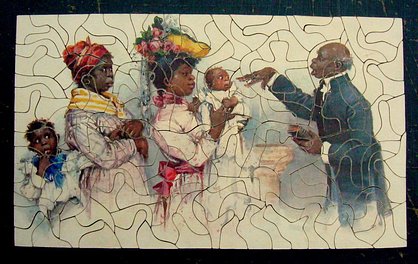
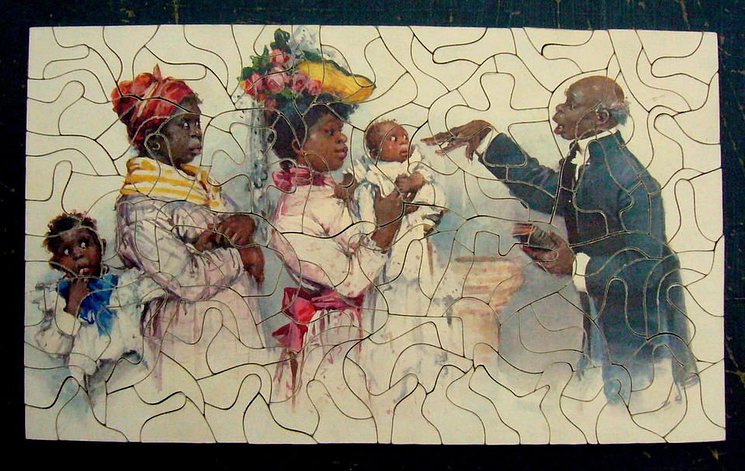
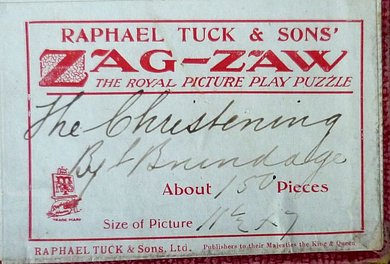
1920'S 150 pieces contains several whimsies
|
|
|
|
Zag-Zaw line of puzzles was first produced in 1909, most incorporate figurals or whimsies, sold in red, orange, or occasionally green boxes with labels on the side or bottom of the box, most without guide pictures. Initially cut non-interlocking but by 1930's became more so. Puzzles have a different cuts so that the same image will come in several versions which means that missing pieces can not be taken from other puzzles with the same image. The puzzle labels are often hand written and come with minor variations in titles and details. Some have a DESIGN category on the label. From my readings this refers to the style of cut, wavy lines, figurals, etc. See also Bob Armstrong's website on old jigsaw puzzles
|
FRANCES BRUNDAGE
|
|
11 X 7 in
|
|
|
| |||
| 25255 |


|
about 150 pieces, listed in the 1920's puzzle catalog on page 23, copy exists in the National Trust Museum of Childhood
|
|
|
|
Zag-Zaw line of puzzles was first produced in 1909, most incorporate figurals or whimsies, sold in red, orange, or occasionally green boxes with labels on the side or bottom of the box, most without guide pictures. Initially cut non-interlocking but by 1930's became more so. Puzzles have a different cuts so that the same image will come in several versions which means that missing pieces can not be taken from other puzzles with the same image. The puzzle labels are often hand written and come with minor variations in titles and details. Some have a DESIGN category on the label. From my readings this refers to the style of cut, wavy lines, figurals, etc. See also Bob Armstrong's website on old jigsaw puzzles
|
Pilkington
|
|
8 x 12 in.
|
|
|
| |||
| 25256 |




|
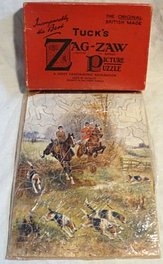
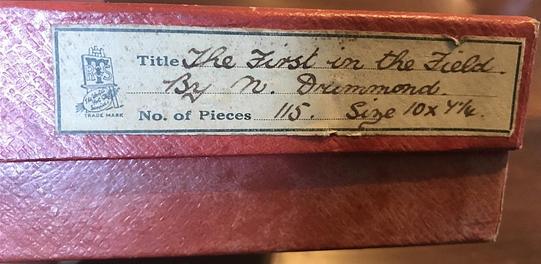
approx 100 pieces
|
|
|
|
Zag-Zaw line of puzzles was first produced in 1909, most incorporate figurals or whimsies, sold in red, orange, or occasionally green boxes with labels on the side or bottom of the box, most without guide pictures. Initially cut non-interlocking but by 1930's became more so. Puzzles have a different cuts so that the same image will come in several versions which means that missing pieces can not be taken from other puzzles with the same image. The puzzle labels are often hand written and come with minor variations in titles and details. Some have a DESIGN category on the label. From my readings this refers to the style of cut, wavy lines, figurals, etc. See also Bob Armstrong's website on old jigsaw puzzles
|
N. DRUMMOND
|
|
10 x 7.5 in
|
|
|
| |||
| 25257 |











|
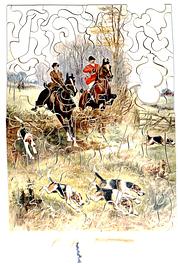
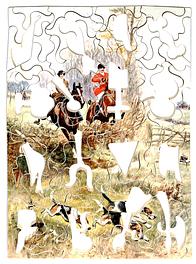
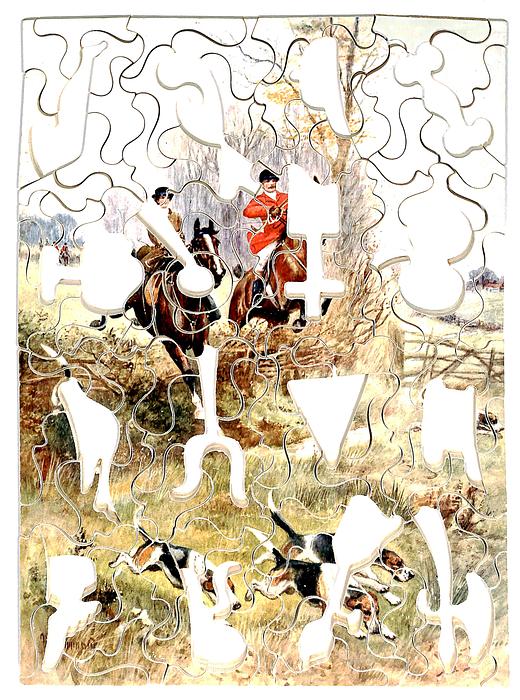
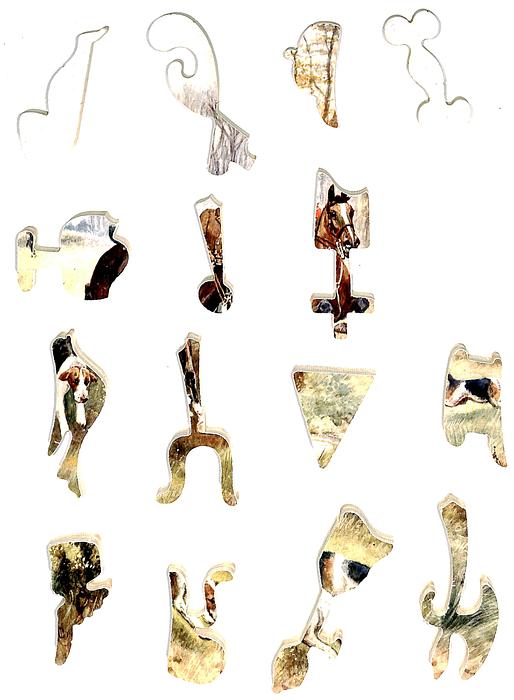
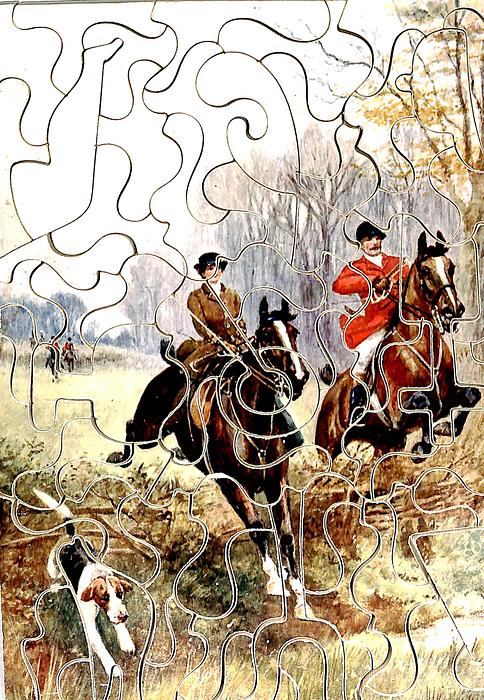
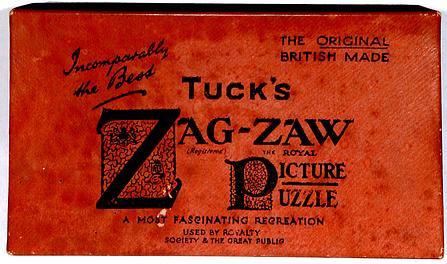
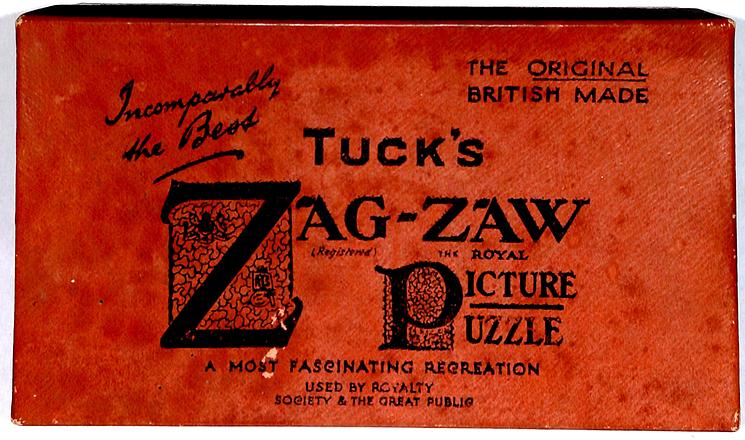
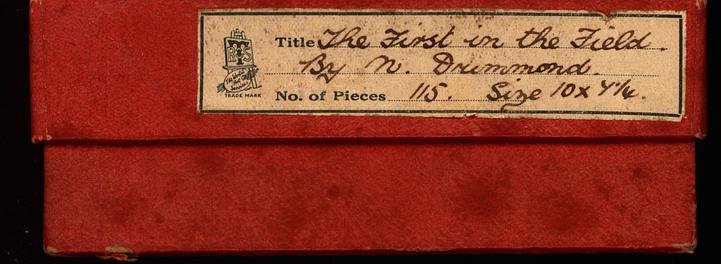
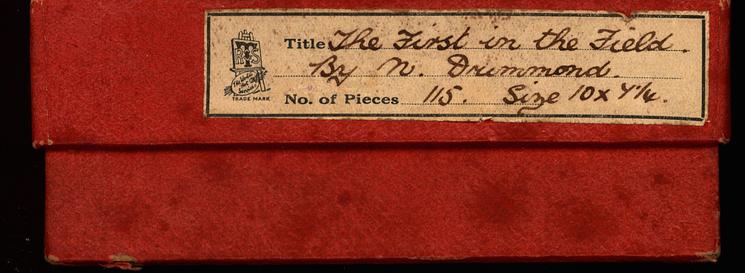
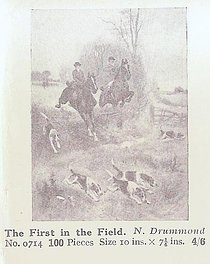
115 pieces, wooden, figurals, two missing pieces and replacements made, with box, push fit style, described and listed in the catalogs as 0714
|
|
|
|
Zag-Zaw line of puzzles was first produced in 1909, most incorporate figurals or whimsies, sold in red, orange, or occasionally green boxes with labels on the side or bottom of the box, most without guide pictures. Initially cut non-interlocking but by 1930's became more so. Puzzles have a different cuts so that the same image will come in several versions which means that missing pieces can not be taken from other puzzles with the same image. The puzzle labels are often hand written and come with minor variations in titles and details. Some have a DESIGN category on the label. From my readings this refers to the style of cut, wavy lines, figurals, etc. See also Bob Armstrong's website on old jigsaw puzzles
|
N. DRUMMOND
|
|
7 x 9 3/4 in.
|
|
| ||||
| 25258 |














|
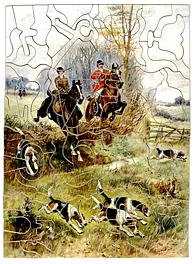
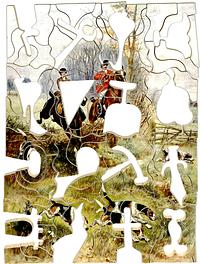
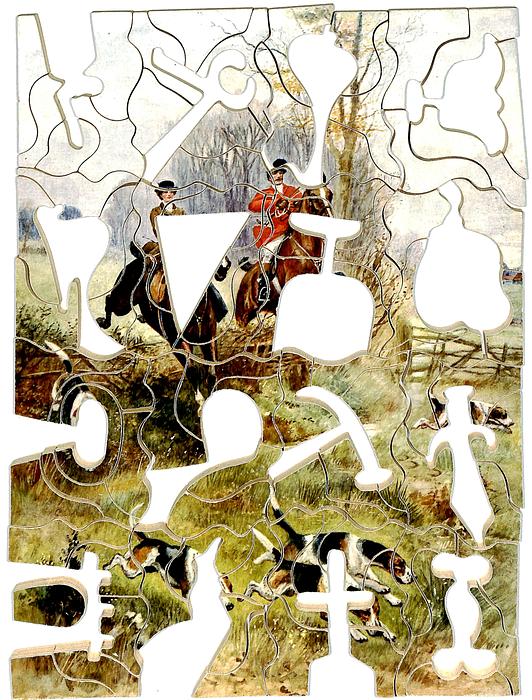
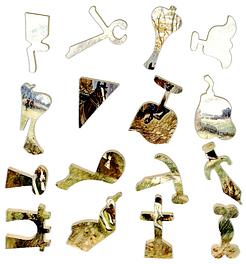
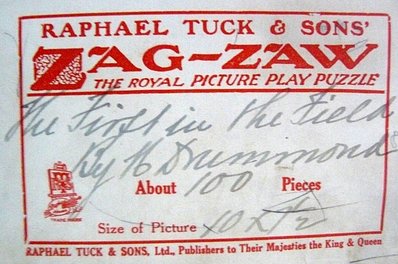
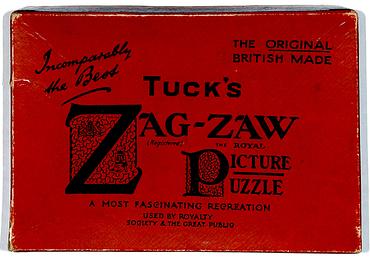
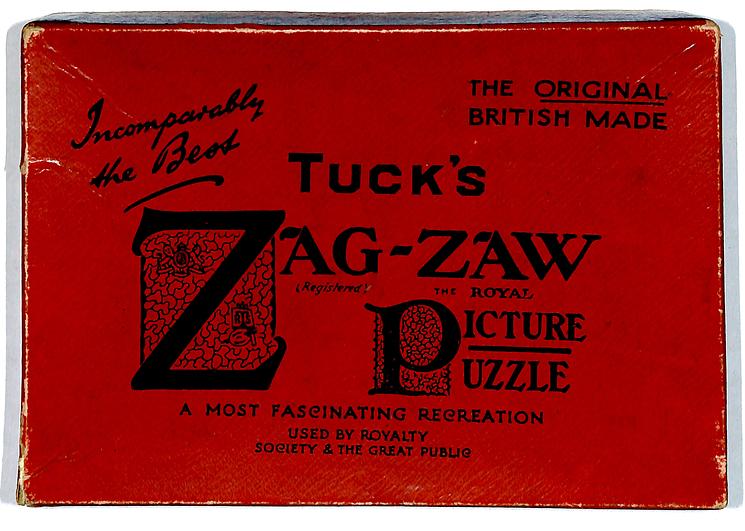
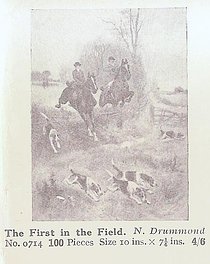
about 100 pieces, wooden, figurals, complete with box, push fit style, described and listed in the catalogs as 0714
|
|
|
|
Zag-Zaw line of puzzles was first produced in 1909, most incorporate figurals or whimsies, sold in red, orange, or occasionally green boxes with labels on the side or bottom of the box, most without guide pictures. Initially cut non-interlocking but by 1930's became more so. Puzzles have a different cuts so that the same image will come in several versions which means that missing pieces can not be taken from other puzzles with the same image. The puzzle labels are often hand written and come with minor variations in titles and details. Some have a DESIGN category on the label. From my readings this refers to the style of cut, wavy lines, figurals, etc. See also Bob Armstrong's website on old jigsaw puzzles
|
N. DRUMMOND
|
|
7 1/4 x 9 3/4 in.
|
|
| ||||
| 25259 |









|
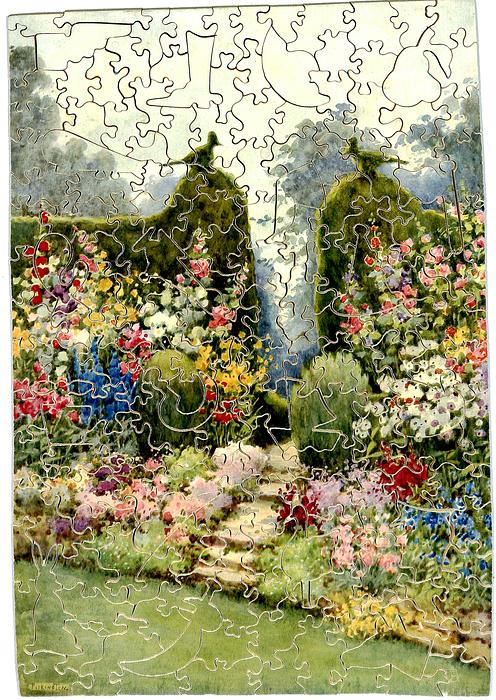
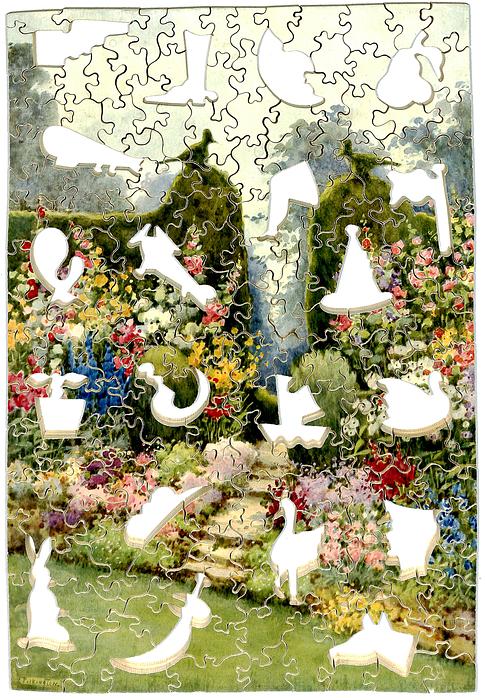
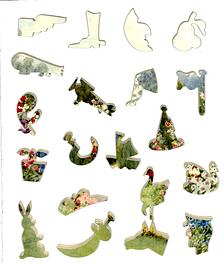
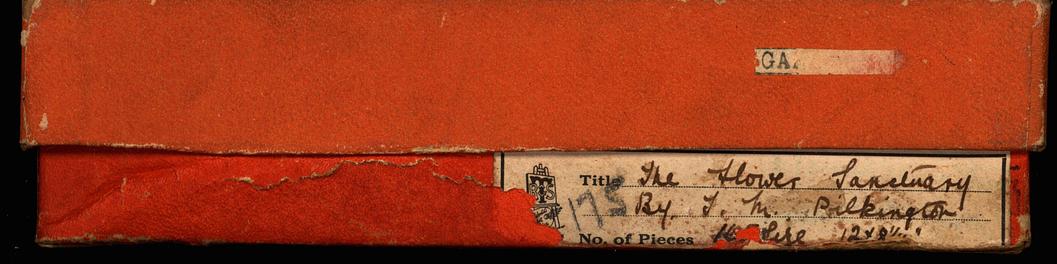
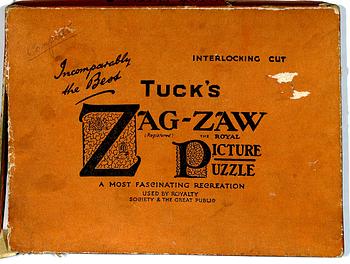
about 165 pieces, wooden, figurals, complete with box, interlocking style, not the same image as the smaller puzzle with the same title, possibly in the wrong box or has the title wrong, more info needed
|
|
|
|
Zag-Zaw line of puzzles was first produced in 1909, most incorporate figurals or whimsies, sold in red, orange, or occasionally green boxes with labels on the side or bottom of the box, most without guide pictures. Initially cut non-interlocking but by 1930's became more so. Puzzles have a different cuts so that the same image will come in several versions which means that missing pieces can not be taken from other puzzles with the same image. The puzzle labels are often hand written and come with minor variations in titles and details. Some have a DESIGN category on the label. From my readings this refers to the style of cut, wavy lines, figurals, etc. See also Bob Armstrong's website on old jigsaw puzzles
|
F.M. PILKINGTON
|
|
8 x 11 3/4 in.
|
|
|
| |||
| 25260 |



|
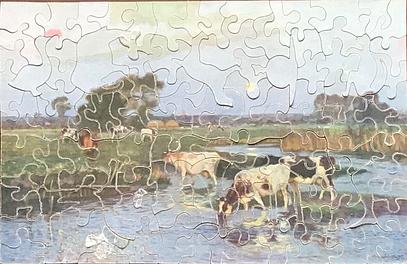
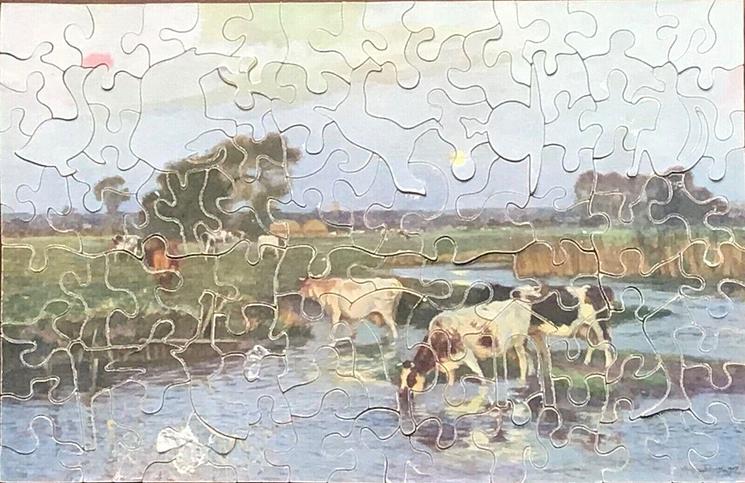
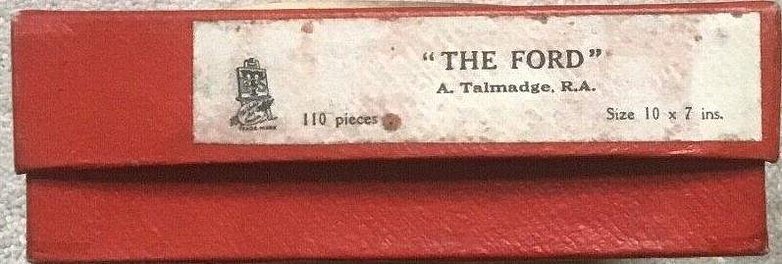
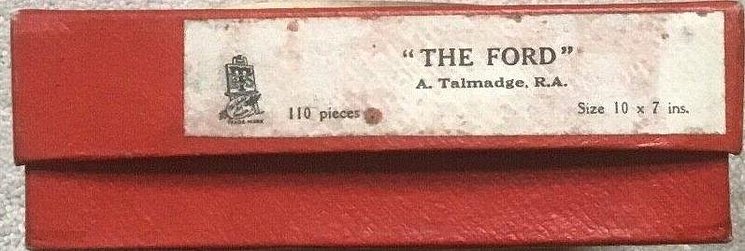
108 pieces, figurals, complete with box, interlocking style
|
|
|
|
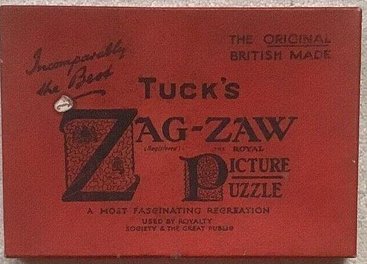
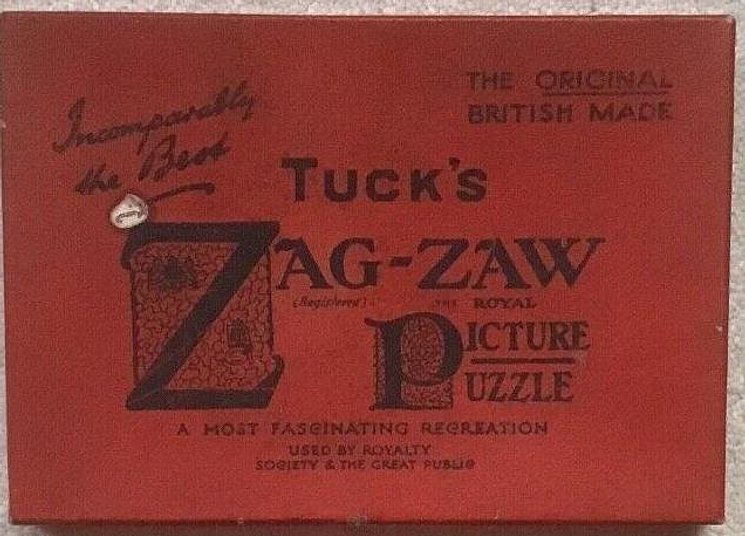
Zag-Zaw line of puzzles was first produced in 1909, most incorporate figurals or whimsies, sold in red, orange, or occasionally green boxes with labels on the side or bottom of the box, most without guide pictures. Initially cut non-interlocking but by 1930's became more so. Puzzles have a different cuts so that the same image will come in several versions which means that missing pieces can not be taken from other puzzles with the same image. The puzzle labels are often hand written and come with minor variations in titles and details. Some have a DESIGN category on the label. From my readings this refers to the style of cut, wavy lines, figurals, etc. See also Bob Armstrong's website on old jigsaw puzzles
|
A. TALMADGE, R.A.
|
|
10 x 7 in.
|
|
|
|