All Items
27,432 items
|
Title
|
Images
|
Item Comment
|
Prefix
|
Number
|
In set
|
Set
|
Set Comment
|
Type
|
Artist
|
Author
|
Size
|
Topics
|
Set Covers
|
Reference
| |
|---|---|---|---|---|---|---|---|---|---|---|---|---|---|---|---|
| 25661 |








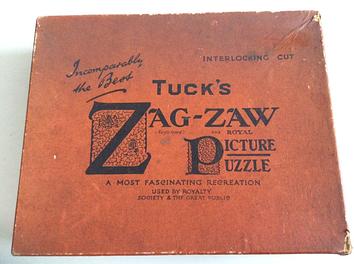
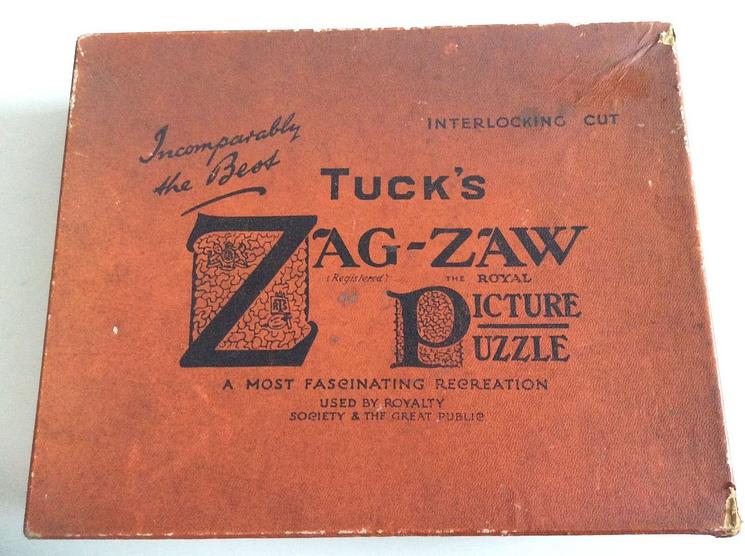

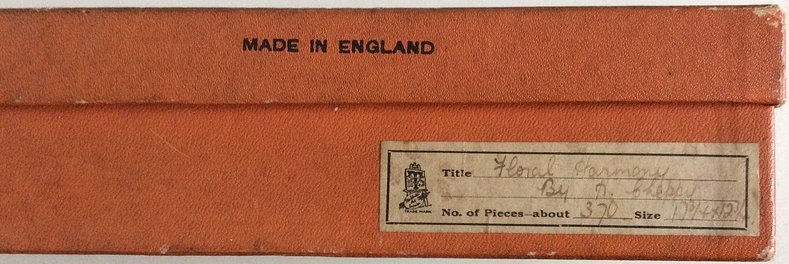

|
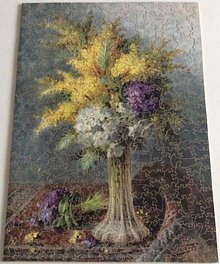
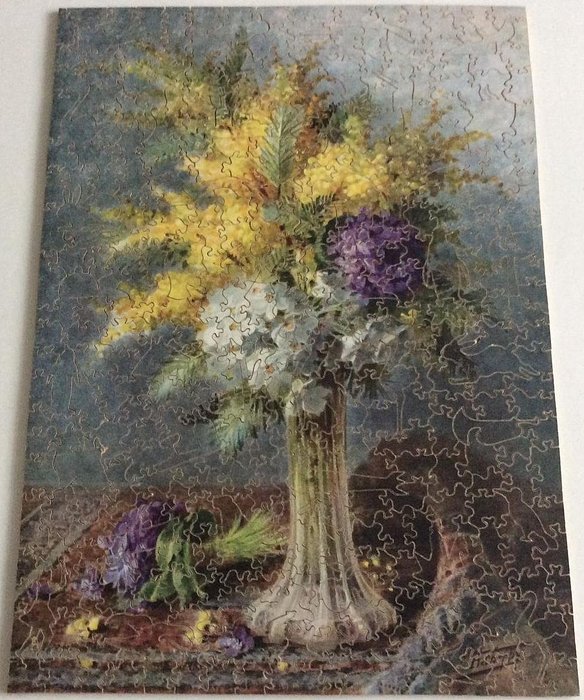
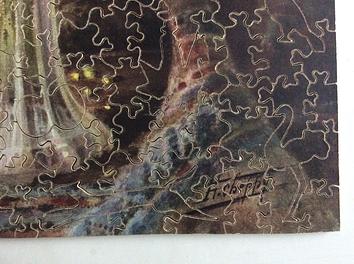
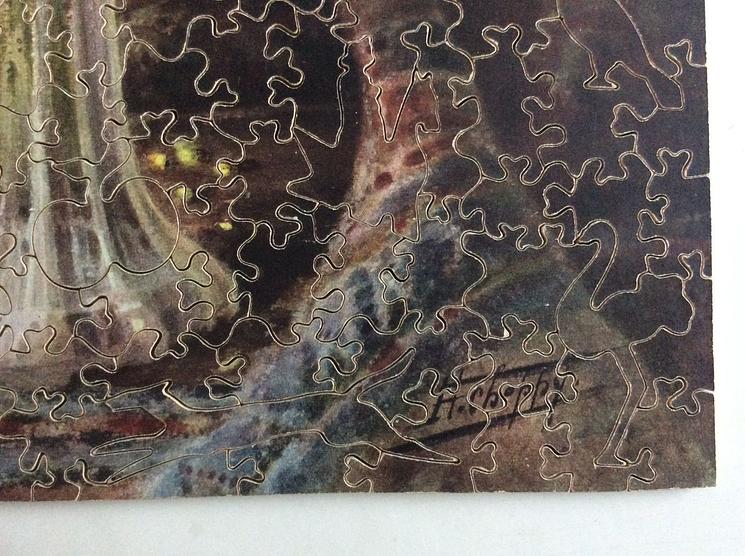
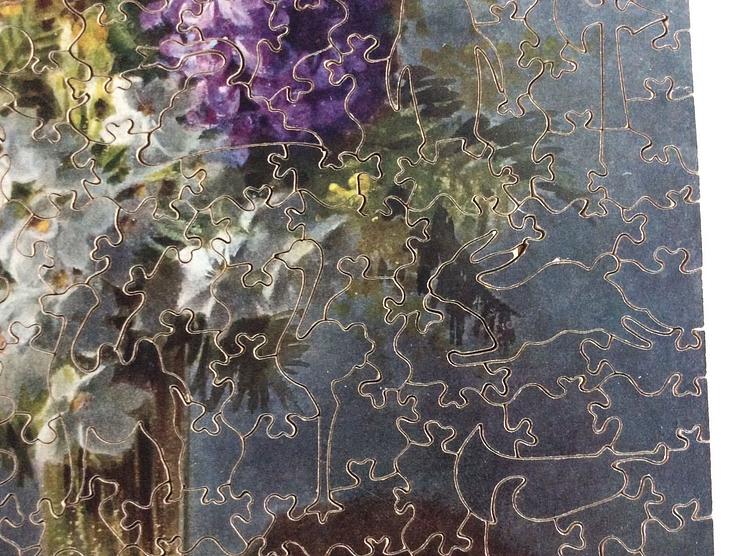
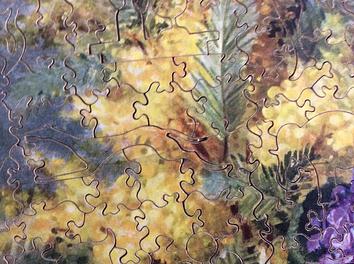
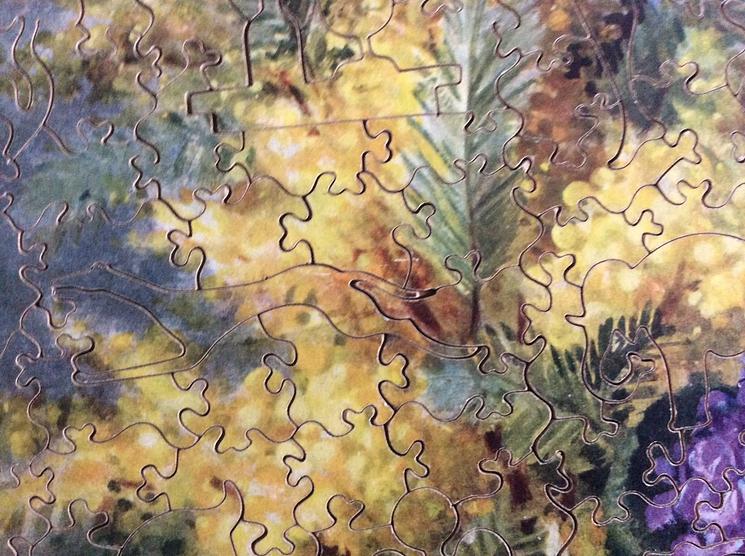
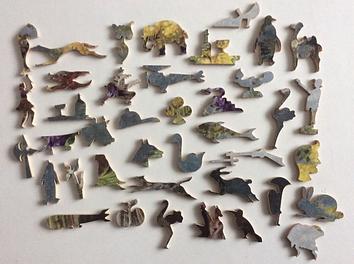
370 wooden pieces with 40 whimsies, circa 1920's,
|
|
|
|
Zag-Zaw line of puzzles was first produced in 1909, most incorporate figurals or whimsies, sold in red, orange, or occasionally green boxes with labels on the side or bottom of the box, most without guide pictures. Initially cut non-interlocking but by 1930's became more so. Puzzles have a different cuts so that the same image will come in several versions which means that missing pieces can not be taken from other puzzles with the same image. The puzzle labels are often hand written and come with minor variations in titles and details. Some have a DESIGN category on the label. From my readings this refers to the style of cut, wavy lines, figurals, etc. See also Bob Armstrong's website on old jigsaw puzzles
|
H. CHEPPY
|
|
13 x 18 in.
|
|
|
| |||
| 25662 |


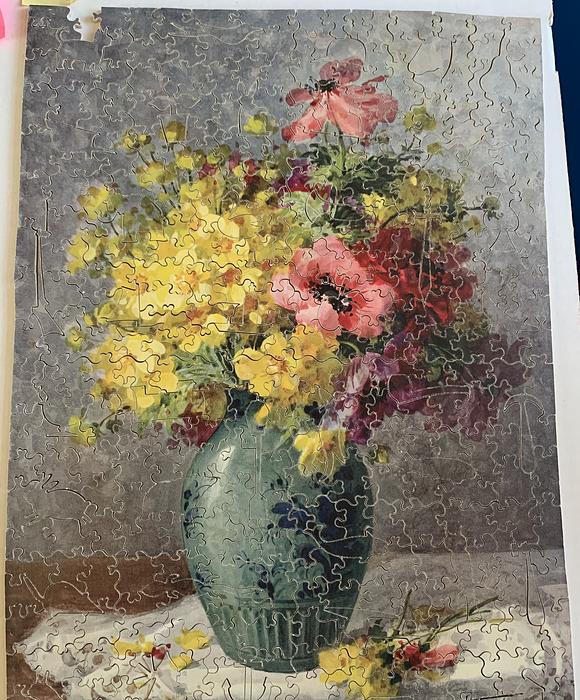






|
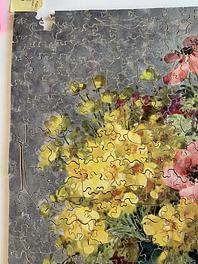
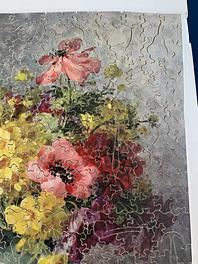
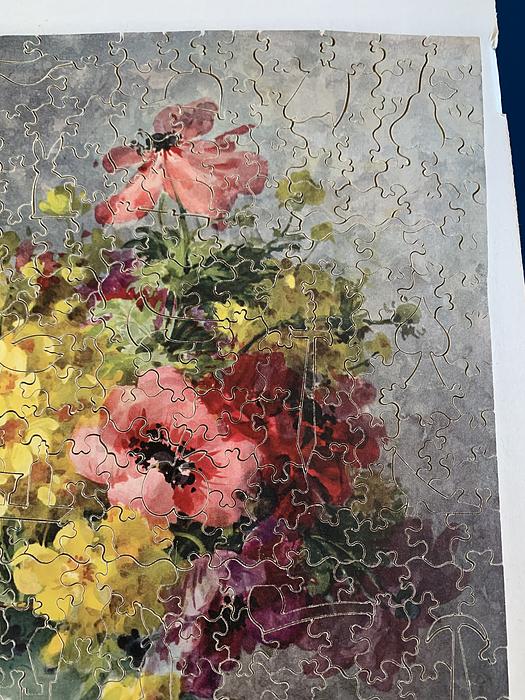
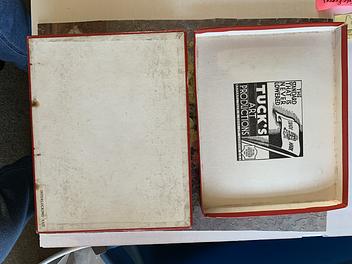
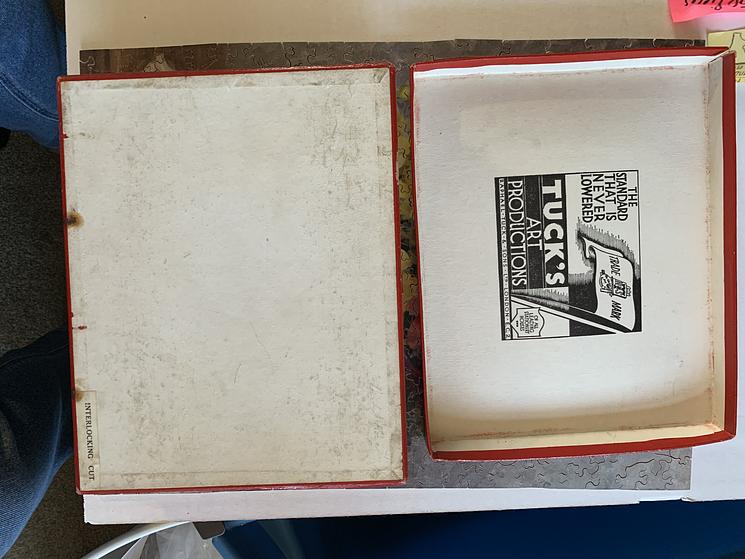
350 pieces, wooden, figurals, interlocking cut, with box, missing one piece
|
|
|
|
Zag-Zaw line of puzzles was first produced in 1909, most incorporate figurals or whimsies, sold in red, orange, or occasionally green boxes with labels on the side or bottom of the box, most without guide pictures. Initially cut non-interlocking but by 1930's became more so. Puzzles have a different cuts so that the same image will come in several versions which means that missing pieces can not be taken from other puzzles with the same image. The puzzle labels are often hand written and come with minor variations in titles and details. Some have a DESIGN category on the label. From my readings this refers to the style of cut, wavy lines, figurals, etc. See also Bob Armstrong's website on old jigsaw puzzles
|
H. CHEPPY
|
|
17 x 12 1/2 in.
|
|
|
| |||
| 25663 |






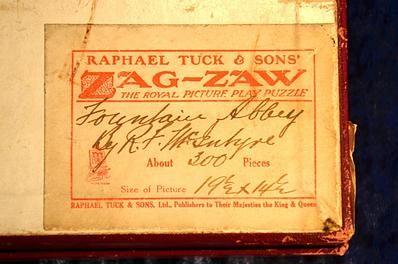
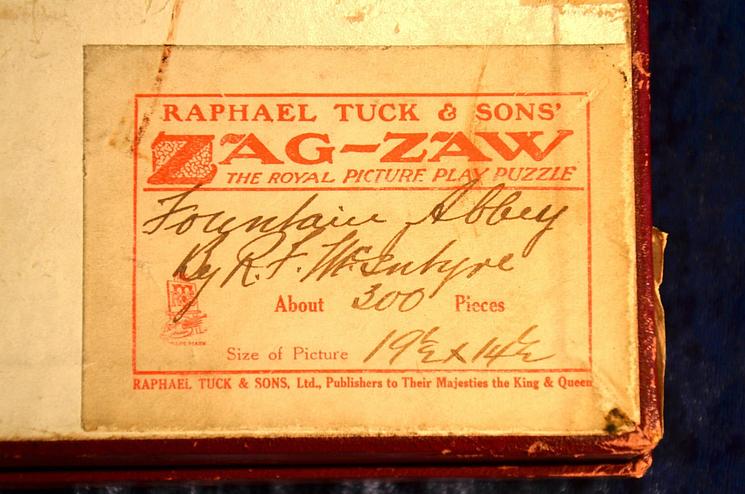

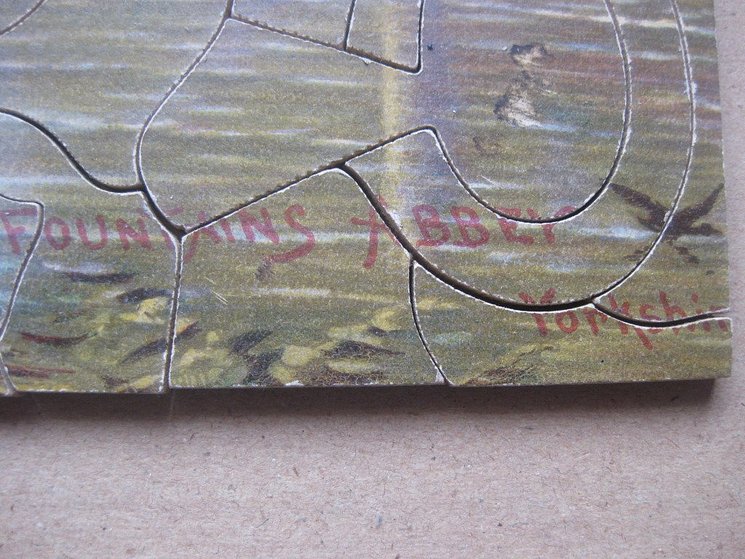


|
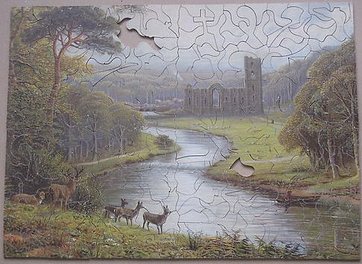
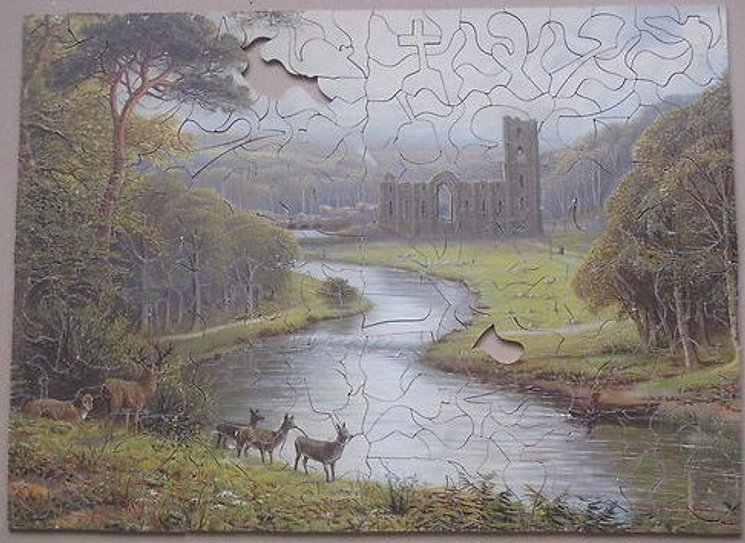
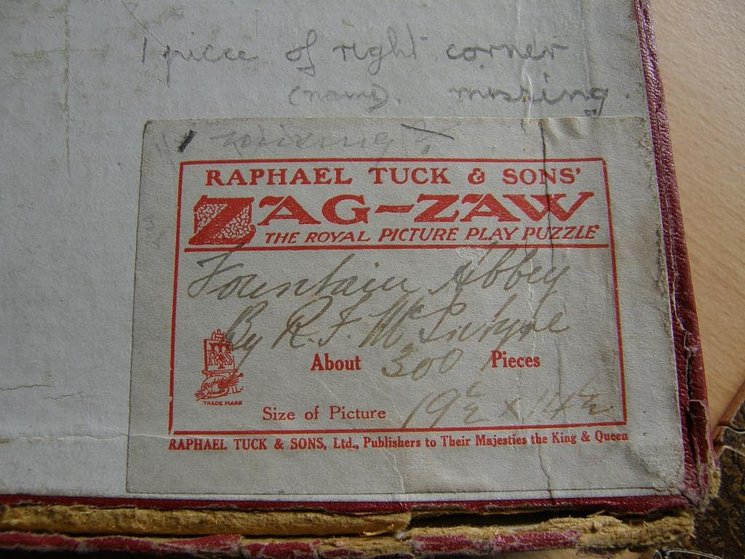
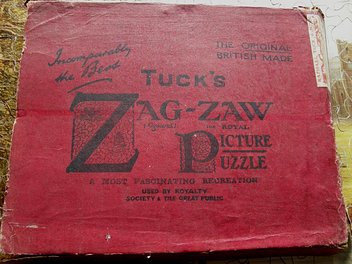
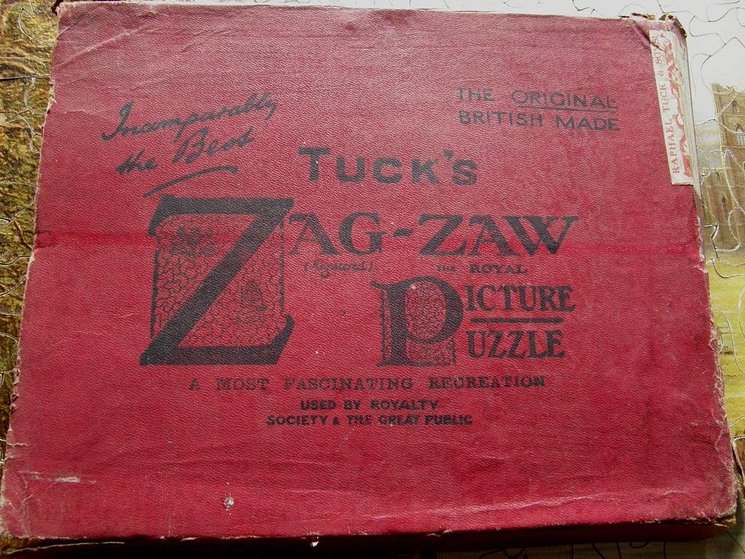
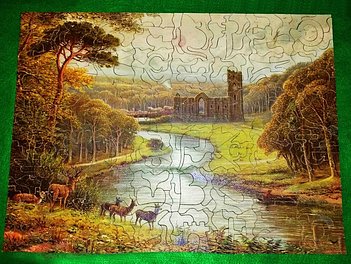
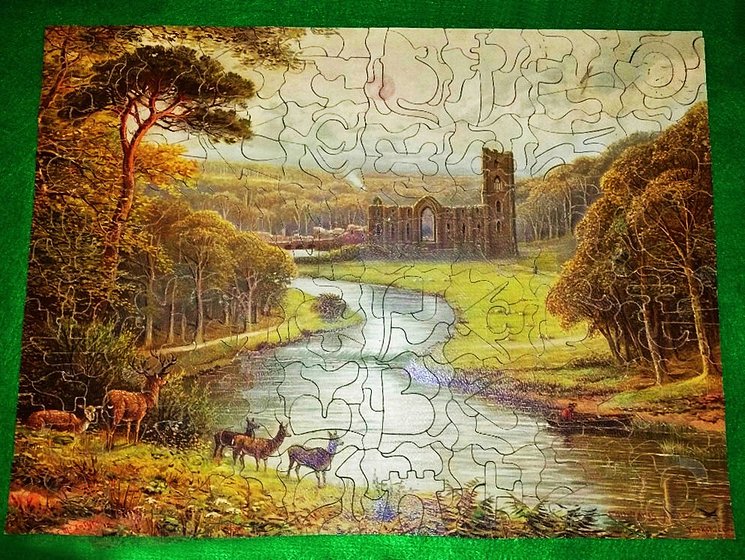
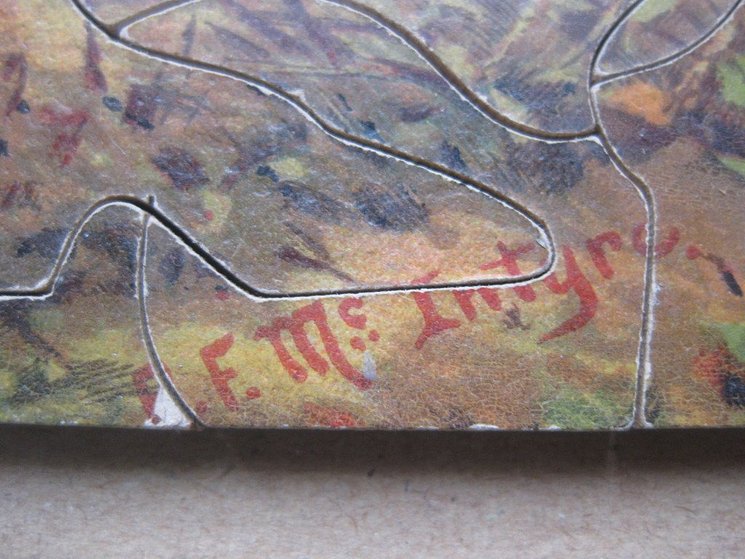
300 pieces, two pieces missing
|
|
|
|
Zag-Zaw line of puzzles was first produced in 1909, most incorporate figurals or whimsies, sold in red, orange, or occasionally green boxes with labels on the side or bottom of the box, most without guide pictures. Initially cut non-interlocking but by 1930's became more so. Puzzles have a different cuts so that the same image will come in several versions which means that missing pieces can not be taken from other puzzles with the same image. The puzzle labels are often hand written and come with minor variations in titles and details. Some have a DESIGN category on the label. From my readings this refers to the style of cut, wavy lines, figurals, etc. See also Bob Armstrong's website on old jigsaw puzzles
|
R.F. MC.INTYRE
|
|
49 x 37 cm
|
|
|
| |||
| 25664 |














|
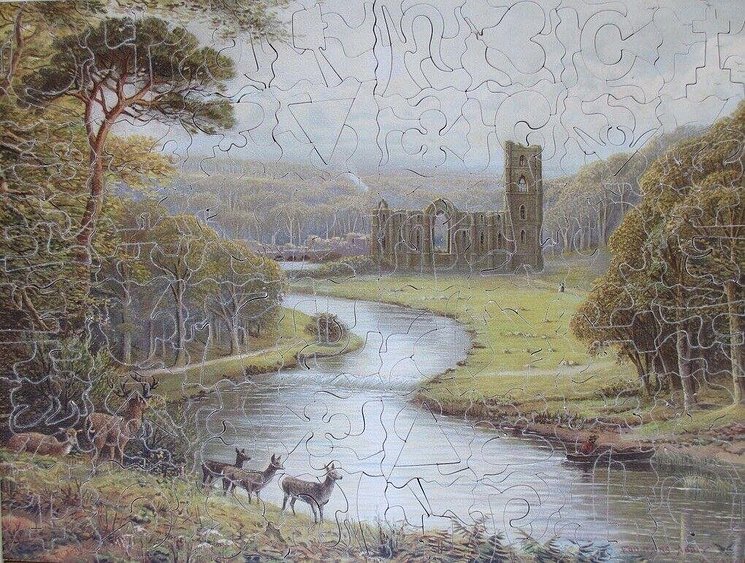
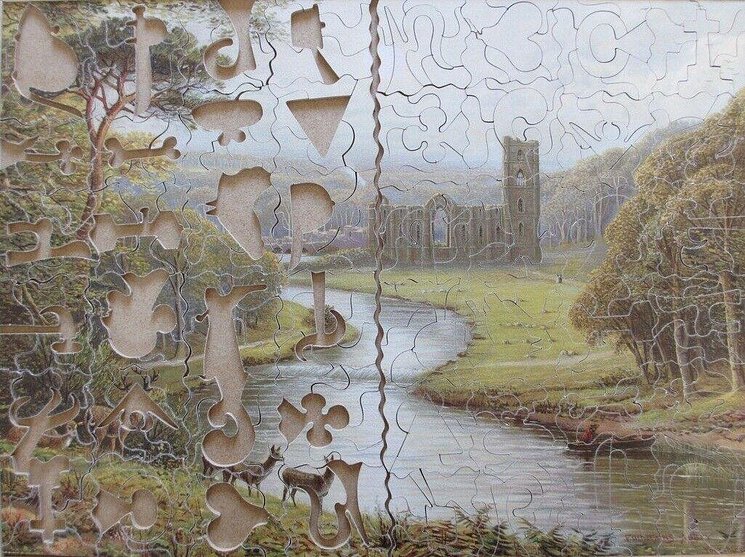
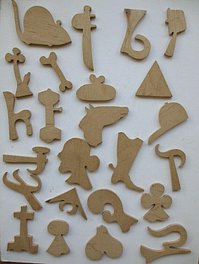
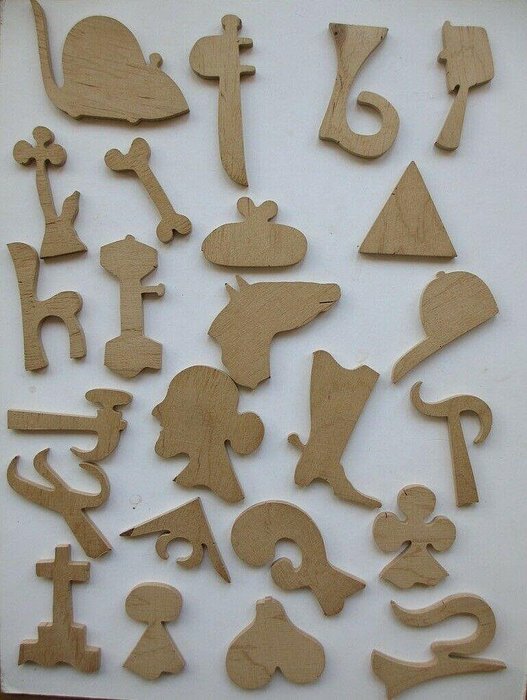
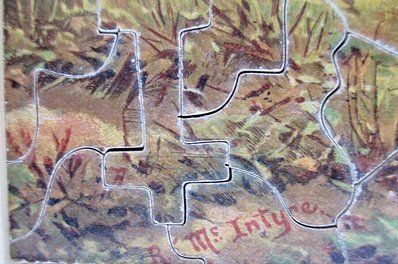
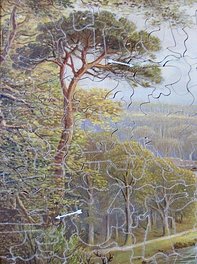
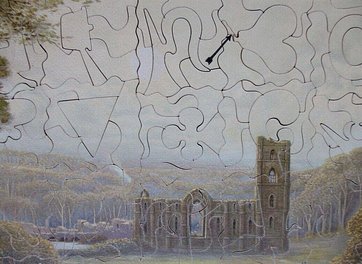
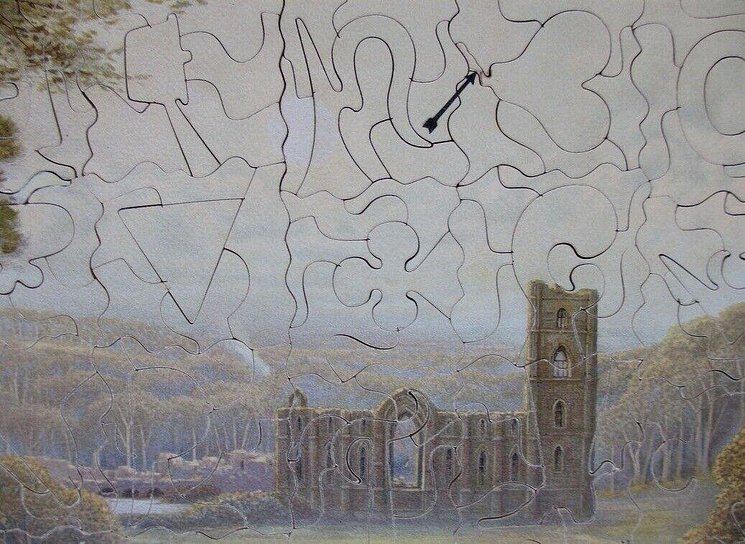
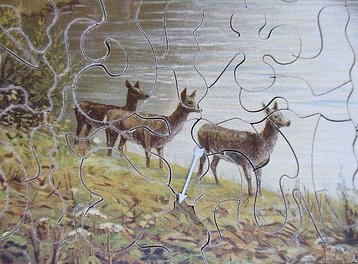
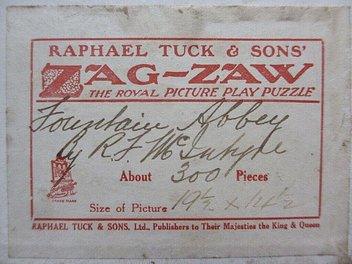
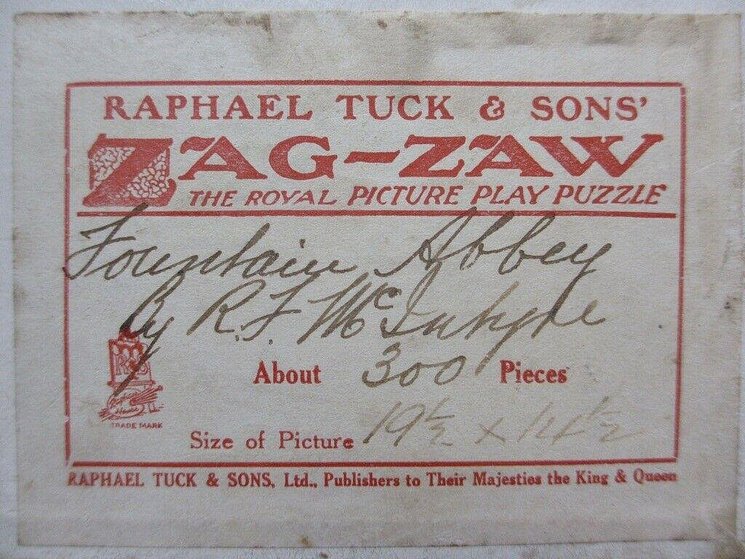
about 300 pieces, wooden, figurals, complete with box-one previously missing piece replaced and paper repaired to another, two nibs from the pear figurals have broken off and one has been reglued, and the other has been replaced by filling in on an adjacent piece, push fit style,
|
|
|
|
Zag-Zaw line of puzzles was first produced in 1909, most incorporate figurals or whimsies, sold in red, orange, or occasionally green boxes with labels on the side or bottom of the box, most without guide pictures. Initially cut non-interlocking but by 1930's became more so. Puzzles have a different cuts so that the same image will come in several versions which means that missing pieces can not be taken from other puzzles with the same image. The puzzle labels are often hand written and come with minor variations in titles and details. Some have a DESIGN category on the label. From my readings this refers to the style of cut, wavy lines, figurals, etc. See also Bob Armstrong's website on old jigsaw puzzles
|
ROBERT FINLAY MCINTYRE (1846-1906)
|
|
19 1/2 x 14 1/2 in.
|
|
|
| |||
| 25665 |


|
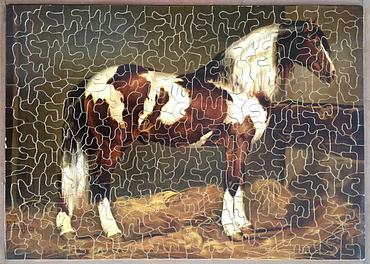
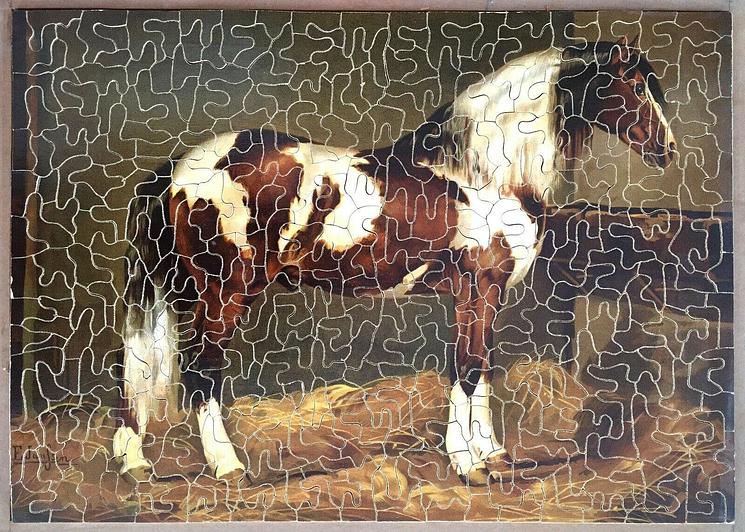
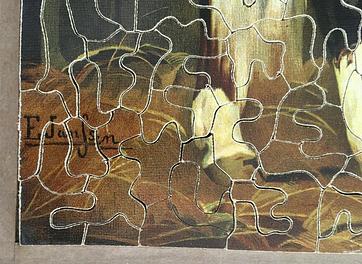
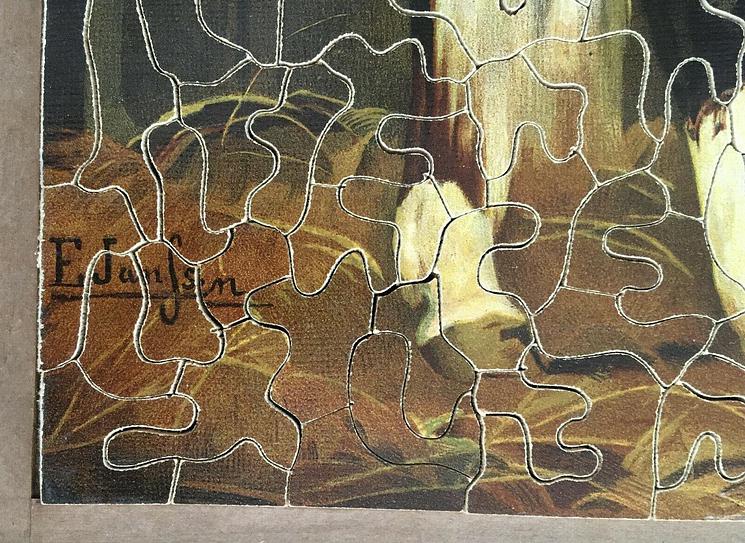
380 pieces, complete push fit, no box, no tuck markings In 1915 Tuck's German in Berlin was liquidated and Wohlgemuth & Lissner in Berlin took over their business. The German Tuck's can be recognized by the different style of cutting then the British Tuck's. After the takeover W&L kept the same cutters. So if this puzzle isn't Wohlgemuth & Lissner, then it is a German Tuck's. circa 1910-1930. per M. Stulemeijer
|
|
|
|
Zag-Zaw line of puzzles was first produced in 1909, most incorporate figurals or whimsies, sold in red, orange, or occasionally green boxes with labels on the side or bottom of the box, most without guide pictures. Initially cut non-interlocking but by 1930's became more so. Puzzles have a different cuts so that the same image will come in several versions which means that missing pieces can not be taken from other puzzles with the same image. The puzzle labels are often hand written and come with minor variations in titles and details. Some have a DESIGN category on the label. From my readings this refers to the style of cut, wavy lines, figurals, etc. See also Bob Armstrong's website on old jigsaw puzzles
|
E. JANSSEN
|
|
19.1 x 13.6 in.
|
|
| ||||
| 25666 |




|
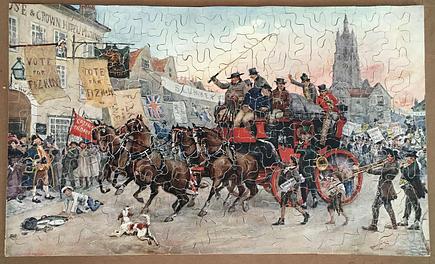
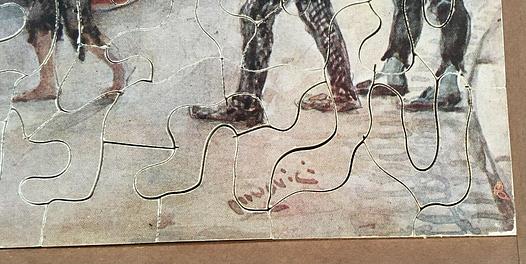
German cut, 386 pieces, wooden, complete, push fit, no box but Tuck trademark symbol on lower R corner, as per seller--In 1915 Tuck's German in Berlin was liquidated and Wohlgemuth & Lissner in Berlin took over their business. The German Tuck's can be recognized by the different style of cutting then the British Tuck's. After the takeover W&L kept the same cutters. So if this puzzle isn't Wohlgemuth & Lissner, then it is a German Tuck's. circa 1910-1930. per M. Stulemeijer
|
|
|
|
Zag-Zaw line of puzzles was first produced in 1909, most incorporate figurals or whimsies, sold in red, orange, or occasionally green boxes with labels on the side or bottom of the box, most without guide pictures. Initially cut non-interlocking but by 1930's became more so. Puzzles have a different cuts so that the same image will come in several versions which means that missing pieces can not be taken from other puzzles with the same image. The puzzle labels are often hand written and come with minor variations in titles and details. Some have a DESIGN category on the label. From my readings this refers to the style of cut, wavy lines, figurals, etc. See also Bob Armstrong's website on old jigsaw puzzles
|
A. LUDOVICI Albert Ludovici Jr. (1852-1932)
|
|
19.3 x 11.8 in.
|
|
| ||||
| 25667 |








|
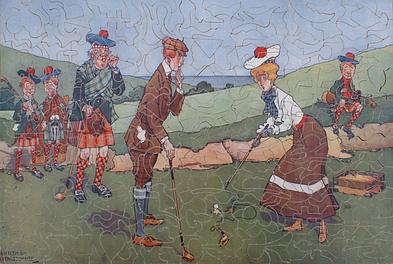
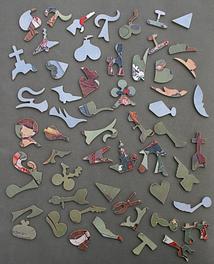
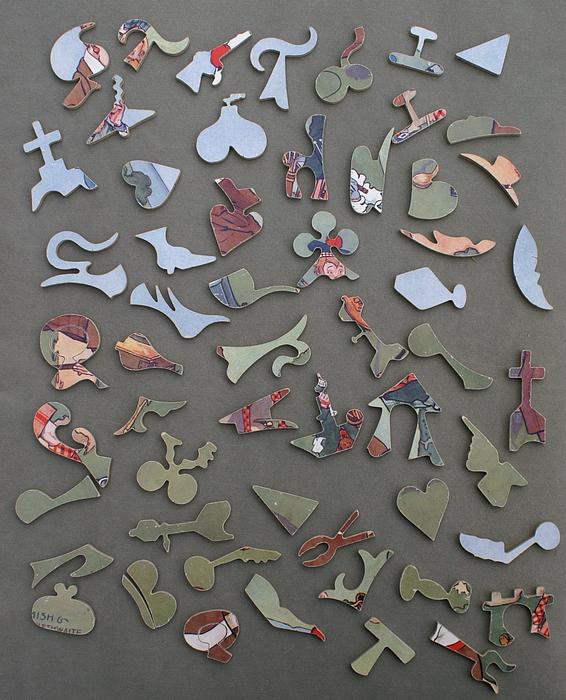
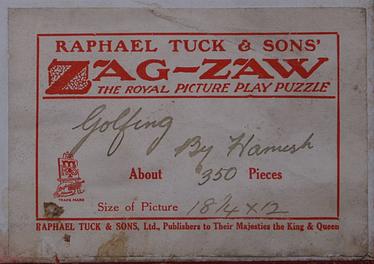
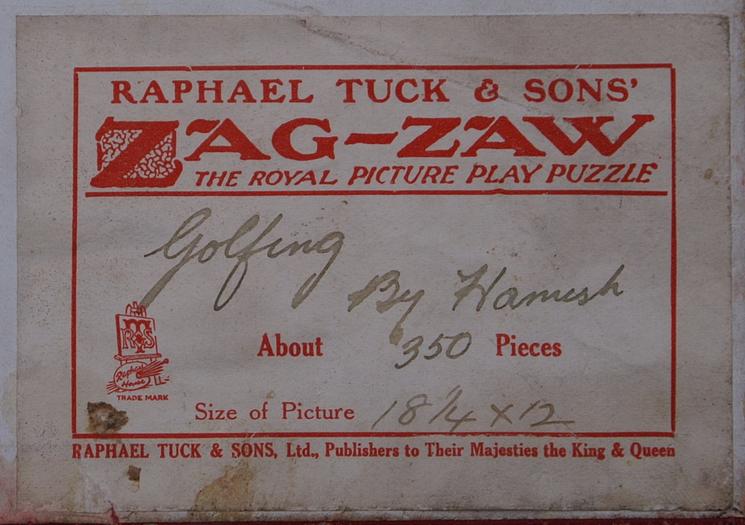
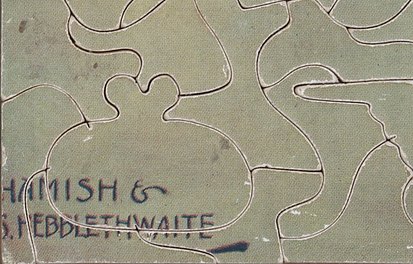
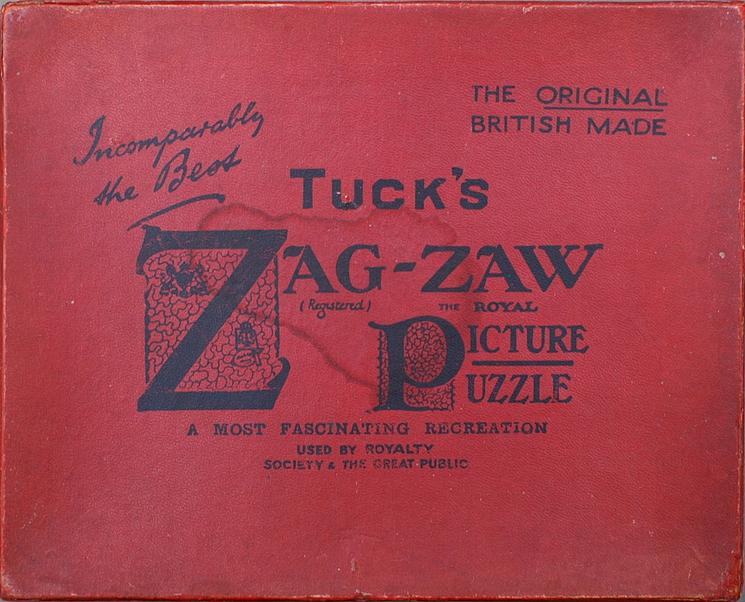
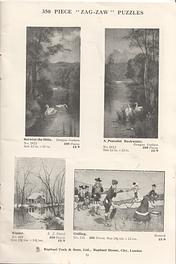
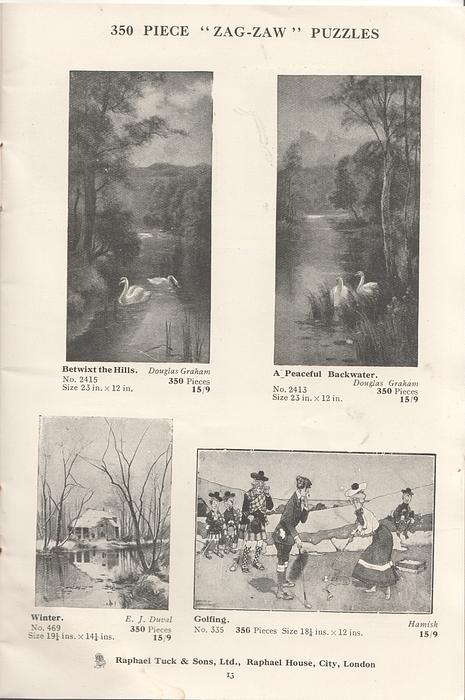
about 350 pieces, wooden, 56 whimsies, circa 1930's, with box, listed in the catalogs as number 335
|
|
|
|
Zag-Zaw line of puzzles was first produced in 1909, most incorporate figurals or whimsies, sold in red, orange, or occasionally green boxes with labels on the side or bottom of the box, most without guide pictures. Initially cut non-interlocking but by 1930's became more so. Puzzles have a different cuts so that the same image will come in several versions which means that missing pieces can not be taken from other puzzles with the same image. The puzzle labels are often hand written and come with minor variations in titles and details. Some have a DESIGN category on the label. From my readings this refers to the style of cut, wavy lines, figurals, etc. See also Bob Armstrong's website on old jigsaw puzzles
|
HAMISH, S. HEBBLETHWAITE
|
|
17 1/2 x 11 3/4 in or 44.5 x 30 cm
|
|
|
| |||
| 25668 |








|
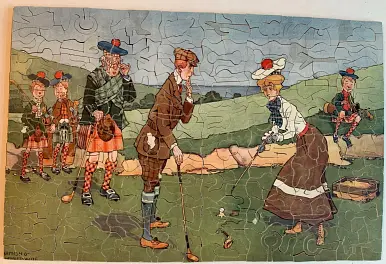
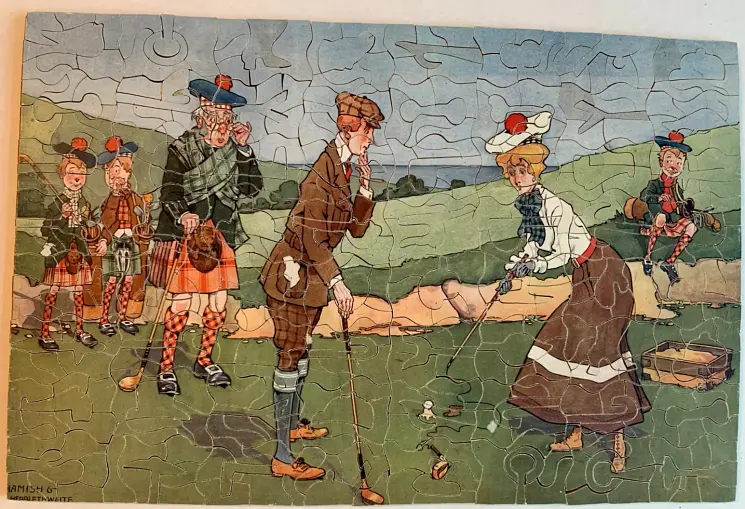
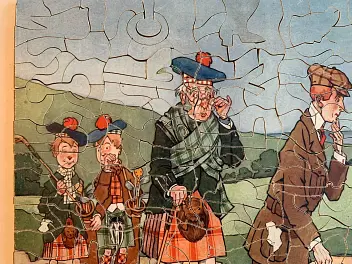
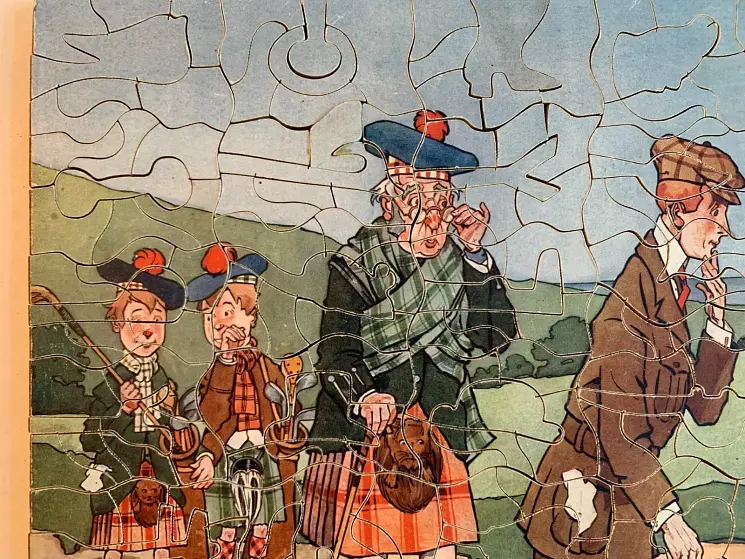
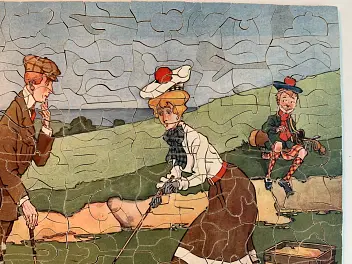
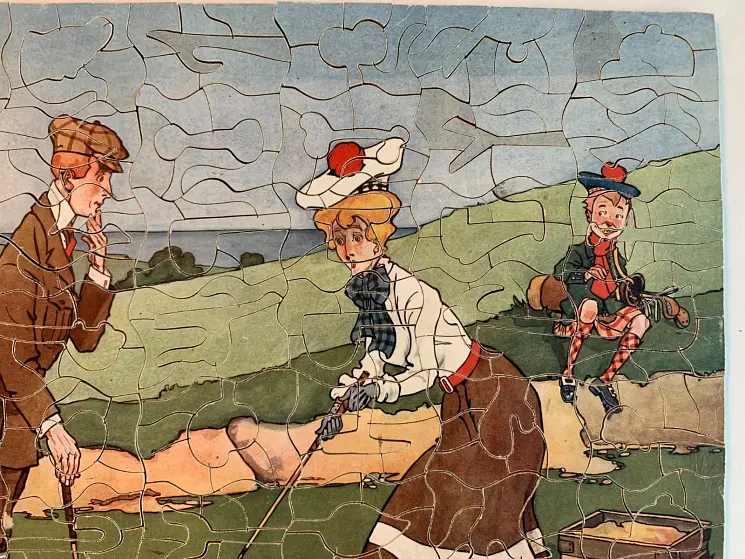
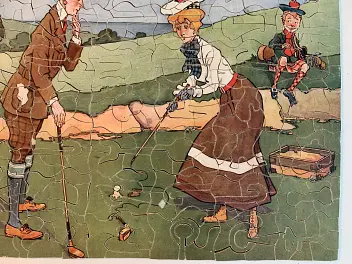
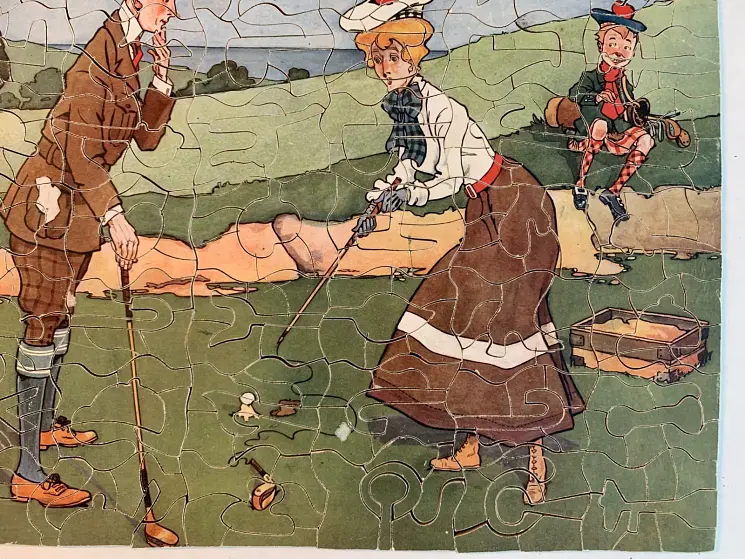
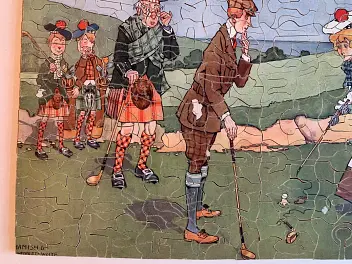
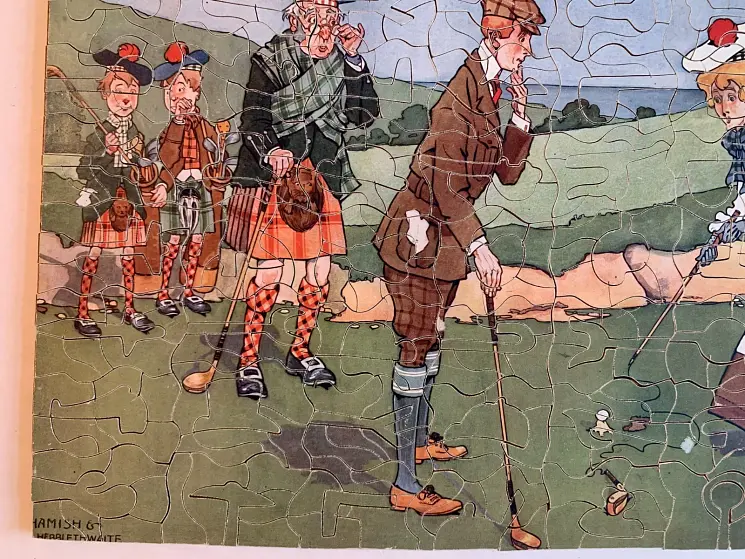
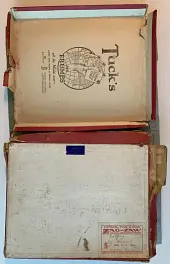
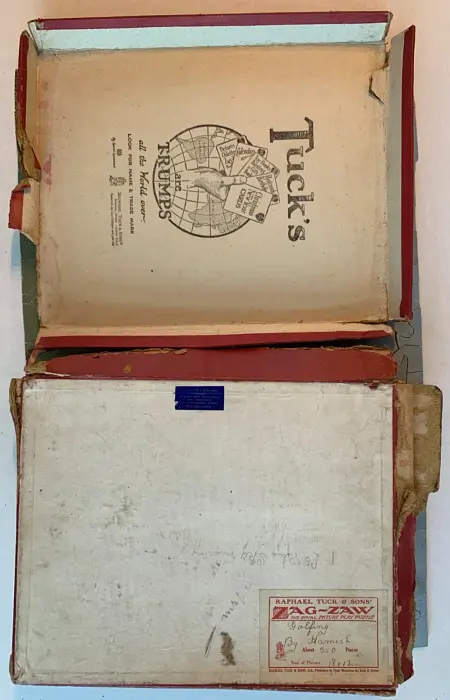
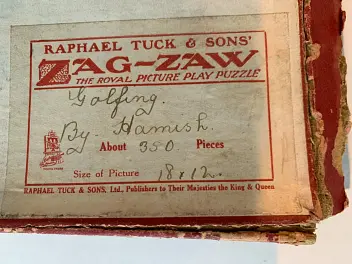
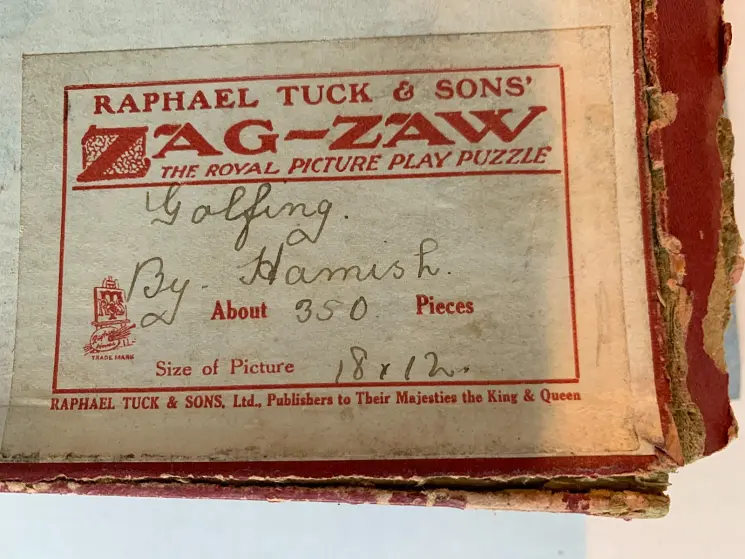
about 350 pieces, wooden, 56 whimsies, circa 1930's, with box, listed in the catalogs as number 335
|
|
|
|
Zag-Zaw line of puzzles was first produced in 1909, most incorporate figurals or whimsies, sold in red, orange, or occasionally green boxes with labels on the side or bottom of the box, most without guide pictures. Initially cut non-interlocking but by 1930's became more so. Puzzles have a different cuts so that the same image will come in several versions which means that missing pieces can not be taken from other puzzles with the same image. The puzzle labels are often hand written and come with minor variations in titles and details. Some have a DESIGN category on the label. From my readings this refers to the style of cut, wavy lines, figurals, etc. See also Bob Armstrong's website on old jigsaw puzzles
|
HAMISH, S. HEBBLETHWAITE
|
|
17 1/2 x 11 3/4 in or 44.5 x 30 cm
|
|
|
| |||
| 25669 |



|
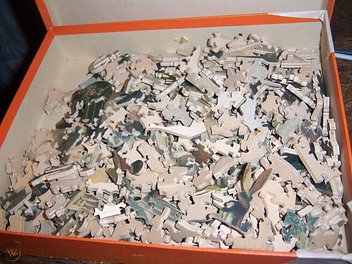
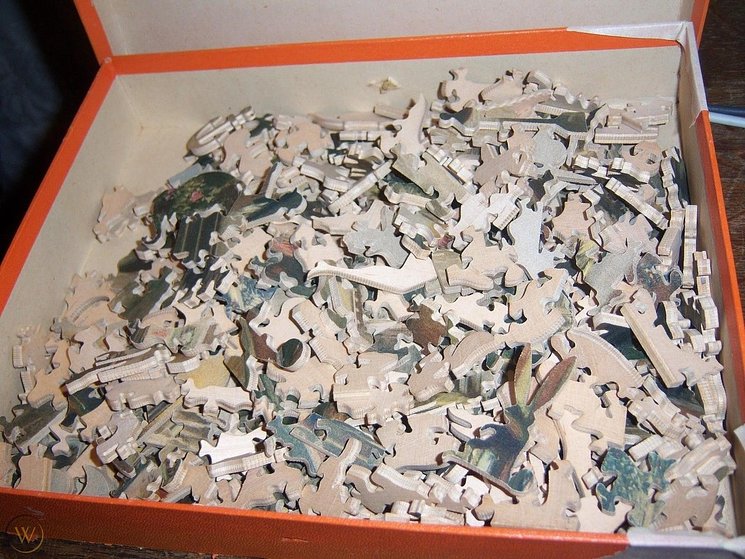
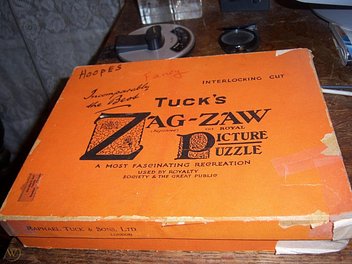
320 pieces,circa 1938,
|
|
|
|
Zag-Zaw line of puzzles was first produced in 1909, most incorporate figurals or whimsies, sold in red, orange, or occasionally green boxes with labels on the side or bottom of the box, most without guide pictures. Initially cut non-interlocking but by 1930's became more so. Puzzles have a different cuts so that the same image will come in several versions which means that missing pieces can not be taken from other puzzles with the same image. The puzzle labels are often hand written and come with minor variations in titles and details. Some have a DESIGN category on the label. From my readings this refers to the style of cut, wavy lines, figurals, etc. See also Bob Armstrong's website on old jigsaw puzzles
|
|
|
15 x 11 in.
|
|
|
| |||
| 25670 |



|
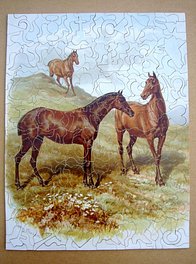
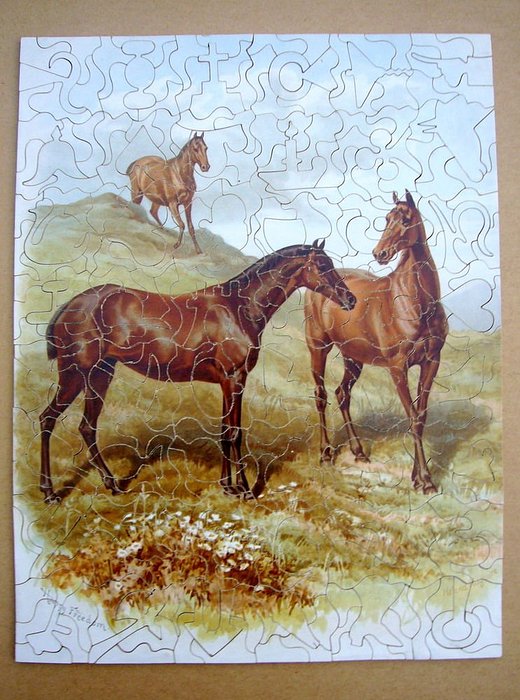
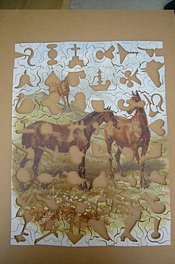
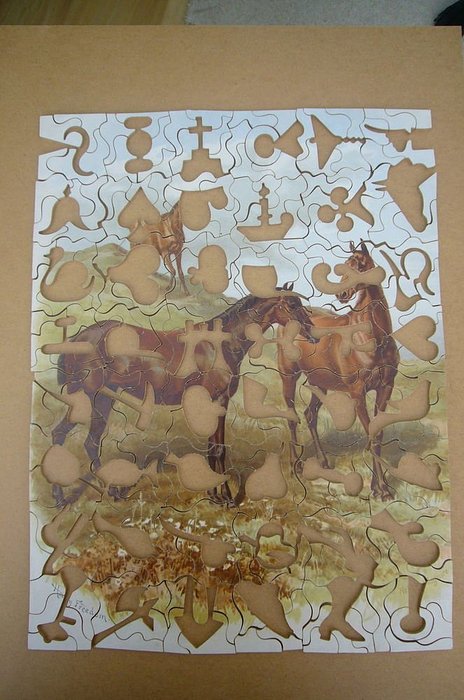
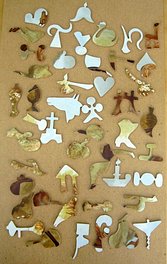
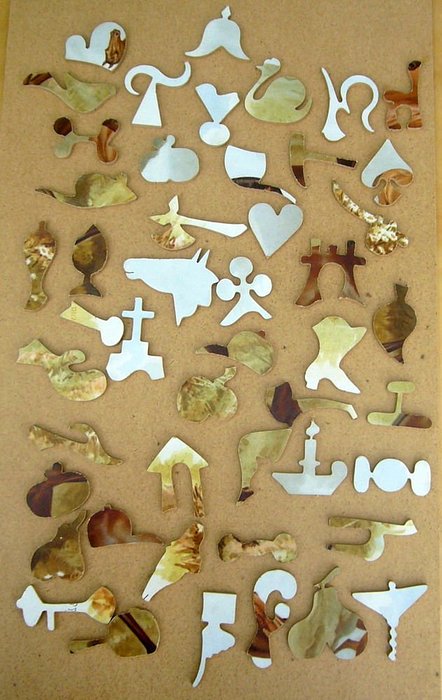
260 pieces 48 whimsies, complete with box, push fit style, label on box gives 300 pieces, listed and described in the catalogs as number 0306 and has 300 pieces
|
|
|
|
Zag-Zaw line of puzzles was first produced in 1909, most incorporate figurals or whimsies, sold in red, orange, or occasionally green boxes with labels on the side or bottom of the box, most without guide pictures. Initially cut non-interlocking but by 1930's became more so. Puzzles have a different cuts so that the same image will come in several versions which means that missing pieces can not be taken from other puzzles with the same image. The puzzle labels are often hand written and come with minor variations in titles and details. Some have a DESIGN category on the label. From my readings this refers to the style of cut, wavy lines, figurals, etc. See also Bob Armstrong's website on old jigsaw puzzles
|
|
Helena Maguire
|
|
13 x 17 in
|
|
|
| ||
| 25671 |






|
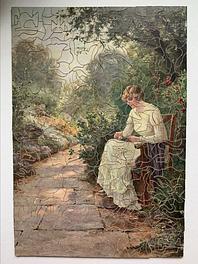
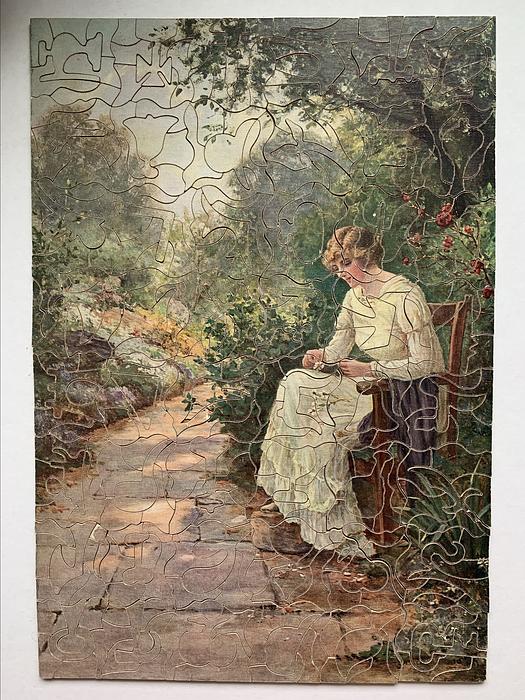
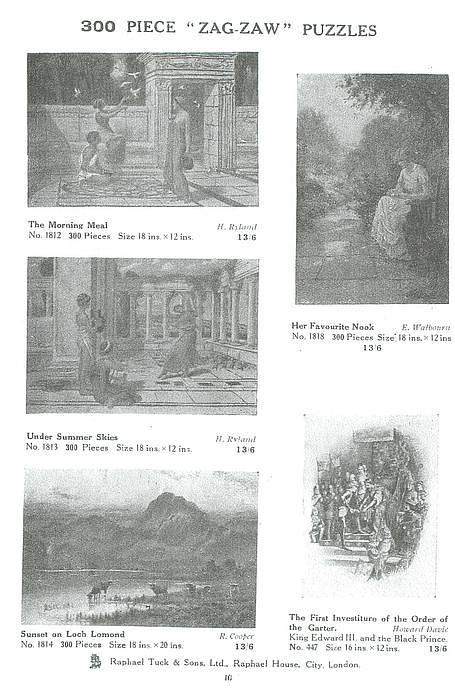
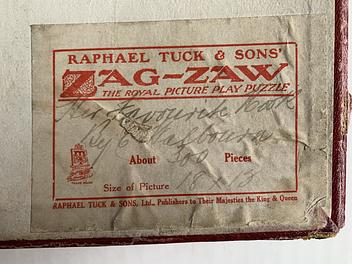
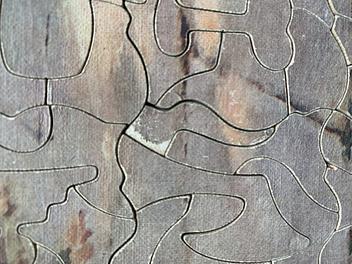
About 300 pieces, wooden, many figurals, complete and original with one piece broken in two and one with some missing colour paper on the tip, see photos, push fit style,
|
|
|
|
Zag-Zaw line of puzzles was first produced in 1909, most incorporate figurals or whimsies, sold in red, orange, or occasionally green boxes with labels on the side or bottom of the box, most without guide pictures. Initially cut non-interlocking but by 1930's became more so. Puzzles have a different cuts so that the same image will come in several versions which means that missing pieces can not be taken from other puzzles with the same image. The puzzle labels are often hand written and come with minor variations in titles and details. Some have a DESIGN category on the label. From my readings this refers to the style of cut, wavy lines, figurals, etc. See also Bob Armstrong's website on old jigsaw puzzles
|
E. WALBOURN
|
|
12 x 17 1/2 IN.
|
|
|
| |||
| 25672 |

|
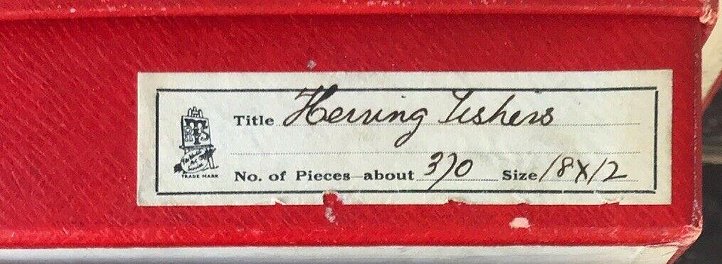
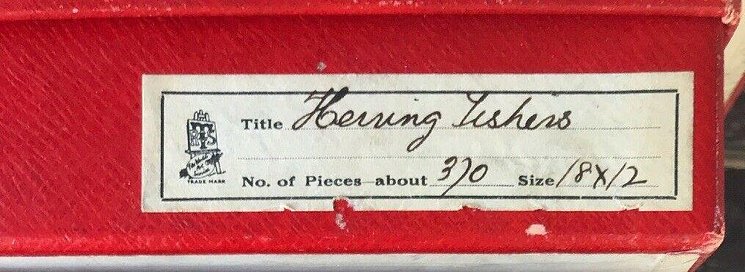
ABOUT 370 PIECES
|
|
|
|
Zag-Zaw line of puzzles was first produced in 1909, most incorporate figurals or whimsies, sold in red, orange, or occasionally green boxes with labels on the side or bottom of the box, most without guide pictures. Initially cut non-interlocking but by 1930's became more so. Puzzles have a different cuts so that the same image will come in several versions which means that missing pieces can not be taken from other puzzles with the same image. The puzzle labels are often hand written and come with minor variations in titles and details. Some have a DESIGN category on the label. From my readings this refers to the style of cut, wavy lines, figurals, etc. See also Bob Armstrong's website on old jigsaw puzzles
|
|
|
18 x 12 in.
|
|
|
| |||
| 25673 |



|
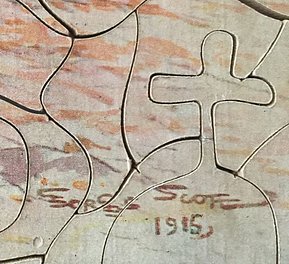
about 300 pieces, several whimsies, dated 1915 painted by a French war correspondent notable for his paintings of the Balkan Wars and the First World War.
|
|
|
|
Zag-Zaw line of puzzles was first produced in 1909, most incorporate figurals or whimsies, sold in red, orange, or occasionally green boxes with labels on the side or bottom of the box, most without guide pictures. Initially cut non-interlocking but by 1930's became more so. Puzzles have a different cuts so that the same image will come in several versions which means that missing pieces can not be taken from other puzzles with the same image. The puzzle labels are often hand written and come with minor variations in titles and details. Some have a DESIGN category on the label. From my readings this refers to the style of cut, wavy lines, figurals, etc. See also Bob Armstrong's website on old jigsaw puzzles
|
GEORGES SCOTT (1873 - 1943)
|
|
18.5 x 12 in.
|
|
|
| |||
| 25674 |





|
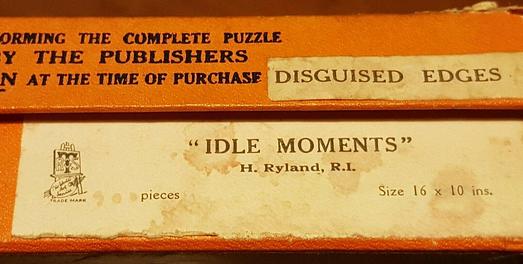
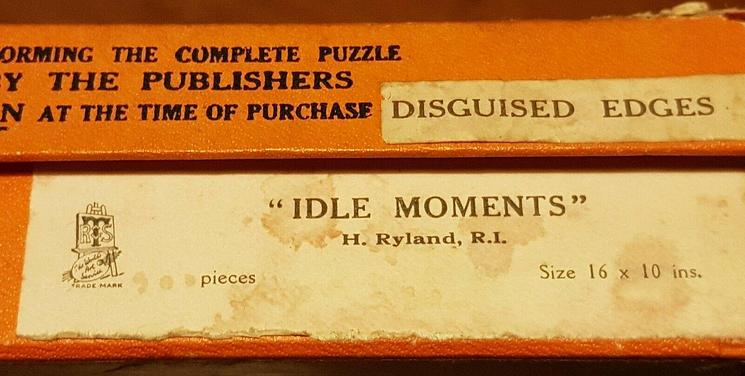
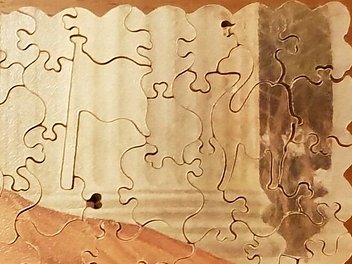
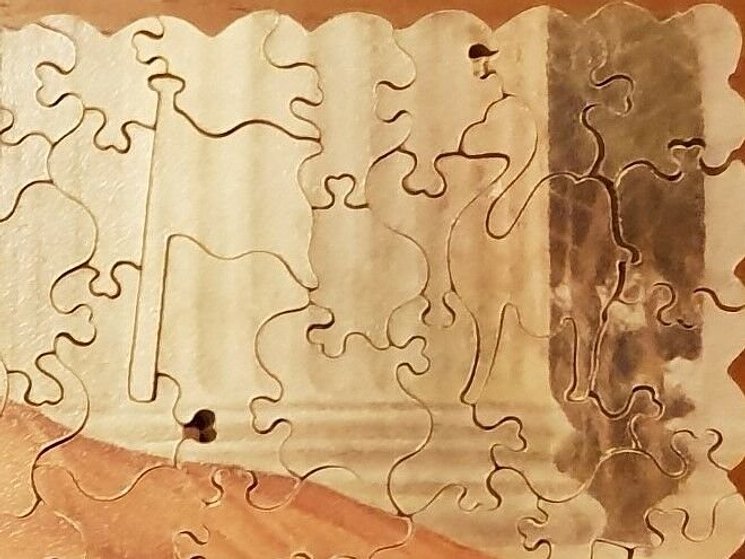
315 pieces, includes 36 whimsies, DISGUISED EDGES
|
|
|
|
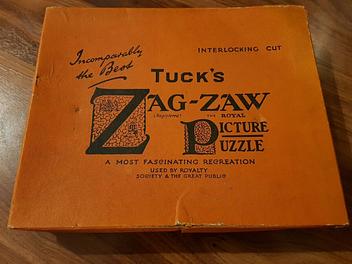
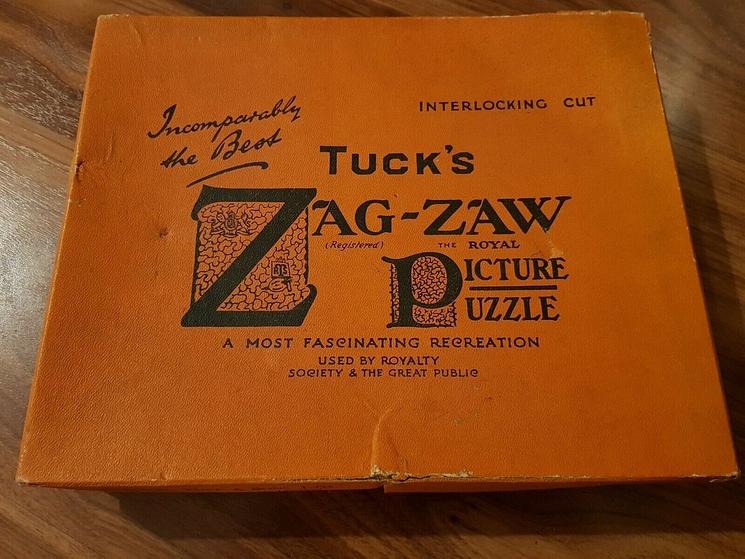
Zag-Zaw line of puzzles was first produced in 1909, most incorporate figurals or whimsies, sold in red, orange, or occasionally green boxes with labels on the side or bottom of the box, most without guide pictures. Initially cut non-interlocking but by 1930's became more so. Puzzles have a different cuts so that the same image will come in several versions which means that missing pieces can not be taken from other puzzles with the same image. The puzzle labels are often hand written and come with minor variations in titles and details. Some have a DESIGN category on the label. From my readings this refers to the style of cut, wavy lines, figurals, etc. See also Bob Armstrong's website on old jigsaw puzzles
|
HENRY RYLAND
|
|
16 x 10 in.
|
|
|
| |||
| 25675 |








|
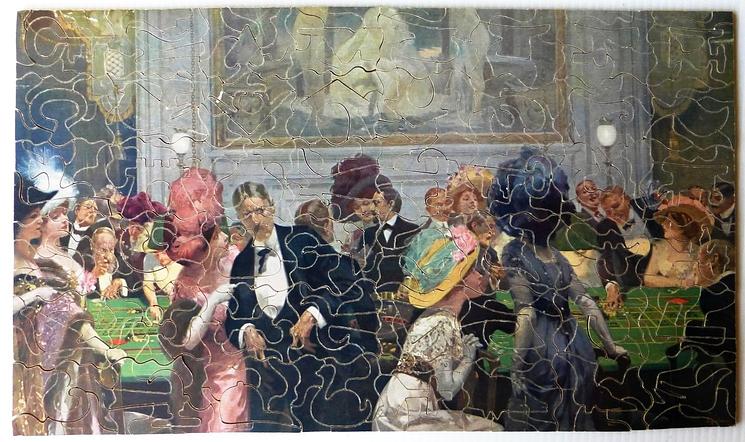
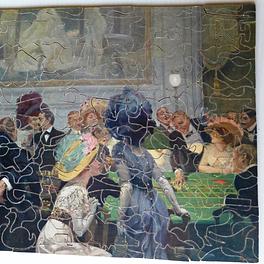
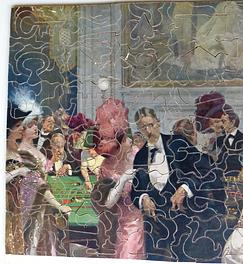
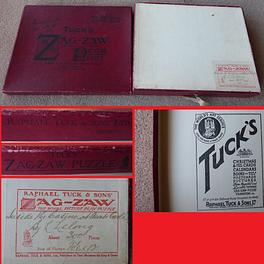
300 pieces
|
|
|
|
Zag-Zaw line of puzzles was first produced in 1909, most incorporate figurals or whimsies, sold in red, orange, or occasionally green boxes with labels on the side or bottom of the box, most without guide pictures. Initially cut non-interlocking but by 1930's became more so. Puzzles have a different cuts so that the same image will come in several versions which means that missing pieces can not be taken from other puzzles with the same image. The puzzle labels are often hand written and come with minor variations in titles and details. Some have a DESIGN category on the label. From my readings this refers to the style of cut, wavy lines, figurals, etc. See also Bob Armstrong's website on old jigsaw puzzles
|
|
|
20.5 x 12 in.
|
|
|
| |||
| 25676 |










|
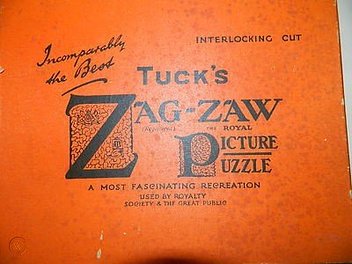
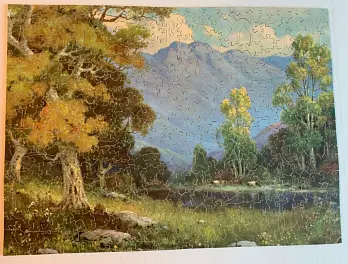
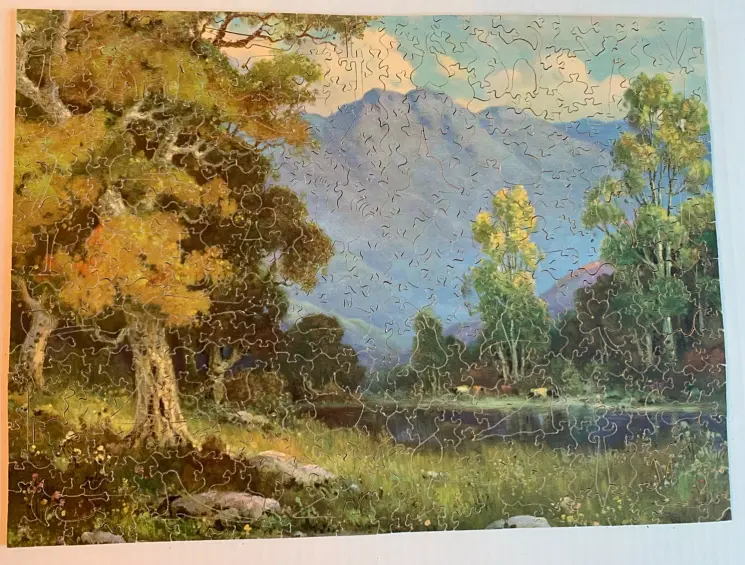
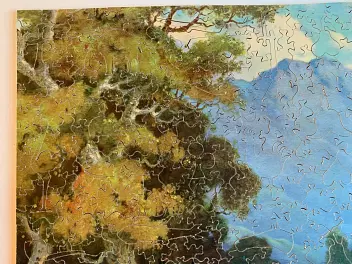
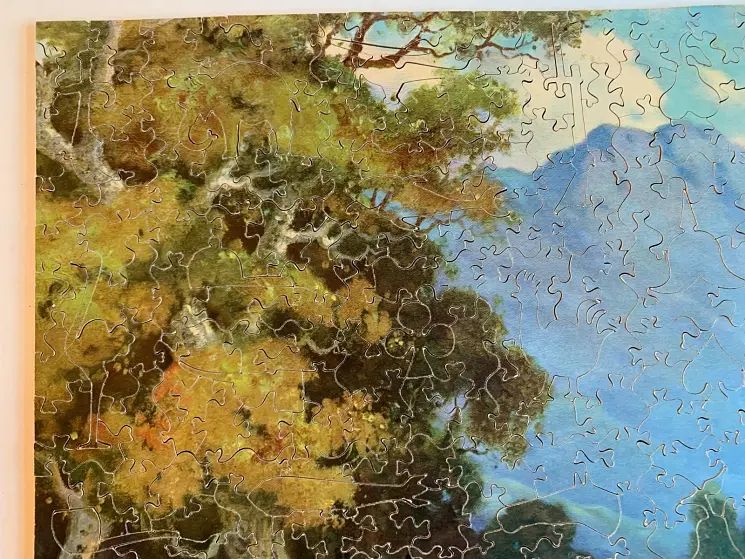
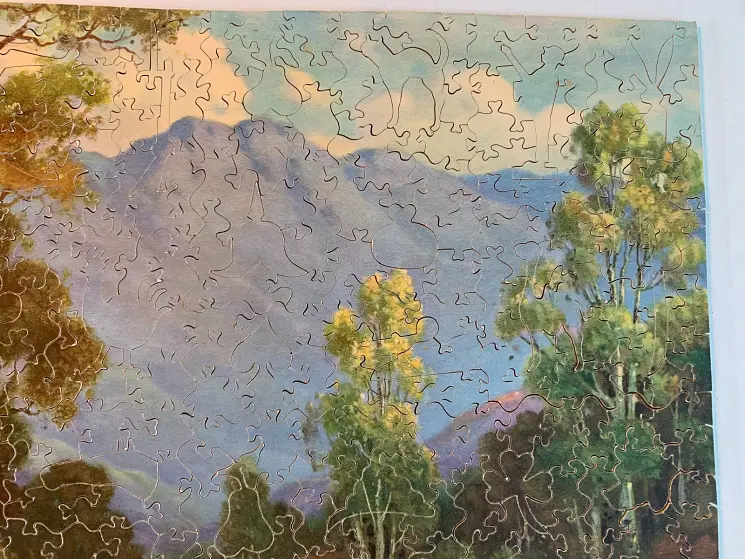
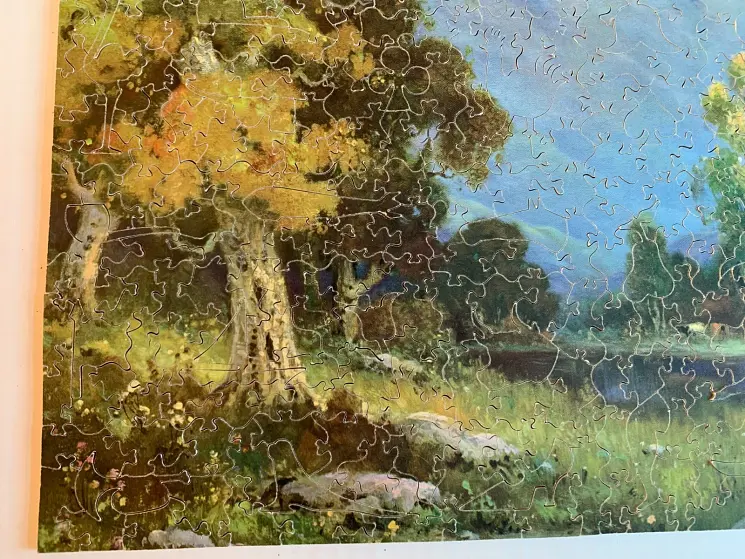
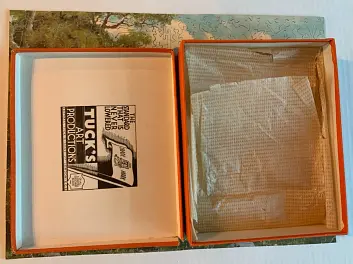
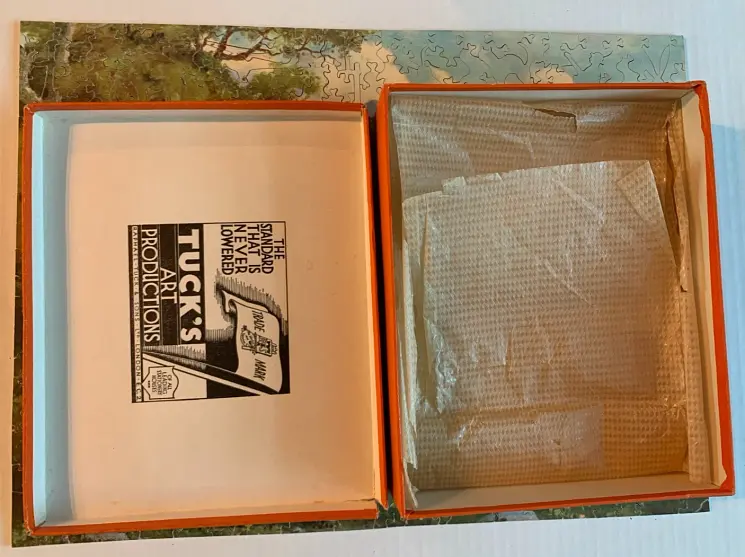
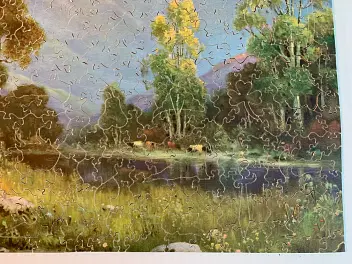
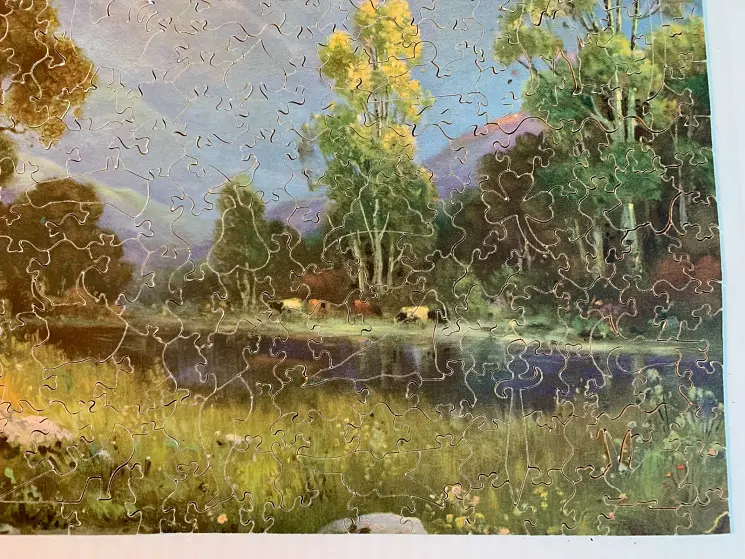
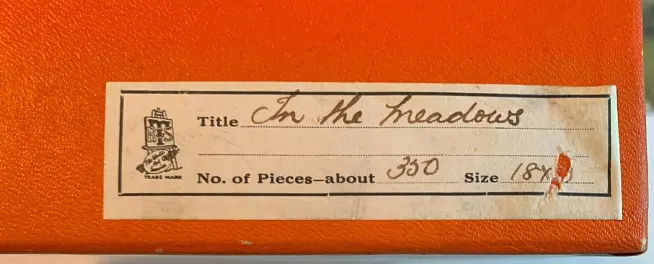
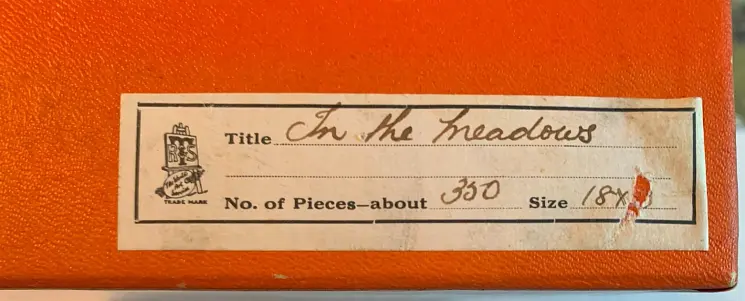
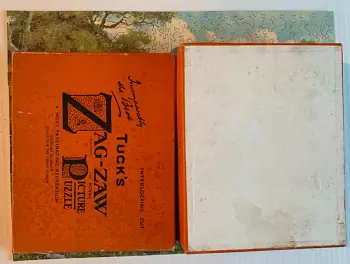
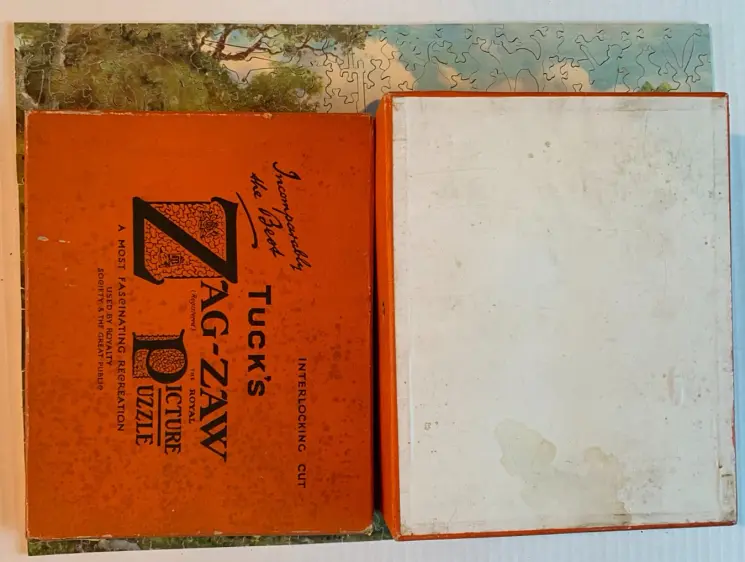
about 350 pieces, wooden, figurals, complete with box, interlocking in style
|
|
|
|
Zag-Zaw line of puzzles was first produced in 1909, most incorporate figurals or whimsies, sold in red, orange, or occasionally green boxes with labels on the side or bottom of the box, most without guide pictures. Initially cut non-interlocking but by 1930's became more so. Puzzles have a different cuts so that the same image will come in several versions which means that missing pieces can not be taken from other puzzles with the same image. The puzzle labels are often hand written and come with minor variations in titles and details. Some have a DESIGN category on the label. From my readings this refers to the style of cut, wavy lines, figurals, etc. See also Bob Armstrong's website on old jigsaw puzzles
|
|
|
18 x 13 1/4 in. or 46 x 33.5 cm
|
|
|
| |||
| 25677 |



|
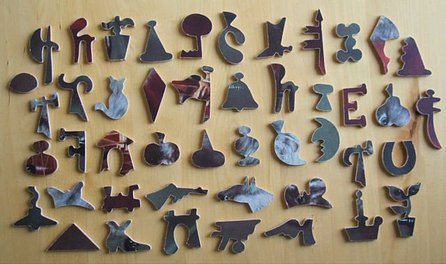
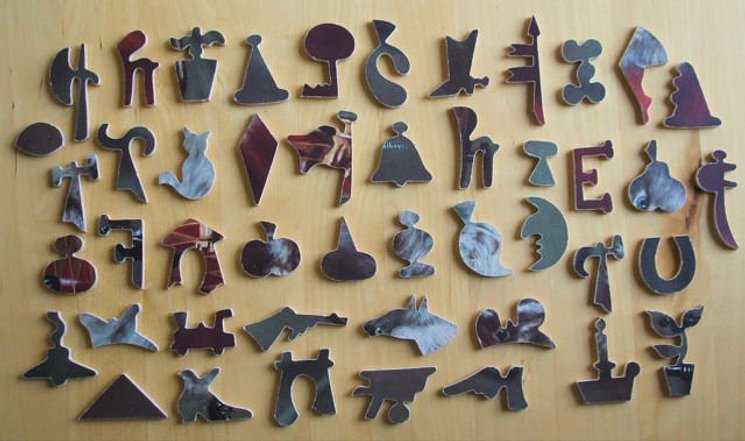
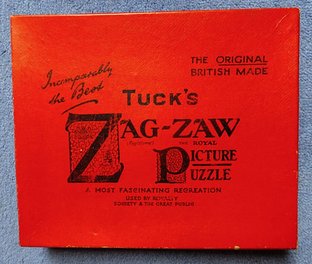
300 pieces, several whimsies
|
|
|
|
Zag-Zaw line of puzzles was first produced in 1909, most incorporate figurals or whimsies, sold in red, orange, or occasionally green boxes with labels on the side or bottom of the box, most without guide pictures. Initially cut non-interlocking but by 1930's became more so. Puzzles have a different cuts so that the same image will come in several versions which means that missing pieces can not be taken from other puzzles with the same image. The puzzle labels are often hand written and come with minor variations in titles and details. Some have a DESIGN category on the label. From my readings this refers to the style of cut, wavy lines, figurals, etc. See also Bob Armstrong's website on old jigsaw puzzles
|
A. AUGUSTA TALBOYS
|
|
17.5 x 11.5 in
|
|
|
| |||
| 25678 |








|
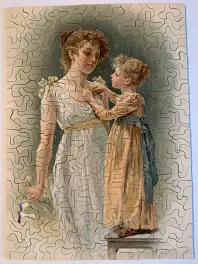
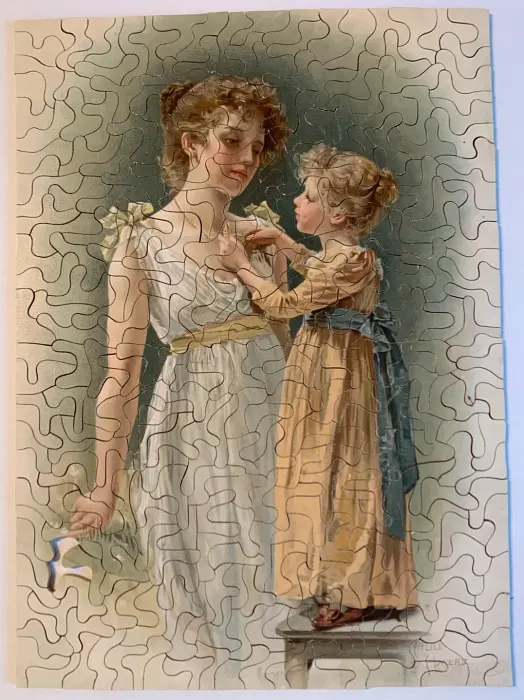
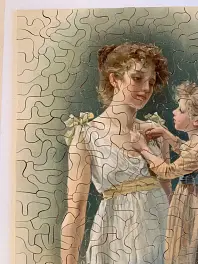
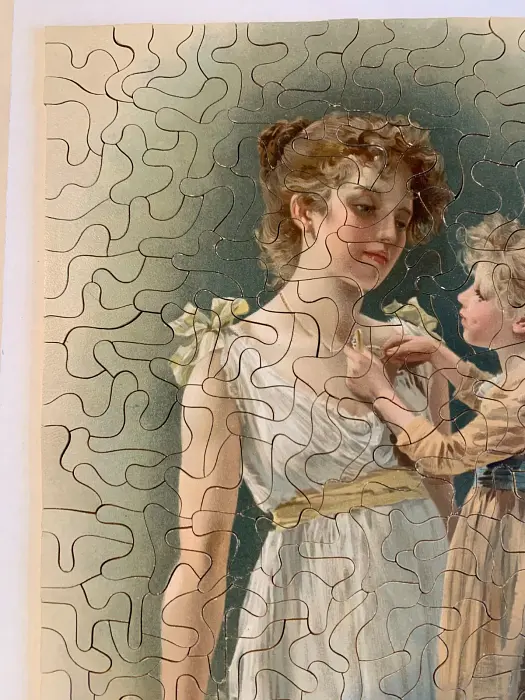
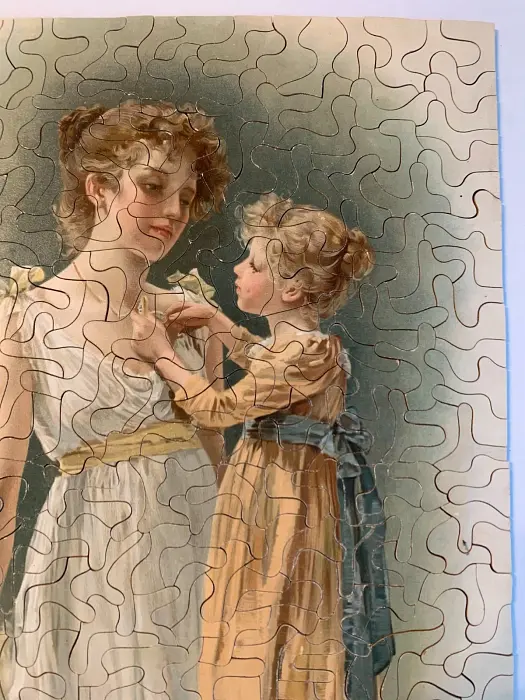
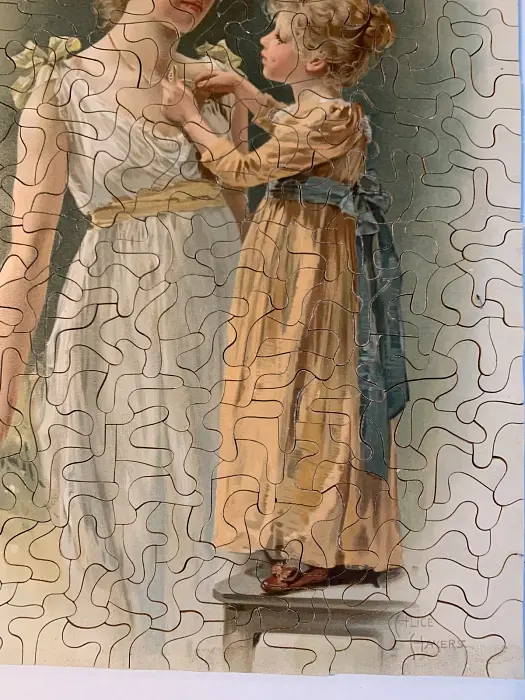
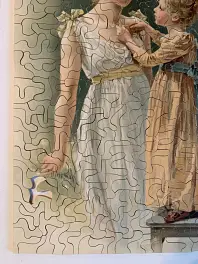
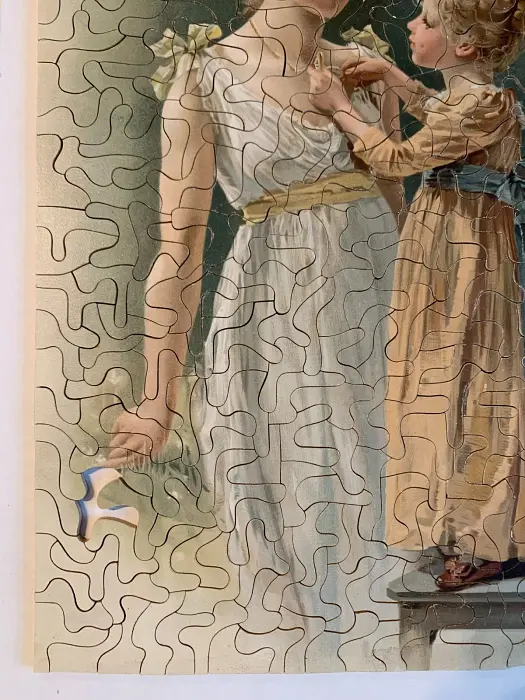
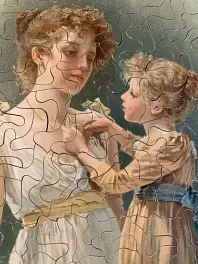
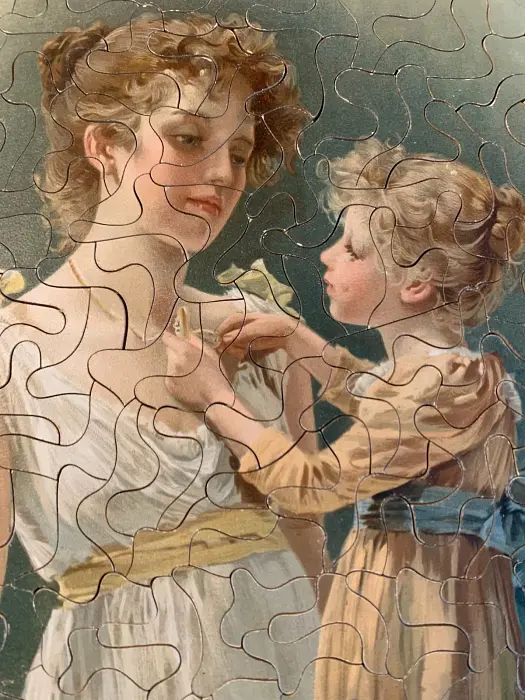
image of a glamourous woman standing beside a small girl standing on a table and looking inside her locket necklace
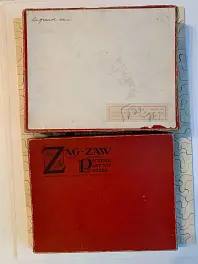
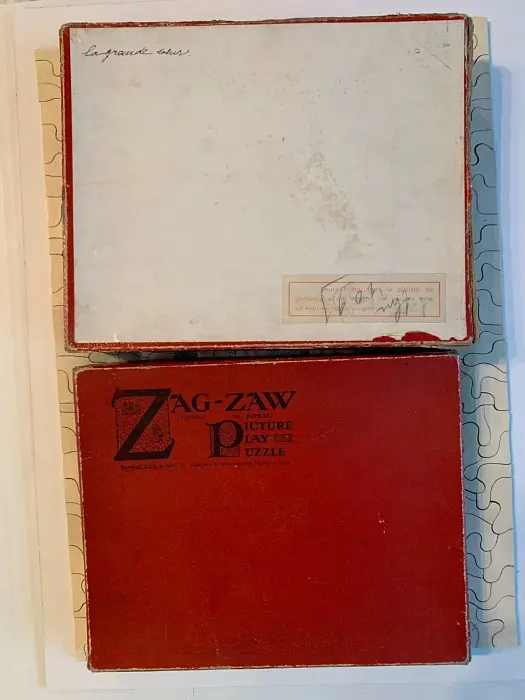
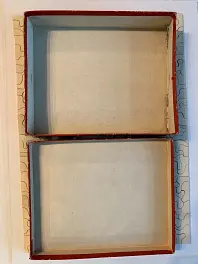
wooden, 300 pieces counted, wavy cut push fit in style, no figurals, with box
|
|
|
|
Zag-Zaw line of puzzles was first produced in 1909, most incorporate figurals or whimsies, sold in red, orange, or occasionally green boxes with labels on the side or bottom of the box, most without guide pictures. Initially cut non-interlocking but by 1930's became more so. Puzzles have a different cuts so that the same image will come in several versions which means that missing pieces can not be taken from other puzzles with the same image. The puzzle labels are often hand written and come with minor variations in titles and details. Some have a DESIGN category on the label. From my readings this refers to the style of cut, wavy lines, figurals, etc. See also Bob Armstrong's website on old jigsaw puzzles
|
ALICE HAVERS, signed on the bottom right corner of the puzzle
|
|
13/4 x 17 3/4 in. or 32 x 45 cm
|
|
|
| |||
| 25679 |







|
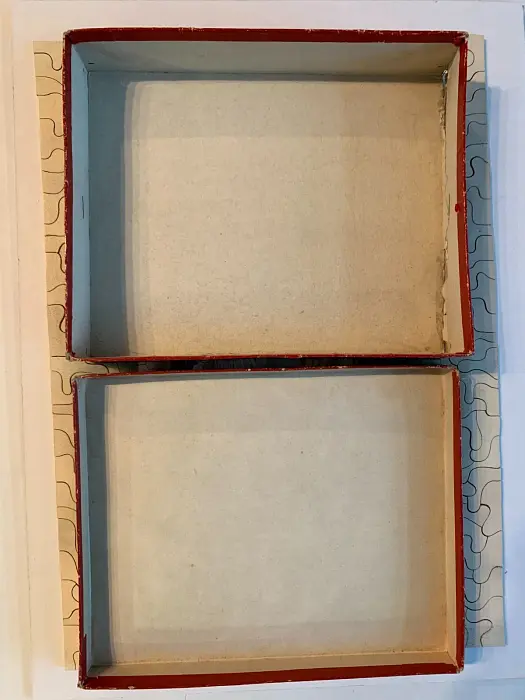
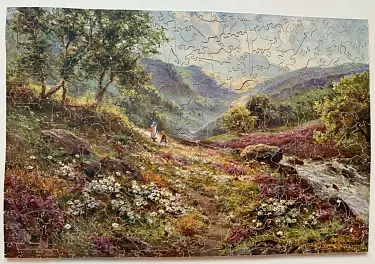
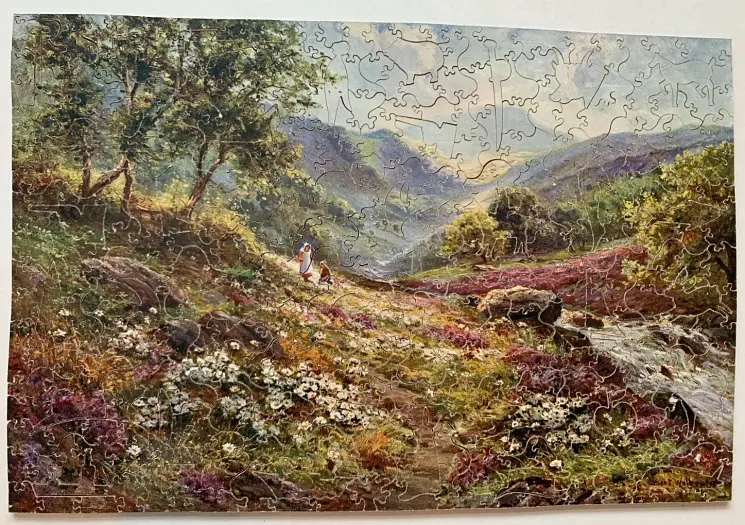
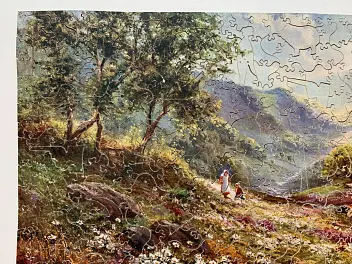
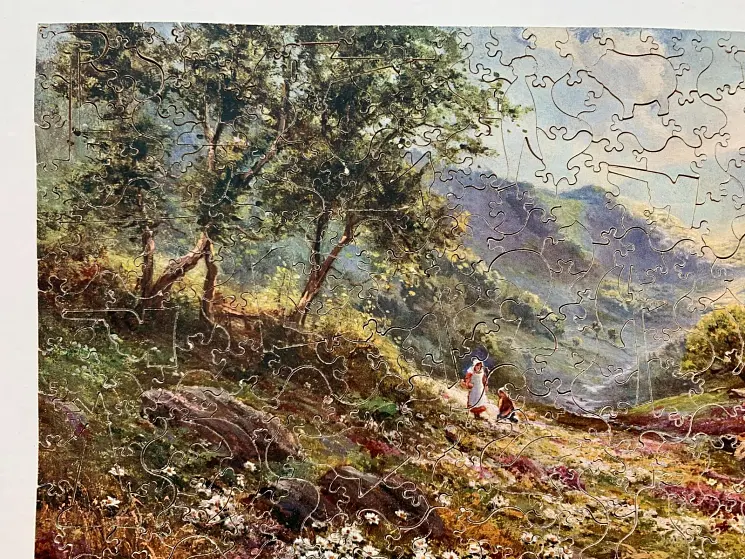
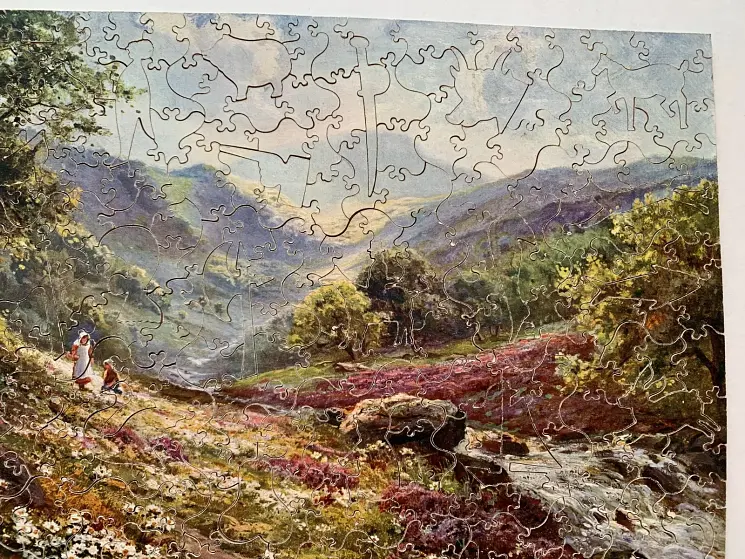
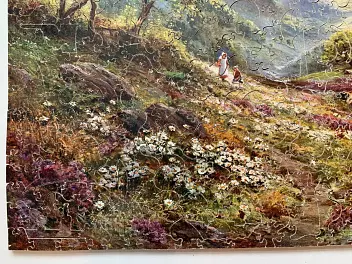
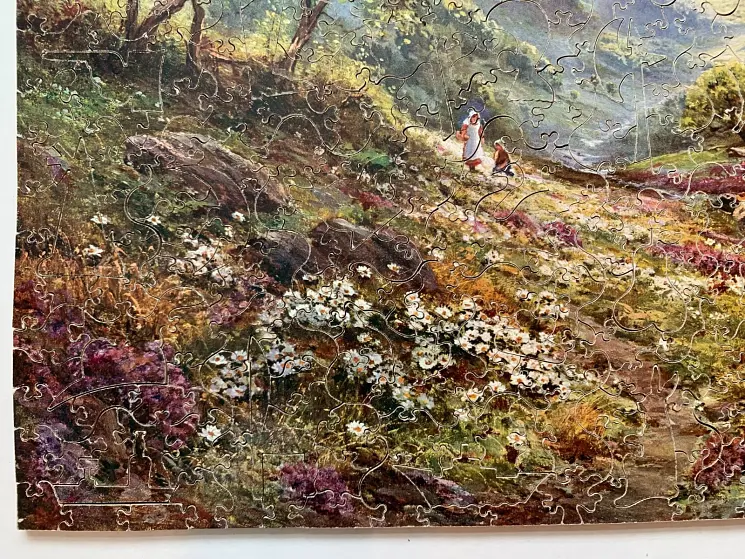
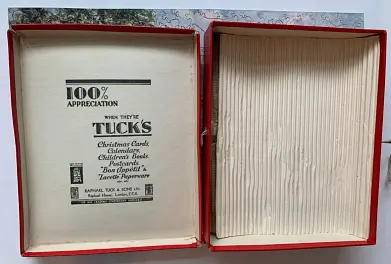
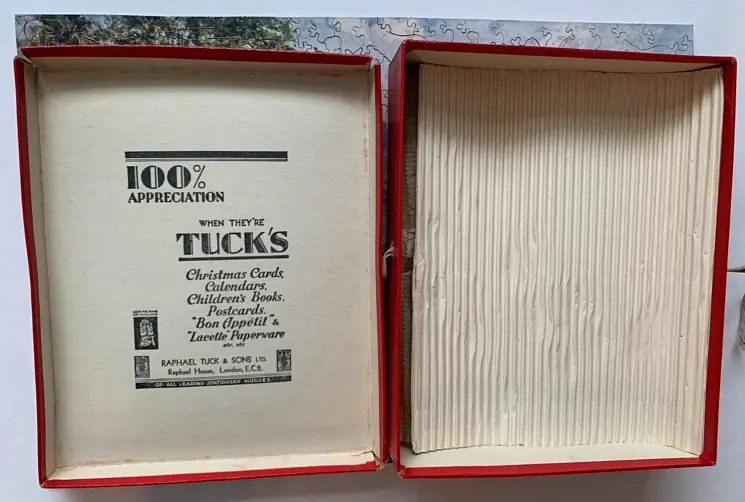
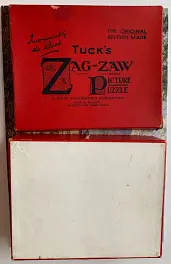
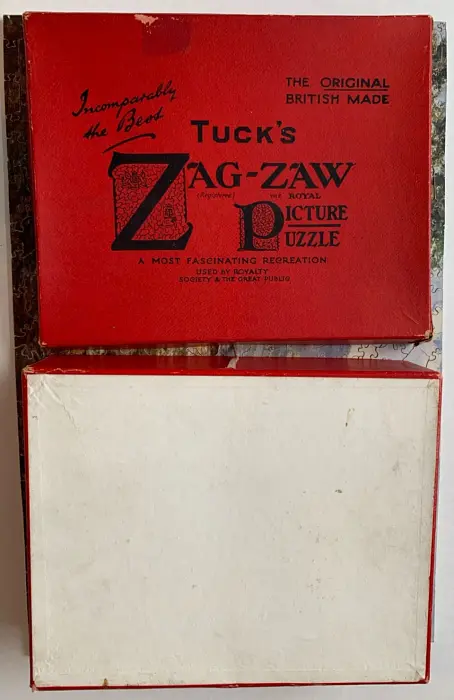
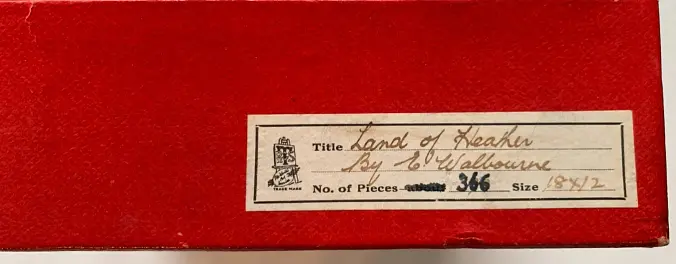
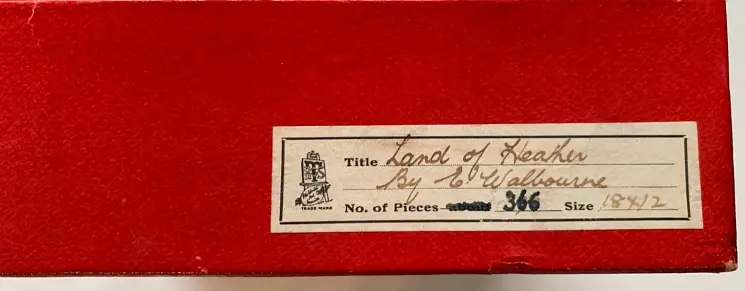
366 pieces, wooden, complete with box, figurals, interlocking in style
also comes titled THE LAND OF HEATHER
|
|
|
|
Zag-Zaw line of puzzles was first produced in 1909, most incorporate figurals or whimsies, sold in red, orange, or occasionally green boxes with labels on the side or bottom of the box, most without guide pictures. Initially cut non-interlocking but by 1930's became more so. Puzzles have a different cuts so that the same image will come in several versions which means that missing pieces can not be taken from other puzzles with the same image. The puzzle labels are often hand written and come with minor variations in titles and details. Some have a DESIGN category on the label. From my readings this refers to the style of cut, wavy lines, figurals, etc. See also Bob Armstrong's website on old jigsaw puzzles
|
|
E. WALBOURNE
|
|
17 3/4 x 11 3/4 inches or 45 x 30 cm
|
|
|
| ||
| 25680 |


|
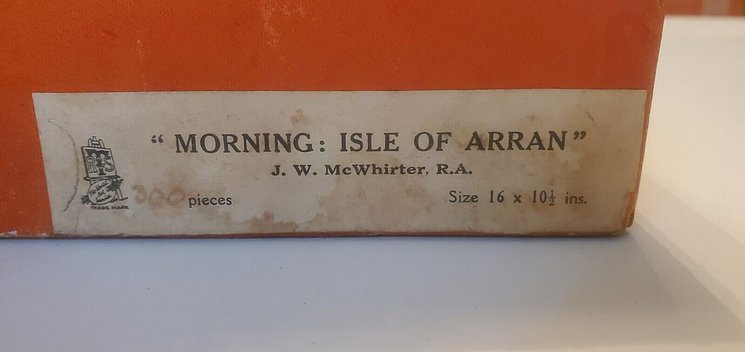
300 pieces, several whimsies, push fit, this copy has only about half of its pieces
|
|
|
|
Zag-Zaw line of puzzles was first produced in 1909, most incorporate figurals or whimsies, sold in red, orange, or occasionally green boxes with labels on the side or bottom of the box, most without guide pictures. Initially cut non-interlocking but by 1930's became more so. Puzzles have a different cuts so that the same image will come in several versions which means that missing pieces can not be taken from other puzzles with the same image. The puzzle labels are often hand written and come with minor variations in titles and details. Some have a DESIGN category on the label. From my readings this refers to the style of cut, wavy lines, figurals, etc. See also Bob Armstrong's website on old jigsaw puzzles
|
J. W. MCWHIRTER, R. A.
|
|
16 x 10 1/2 in
|
|
|
|