All Items
27,432 items
|
Title
|
Images
|
Item Comment
|
Prefix
|
Number
|
In set
|
Set
|
Set Comment
|
Type
|
Artist
|
Author
|
Size
|
Topics
|
Set Covers
|
Reference
| |
|---|---|---|---|---|---|---|---|---|---|---|---|---|---|---|---|
| 25621 |






|
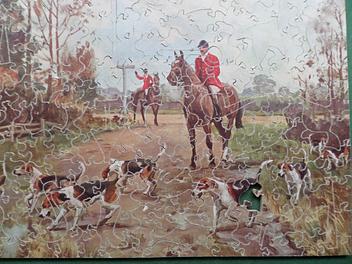
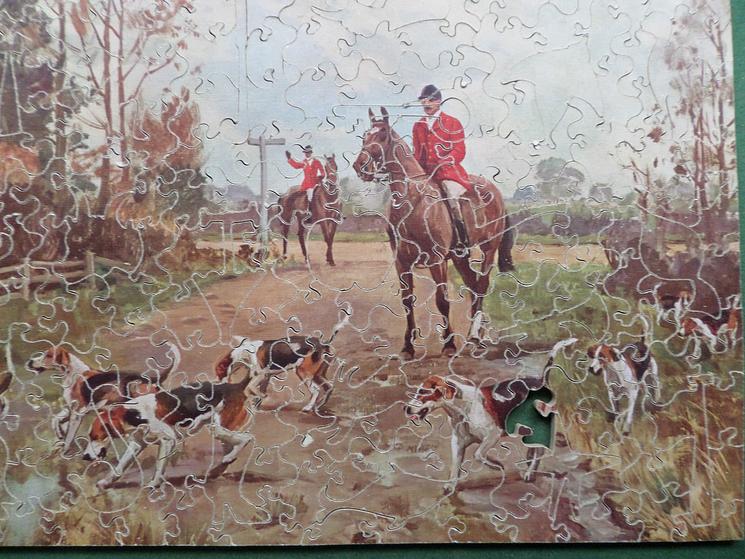
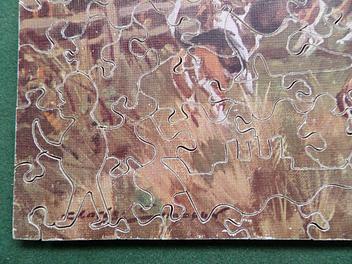
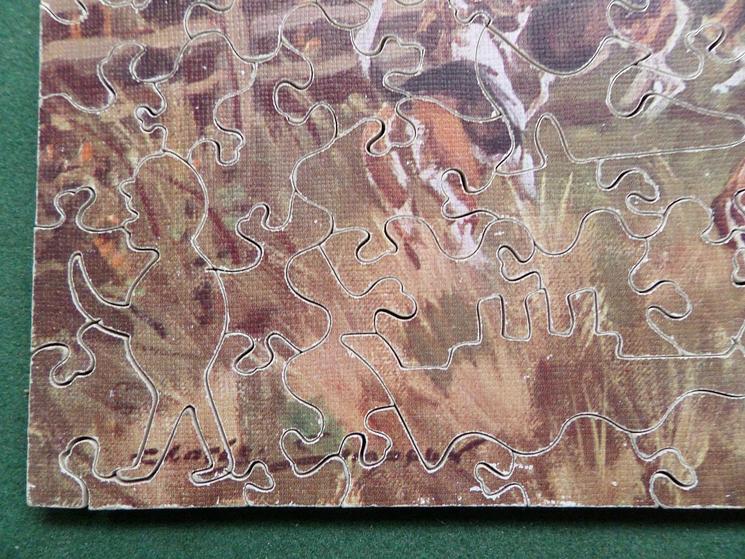
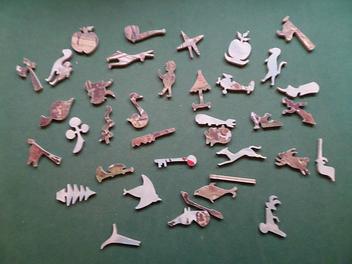
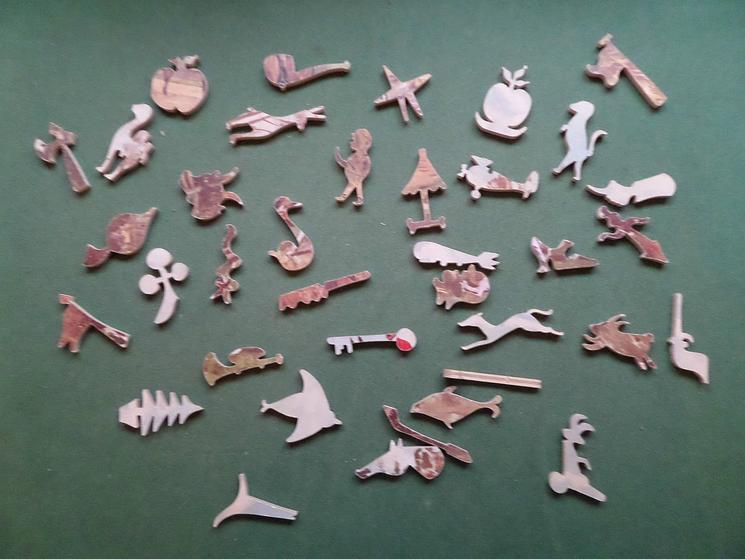
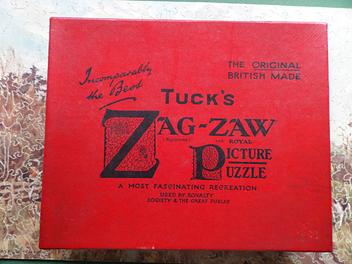
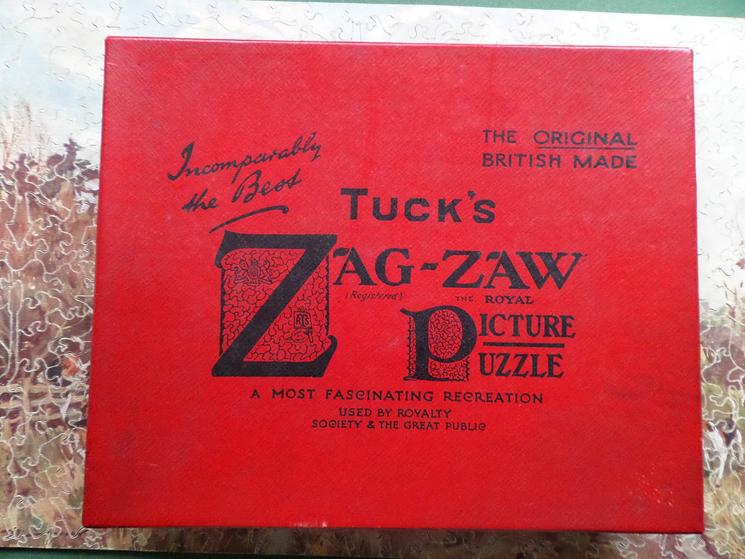
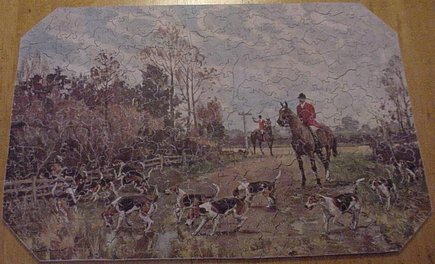
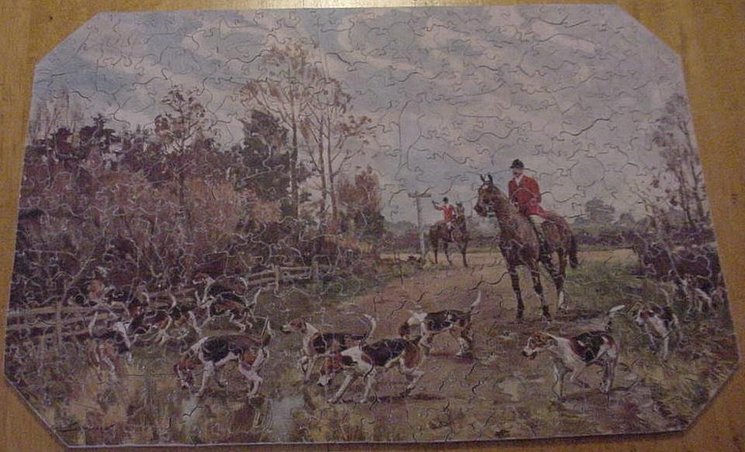
370 pieces, one piece missing, several whimsies, also comes titled THE CHECK AT THE CROSSROADS
|
|
|
|
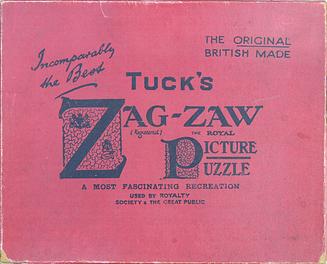
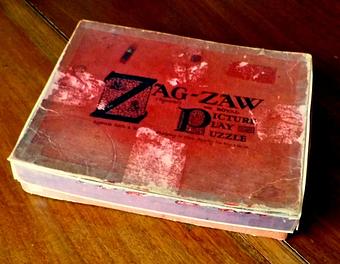
Zag-Zaw line of puzzles was first produced in 1909, most incorporate figurals or whimsies, sold in red, orange, or occasionally green boxes with labels on the side or bottom of the box, most without guide pictures. Initially cut non-interlocking but by 1930's became more so. Puzzles have a different cuts so that the same image will come in several versions which means that missing pieces can not be taken from other puzzles with the same image. The puzzle labels are often hand written and come with minor variations in titles and details. Some have a DESIGN category on the label. From my readings this refers to the style of cut, wavy lines, figurals, etc. See also Bob Armstrong's website on old jigsaw puzzles
|
C. SIMPSON
|
|
18 x 12 in.
|
|
|
| |||
| 25622 |




|
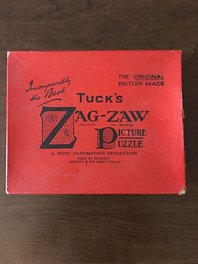
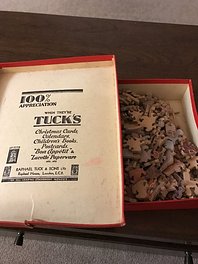
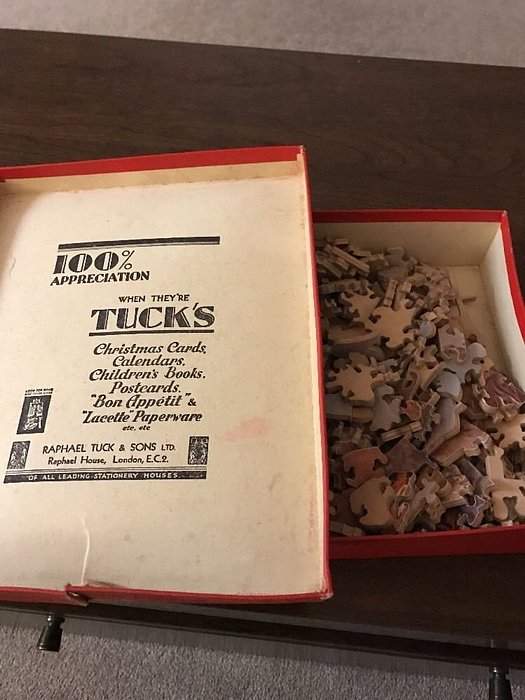
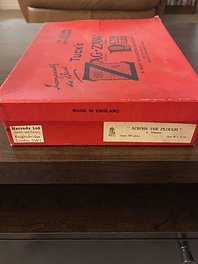
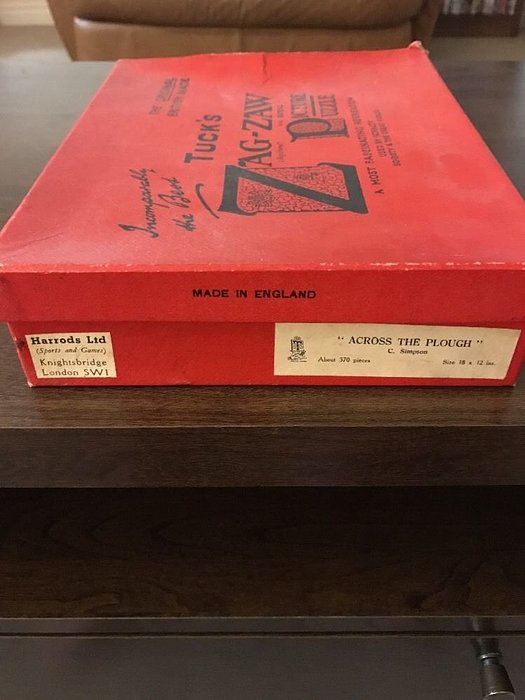
about 370 pieces, has a sticker for HARRODS LTD. (SPORTS AND GAME) KNIGHTSBRIDGE LONDON SWI. not sure if complete
|
|
|
|
Zag-Zaw line of puzzles was first produced in 1909, most incorporate figurals or whimsies, sold in red, orange, or occasionally green boxes with labels on the side or bottom of the box, most without guide pictures. Initially cut non-interlocking but by 1930's became more so. Puzzles have a different cuts so that the same image will come in several versions which means that missing pieces can not be taken from other puzzles with the same image. The puzzle labels are often hand written and come with minor variations in titles and details. Some have a DESIGN category on the label. From my readings this refers to the style of cut, wavy lines, figurals, etc. See also Bob Armstrong's website on old jigsaw puzzles
|
C. SIMPSON
|
|
|
|
|
| |||
| 25623 |











|
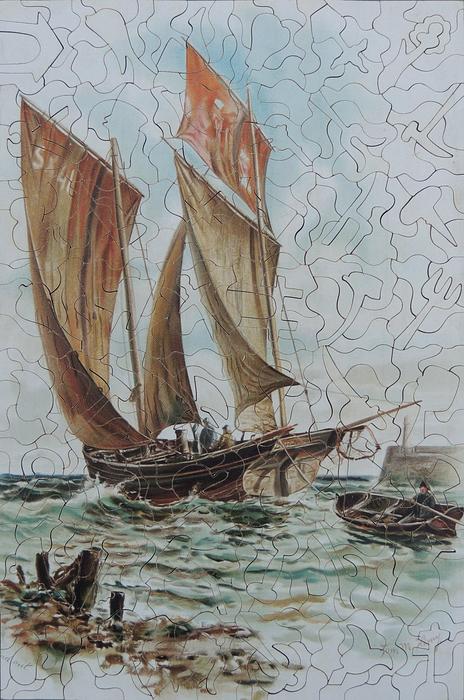
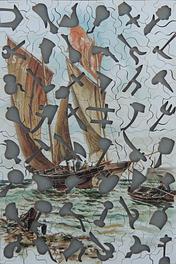
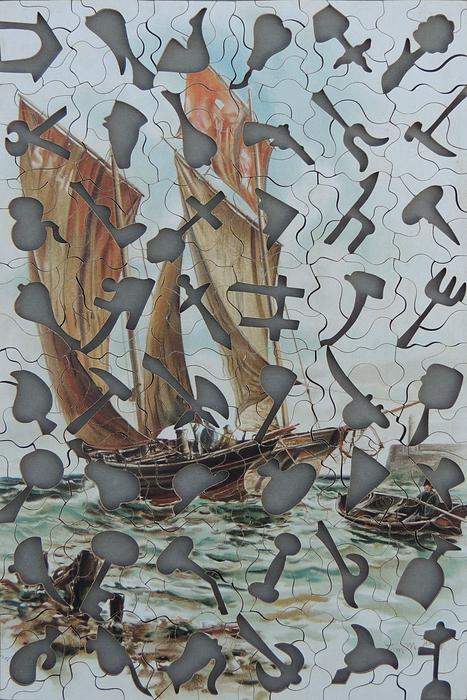
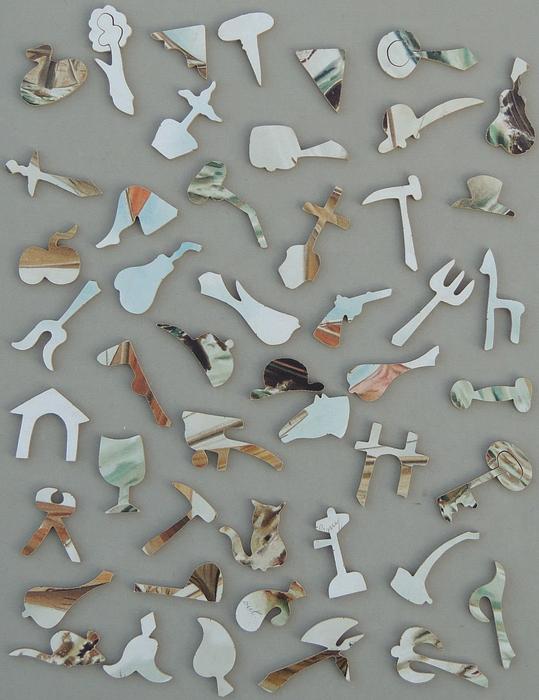
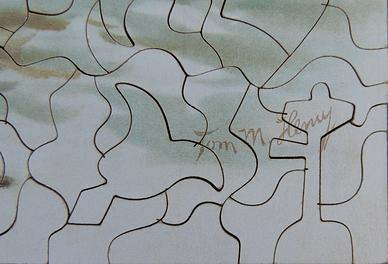
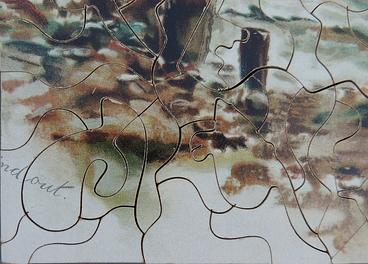
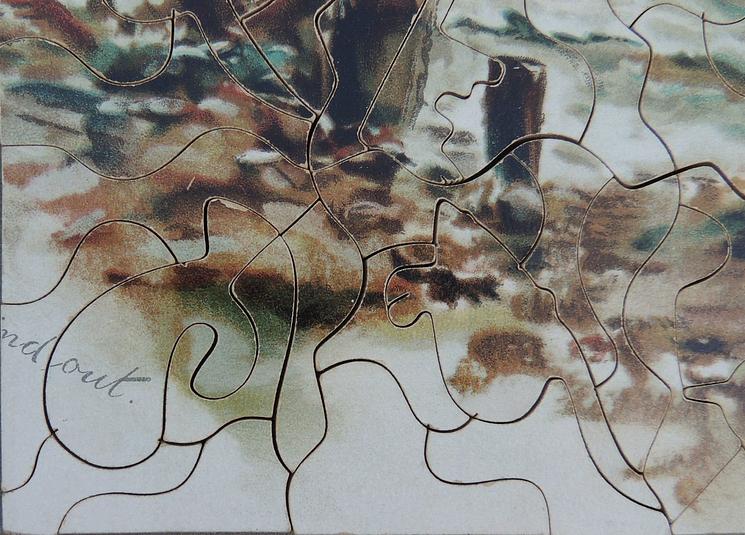
title is known to be "A Fair Wind Out" which appears as a partial title in the lower left corner of the image and is also confirmed within their company catalogues. 300 pieces,48 whimsies, wooden push-fit
|
|
|
|
Zag-Zaw line of puzzles was first produced in 1909, most incorporate figurals or whimsies, sold in red, orange, or occasionally green boxes with labels on the side or bottom of the box, most without guide pictures. Initially cut non-interlocking but by 1930's became more so. Puzzles have a different cuts so that the same image will come in several versions which means that missing pieces can not be taken from other puzzles with the same image. The puzzle labels are often hand written and come with minor variations in titles and details. Some have a DESIGN category on the label. From my readings this refers to the style of cut, wavy lines, figurals, etc. See also Bob Armstrong's website on old jigsaw puzzles
|
TOM M. HENRY
|
|
12 x 18 in.
|
|
|
| |||
| 25624 |



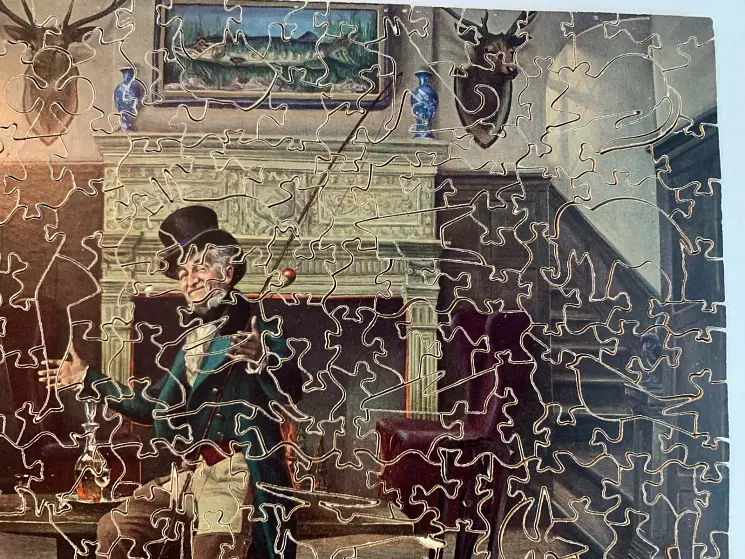

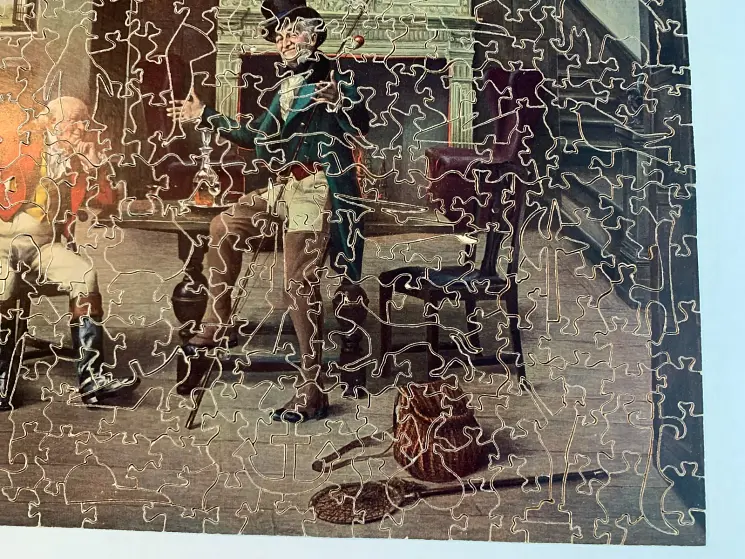

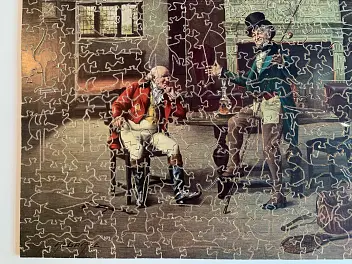




|
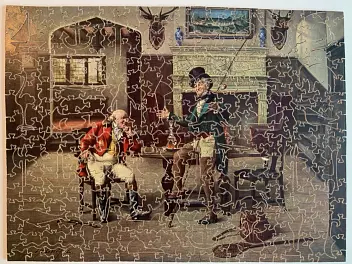
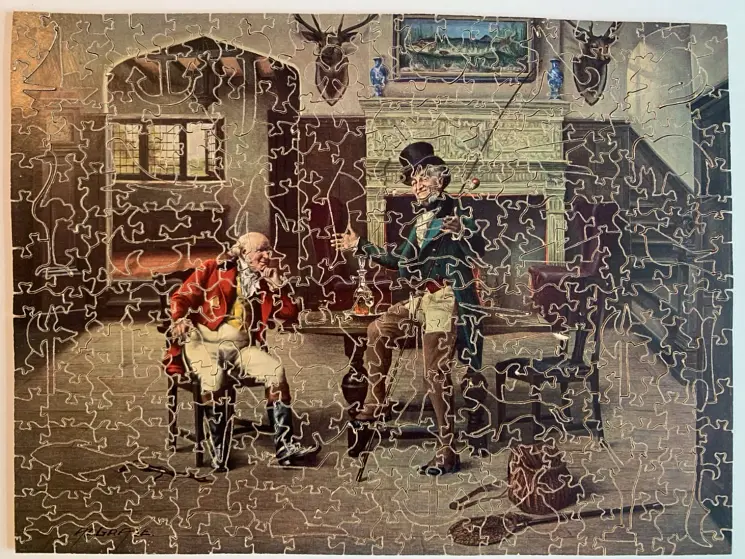
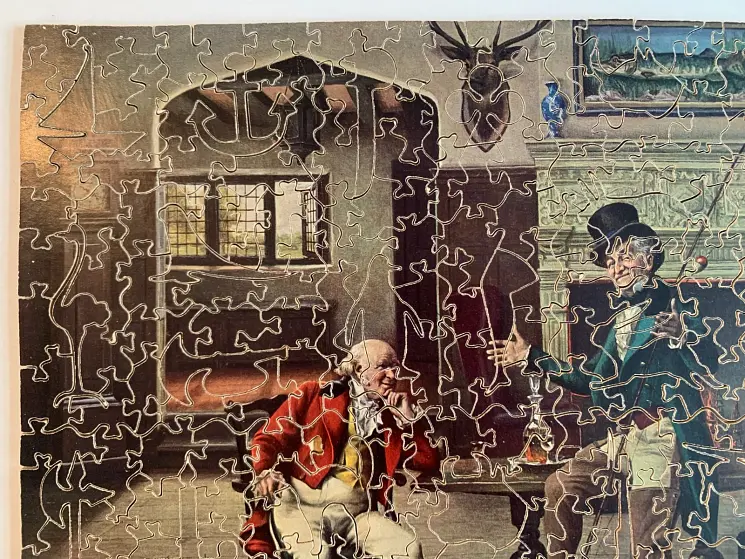
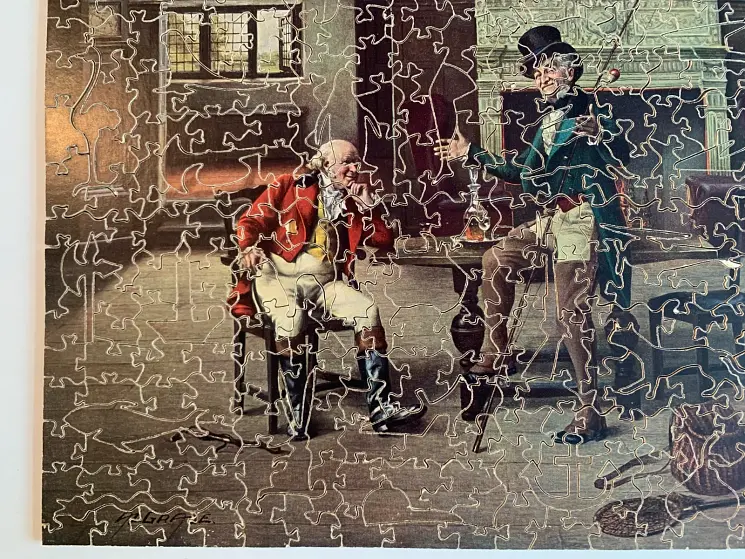
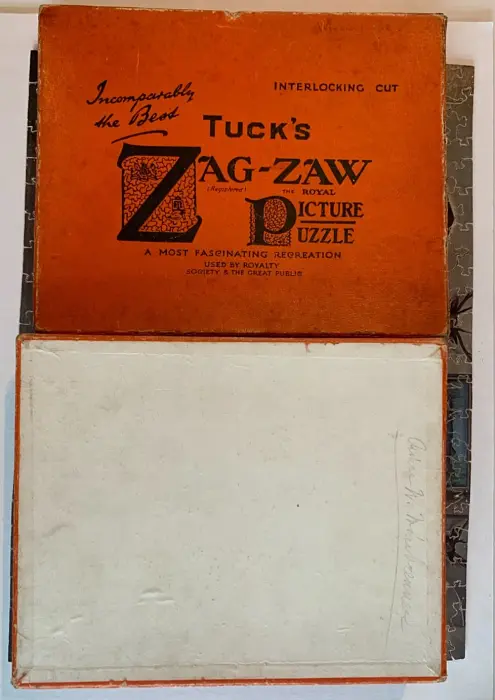
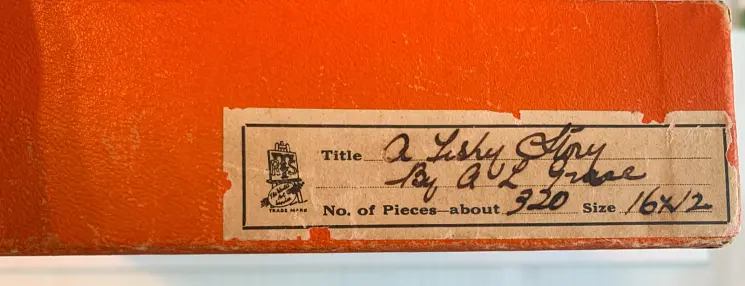
Fishermen reminiscing at table in a hunting or sporting room, large fishing pole, net and creel
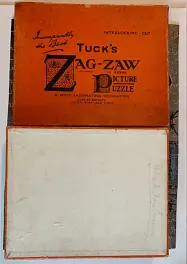
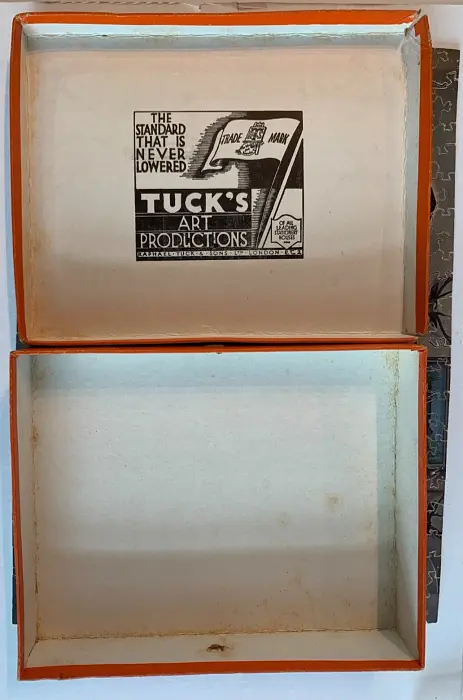
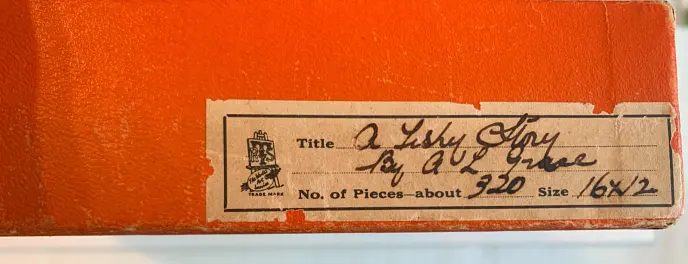
320 piece wooden, figurals, with box, complete,
|
|
|
|
Zag-Zaw line of puzzles was first produced in 1909, most incorporate figurals or whimsies, sold in red, orange, or occasionally green boxes with labels on the side or bottom of the box, most without guide pictures. Initially cut non-interlocking but by 1930's became more so. Puzzles have a different cuts so that the same image will come in several versions which means that missing pieces can not be taken from other puzzles with the same image. The puzzle labels are often hand written and come with minor variations in titles and details. Some have a DESIGN category on the label. From my readings this refers to the style of cut, wavy lines, figurals, etc. See also Bob Armstrong's website on old jigsaw puzzles
|
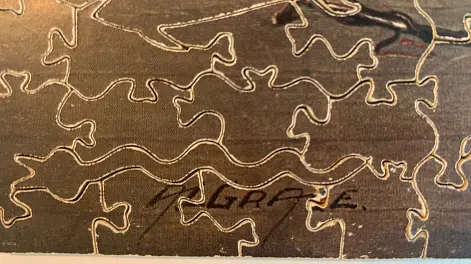
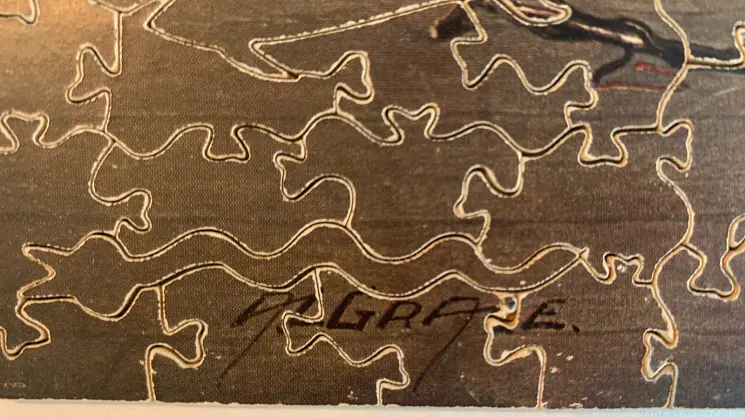
A. L. GRACE
|
|
15 3/4 x 12 in. or 40 x 30 cm
|
|
|
| |||
| 25625 |






|
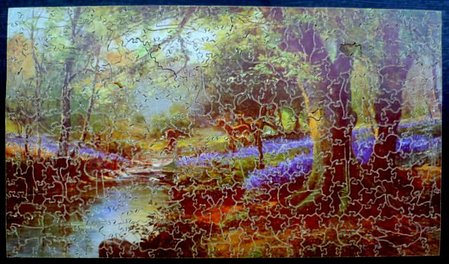
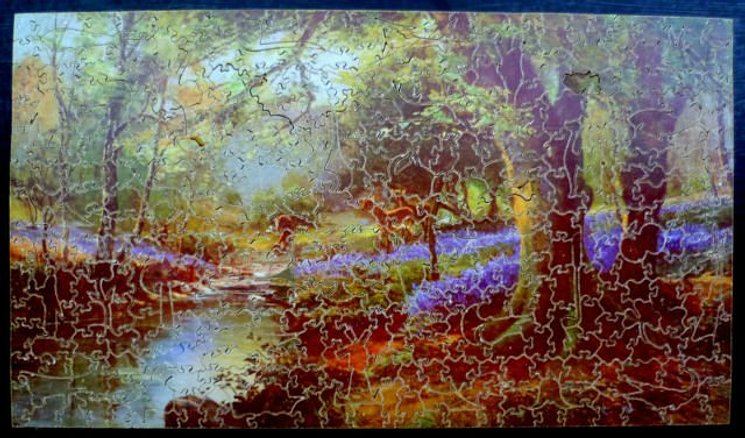
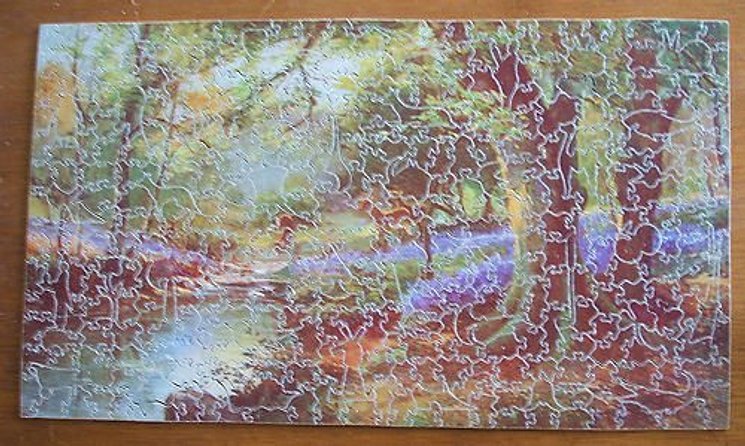
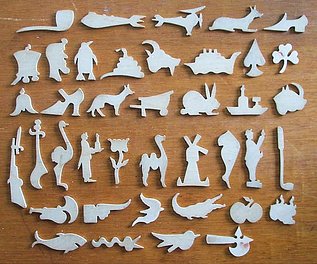
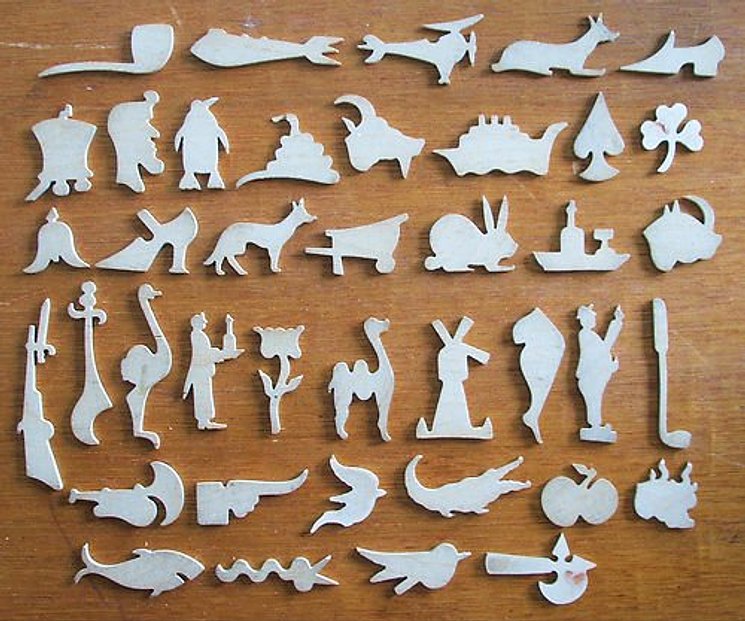
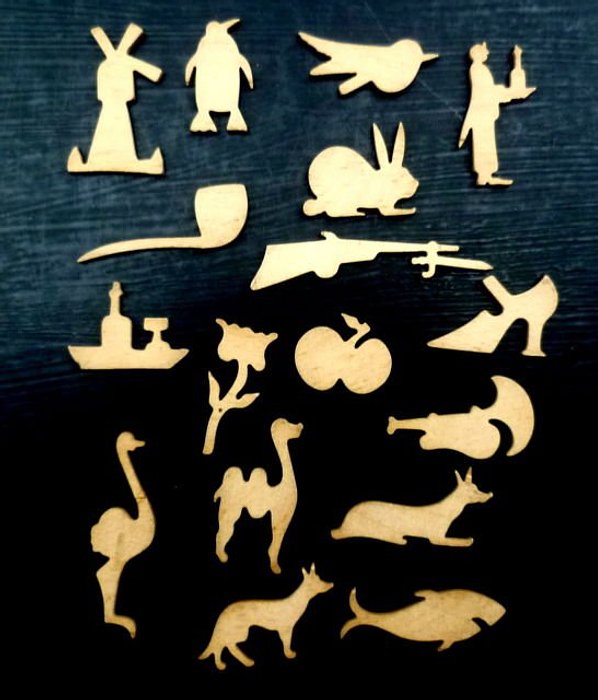
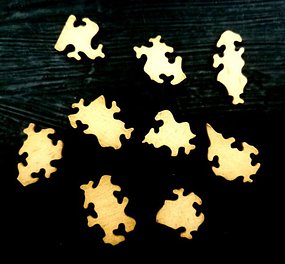
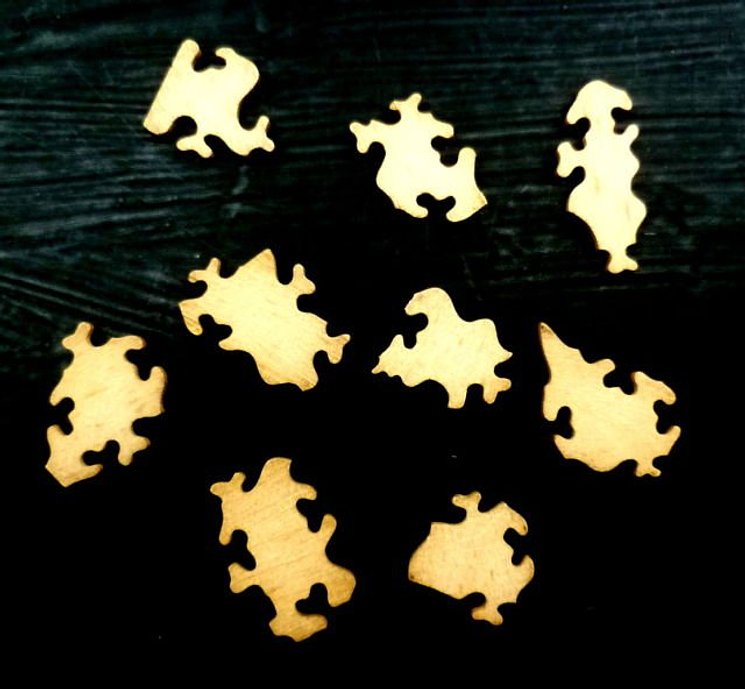
360 pieces, dated 1920's period, several whimsies
|
|
|
|
Zag-Zaw line of puzzles was first produced in 1909, most incorporate figurals or whimsies, sold in red, orange, or occasionally green boxes with labels on the side or bottom of the box, most without guide pictures. Initially cut non-interlocking but by 1930's became more so. Puzzles have a different cuts so that the same image will come in several versions which means that missing pieces can not be taken from other puzzles with the same image. The puzzle labels are often hand written and come with minor variations in titles and details. Some have a DESIGN category on the label. From my readings this refers to the style of cut, wavy lines, figurals, etc. See also Bob Armstrong's website on old jigsaw puzzles
|
|
|
20 x 12 in.
|
|
|
| |||
| 25626 |


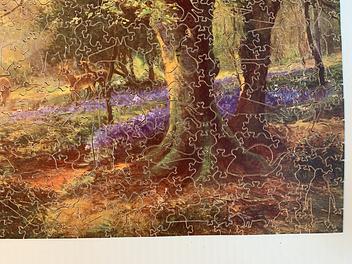
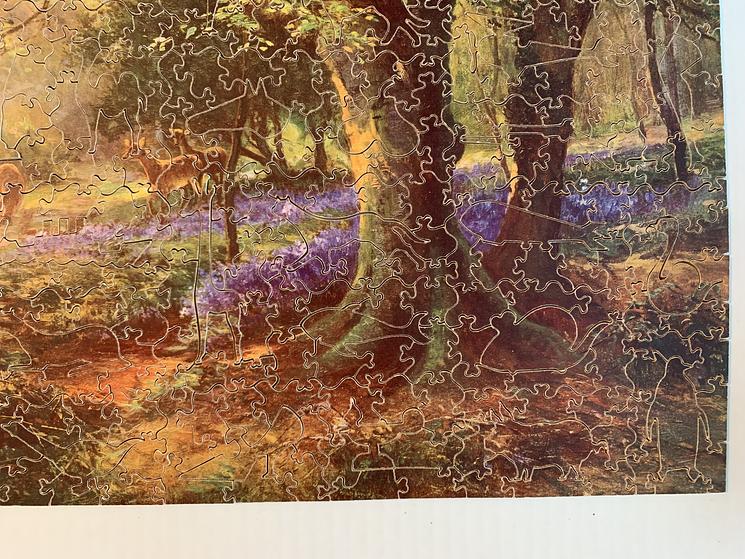

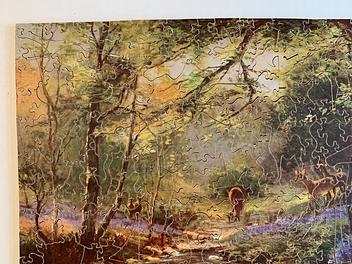
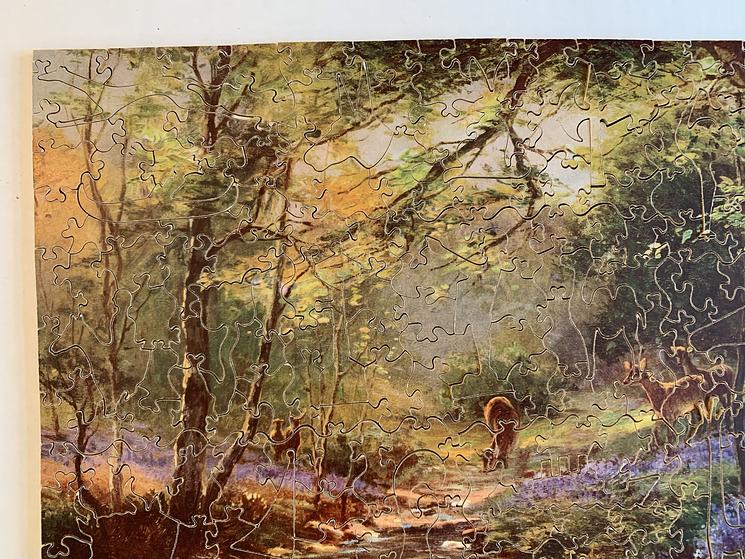




|
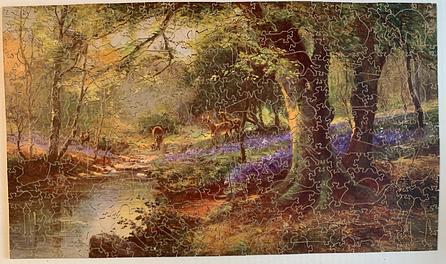
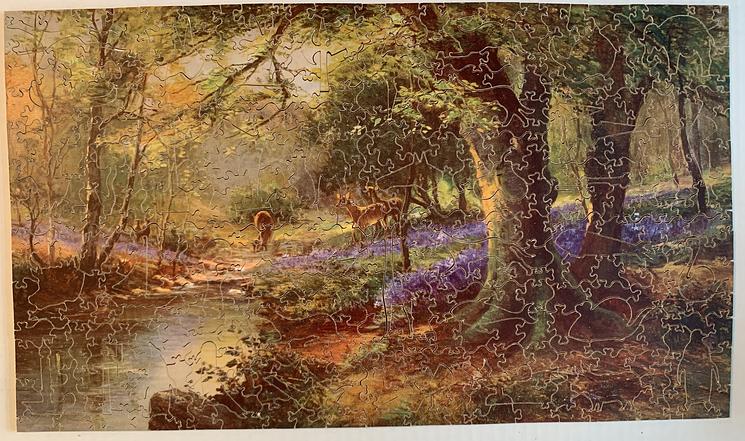
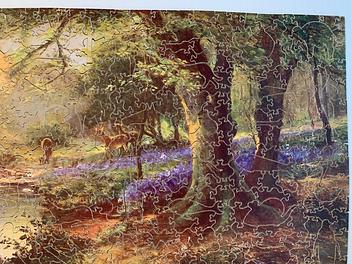
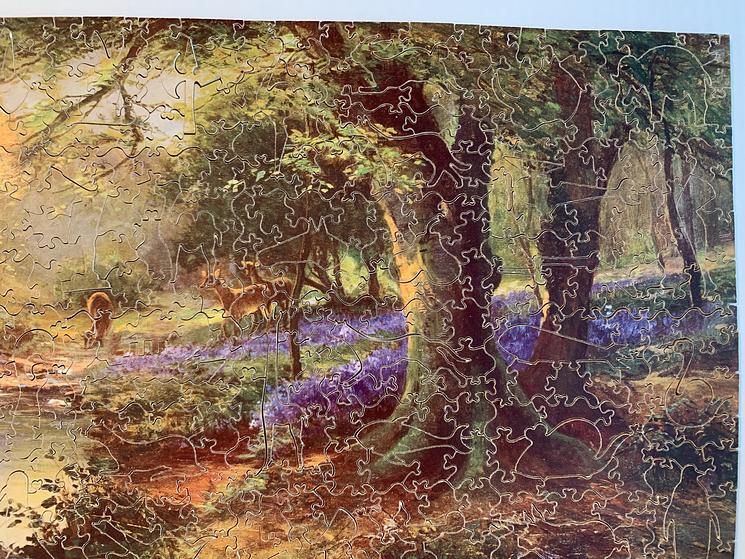
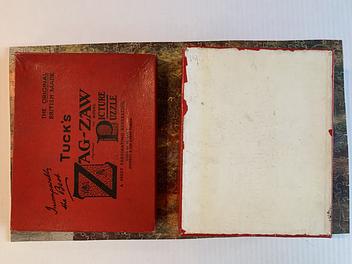
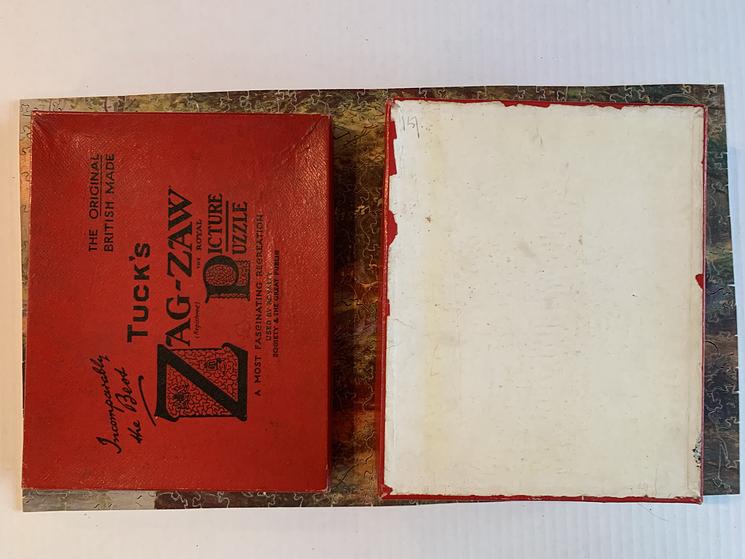
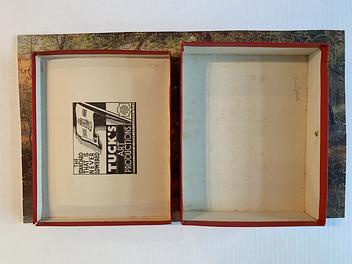
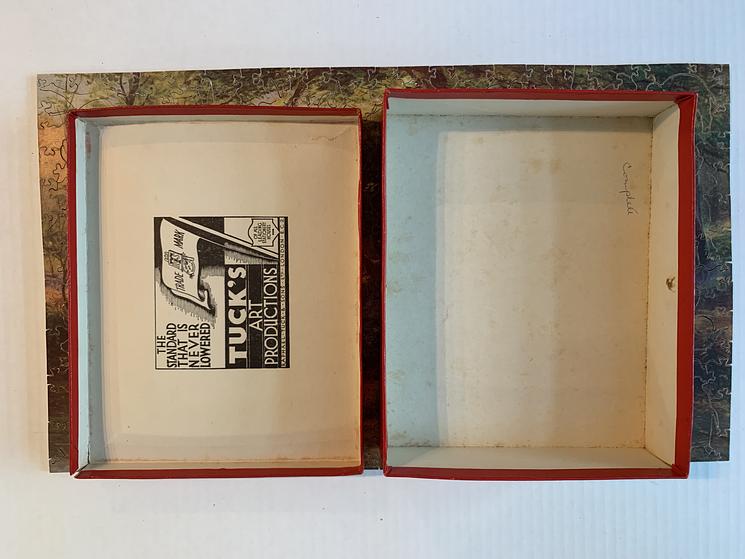
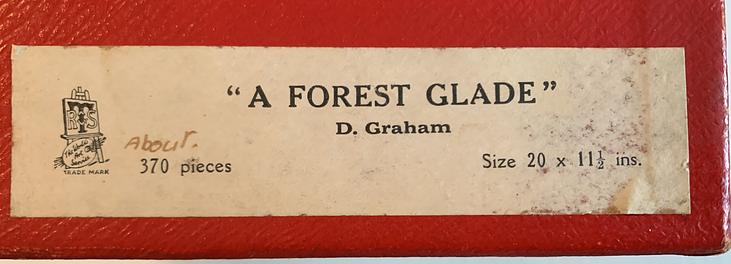
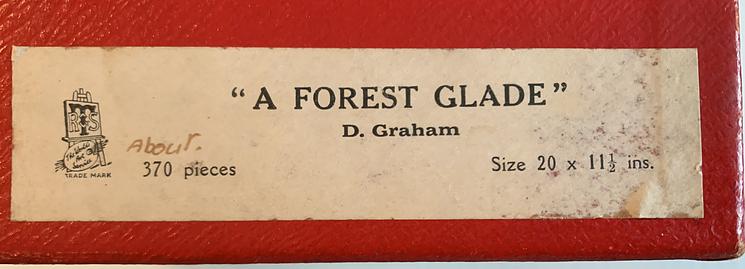
360 pieces, wooden, figurals, interlocking in style, complete with box, described and listed in the catalogs as number 2411,
|
|
|
|
Zag-Zaw line of puzzles was first produced in 1909, most incorporate figurals or whimsies, sold in red, orange, or occasionally green boxes with labels on the side or bottom of the box, most without guide pictures. Initially cut non-interlocking but by 1930's became more so. Puzzles have a different cuts so that the same image will come in several versions which means that missing pieces can not be taken from other puzzles with the same image. The puzzle labels are often hand written and come with minor variations in titles and details. Some have a DESIGN category on the label. From my readings this refers to the style of cut, wavy lines, figurals, etc. See also Bob Armstrong's website on old jigsaw puzzles
|
Douglas Graham listed as artist in catalog
|
|
20 x 12 in.
|
|
|
| |||
| 25627 |










|
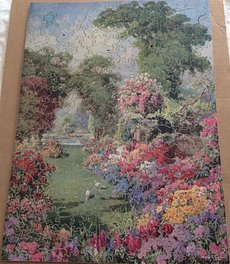
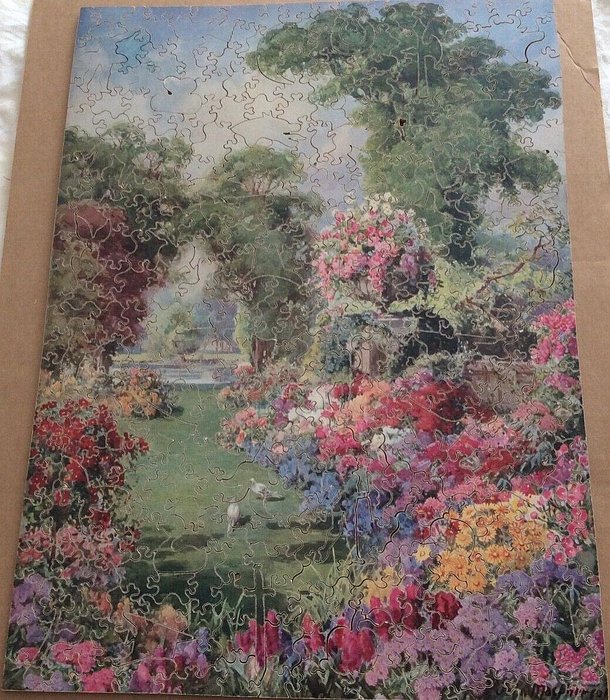
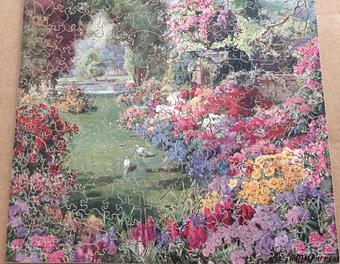
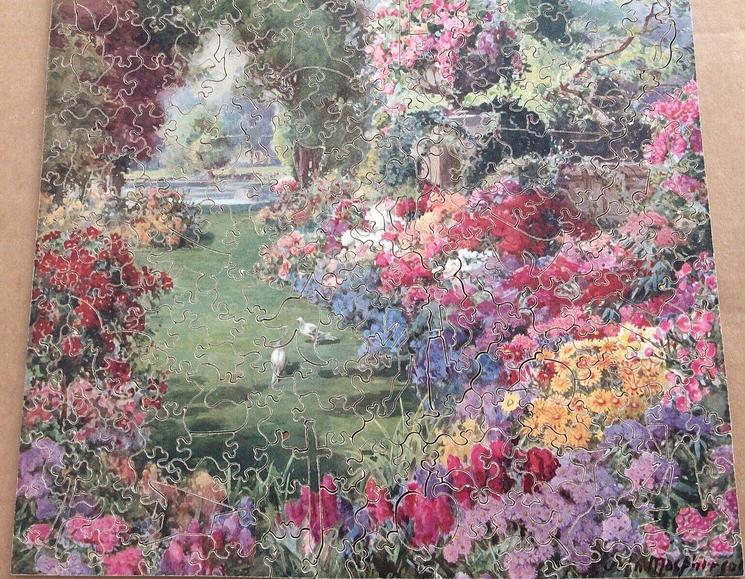
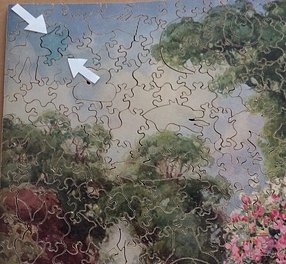
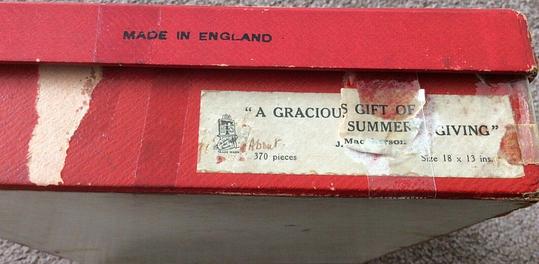
370 pieces, wooden, figurals, interlocking in style
|
|
|
|
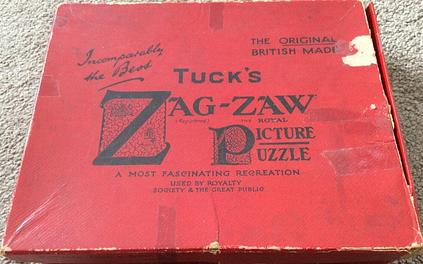
Zag-Zaw line of puzzles was first produced in 1909, most incorporate figurals or whimsies, sold in red, orange, or occasionally green boxes with labels on the side or bottom of the box, most without guide pictures. Initially cut non-interlocking but by 1930's became more so. Puzzles have a different cuts so that the same image will come in several versions which means that missing pieces can not be taken from other puzzles with the same image. The puzzle labels are often hand written and come with minor variations in titles and details. Some have a DESIGN category on the label. From my readings this refers to the style of cut, wavy lines, figurals, etc. See also Bob Armstrong's website on old jigsaw puzzles
|
J. MACPHERSON
|
|
13 x 18 in.
|
|
|
| |||
| 25628 |

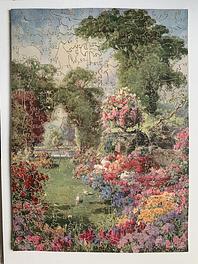
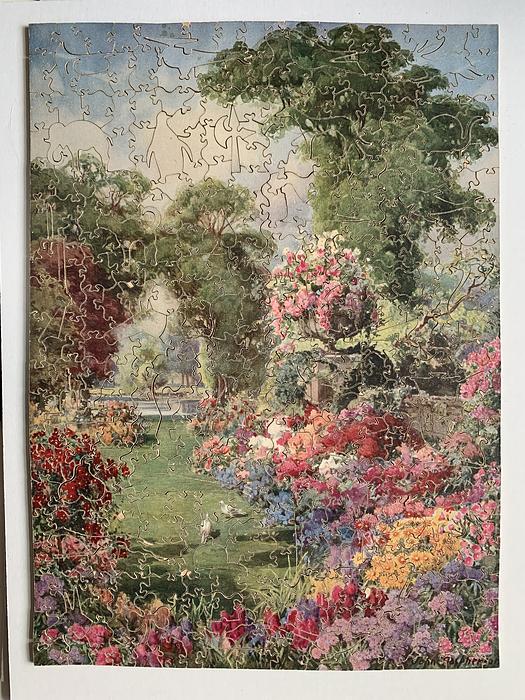



|
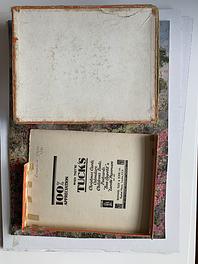
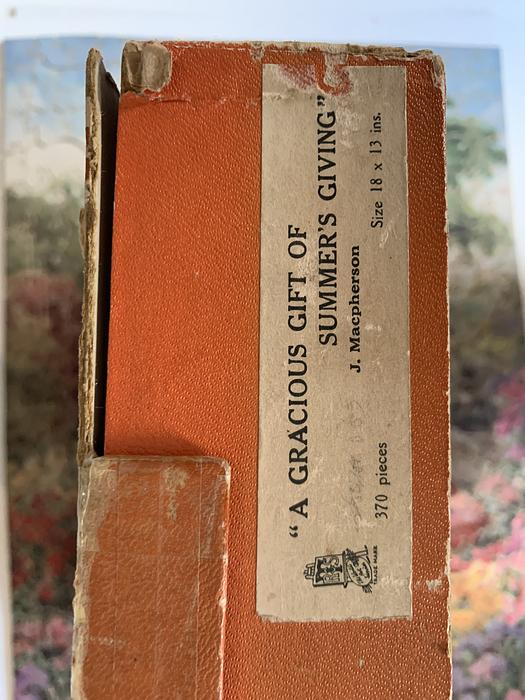
370 pieces, wooden, figurals, interlocking in style,
|
|
|
|
Zag-Zaw line of puzzles was first produced in 1909, most incorporate figurals or whimsies, sold in red, orange, or occasionally green boxes with labels on the side or bottom of the box, most without guide pictures. Initially cut non-interlocking but by 1930's became more so. Puzzles have a different cuts so that the same image will come in several versions which means that missing pieces can not be taken from other puzzles with the same image. The puzzle labels are often hand written and come with minor variations in titles and details. Some have a DESIGN category on the label. From my readings this refers to the style of cut, wavy lines, figurals, etc. See also Bob Armstrong's website on old jigsaw puzzles
|
J. MACPHERSON
|
|
11.5 x 20 in
|
|
|
| |||
| 25629 |









|
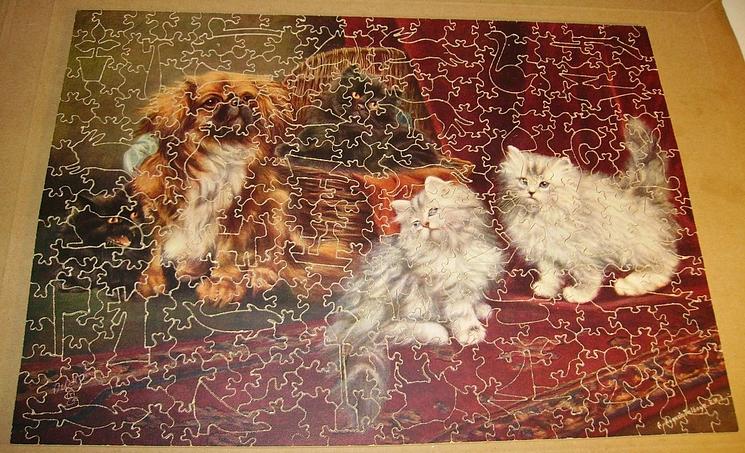
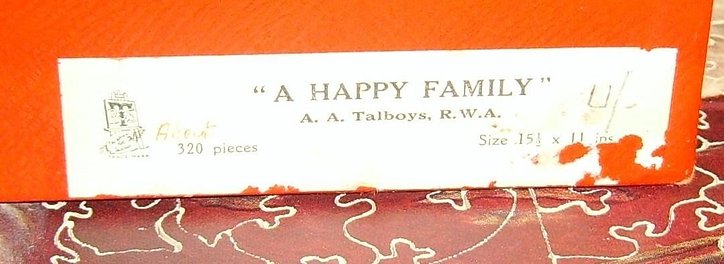
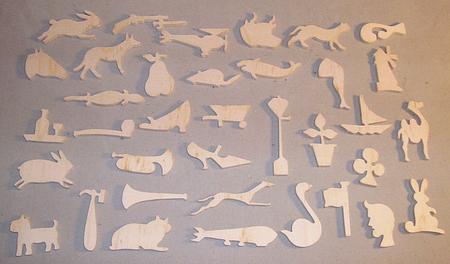
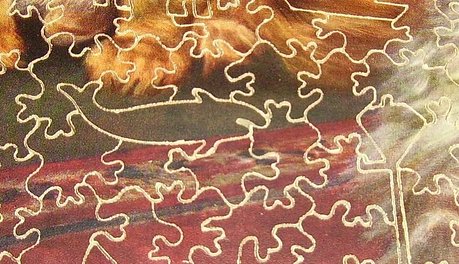
320 pieces, 36 whimsies
|
|
|
|
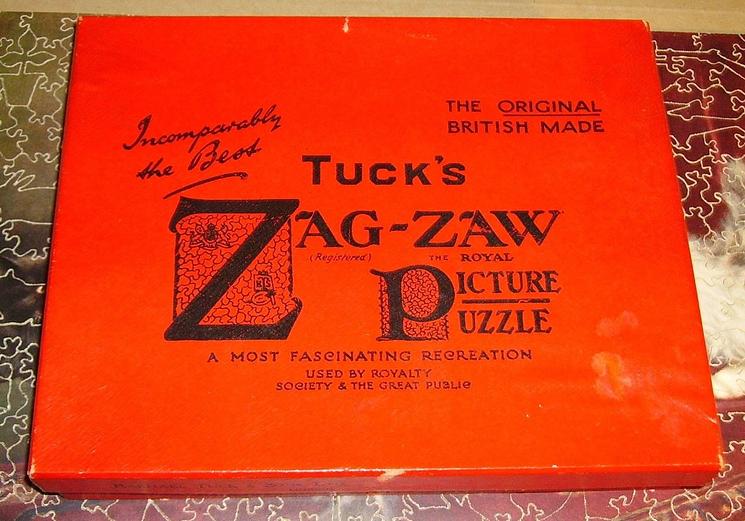
Zag-Zaw line of puzzles was first produced in 1909, most incorporate figurals or whimsies, sold in red, orange, or occasionally green boxes with labels on the side or bottom of the box, most without guide pictures. Initially cut non-interlocking but by 1930's became more so. Puzzles have a different cuts so that the same image will come in several versions which means that missing pieces can not be taken from other puzzles with the same image. The puzzle labels are often hand written and come with minor variations in titles and details. Some have a DESIGN category on the label. From my readings this refers to the style of cut, wavy lines, figurals, etc. See also Bob Armstrong's website on old jigsaw puzzles
|
A.A.TALBOYS, R.W.A.
|
|
15.5 x 11 in.
|
|
|
| |||
| 25630 |









|
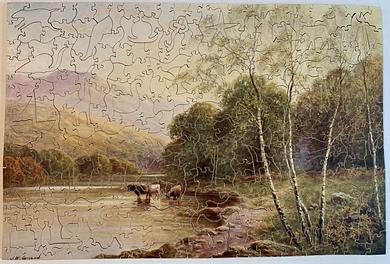
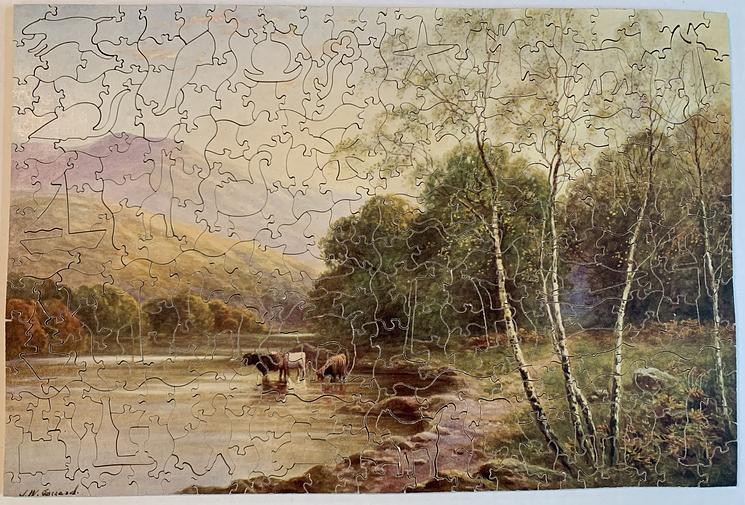
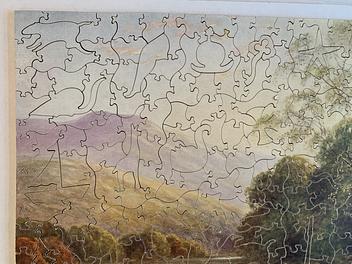
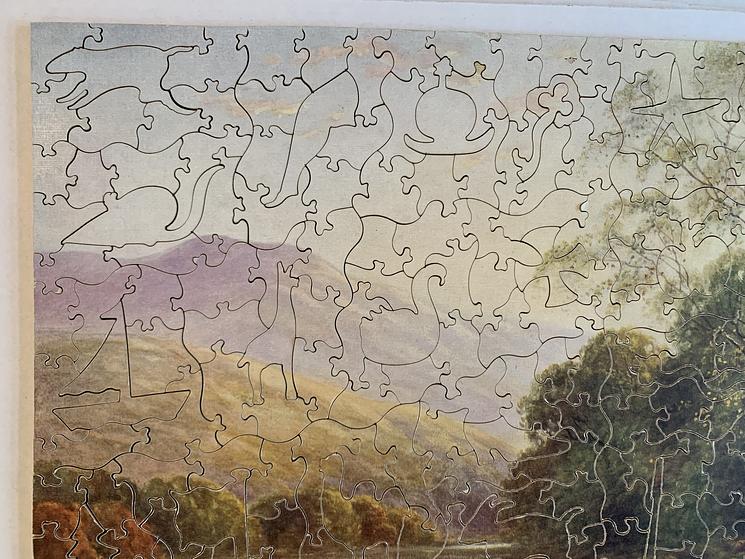
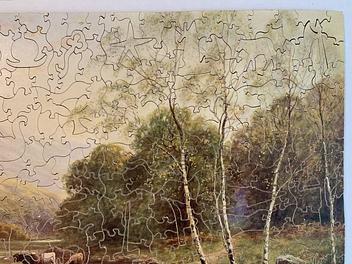
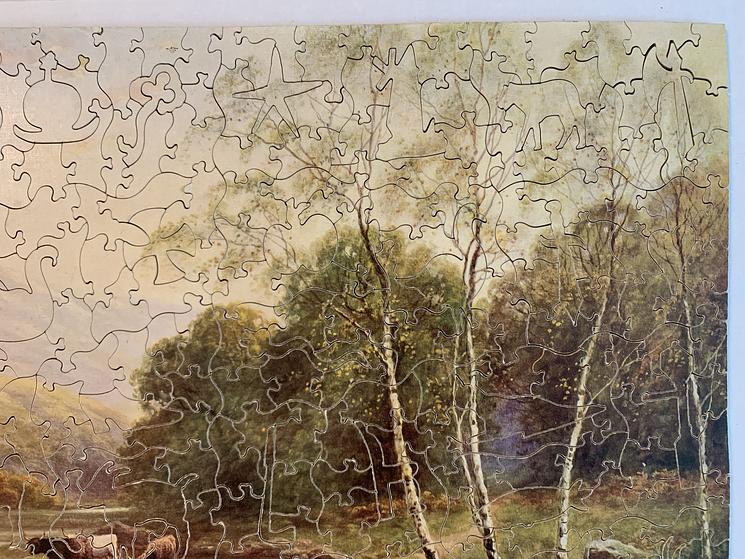
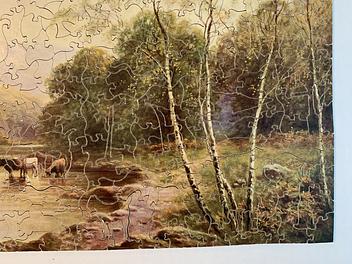
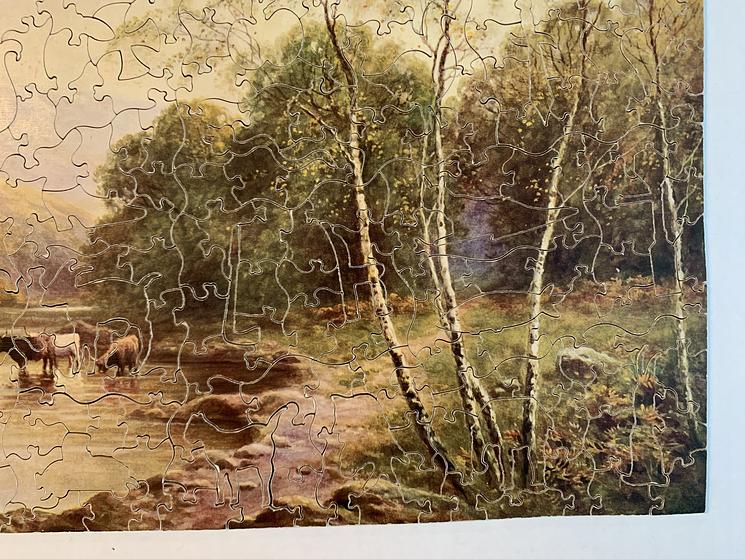
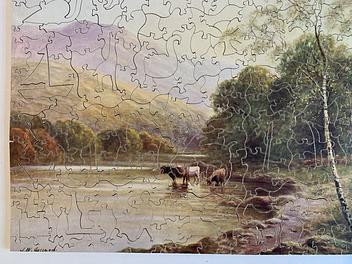
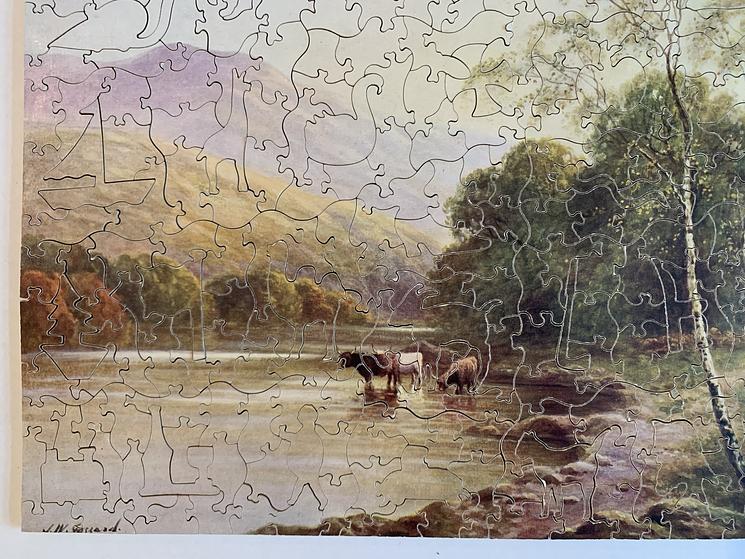
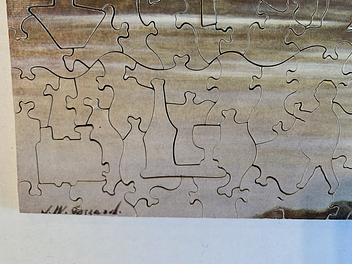
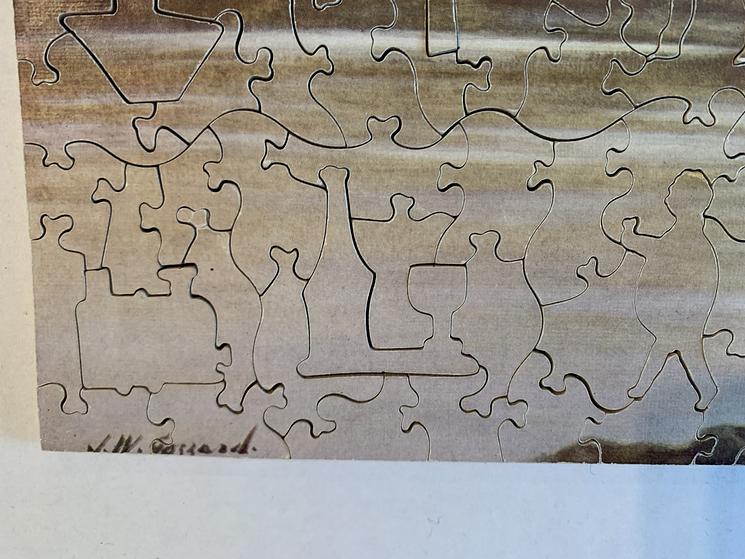
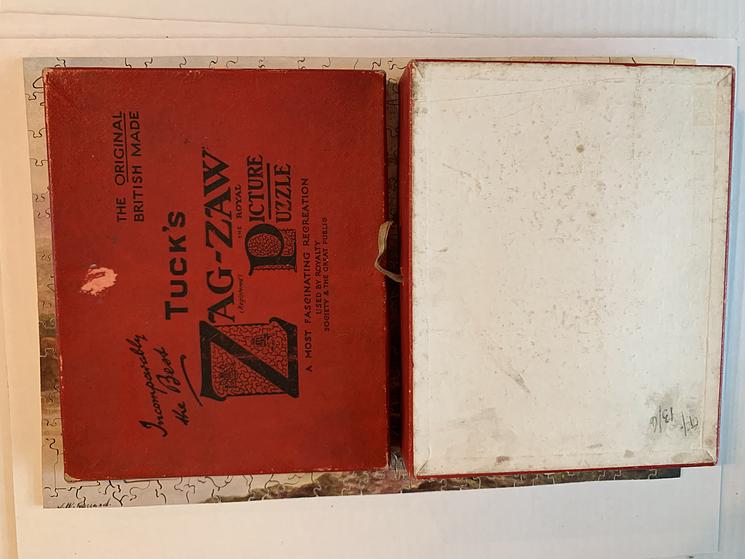
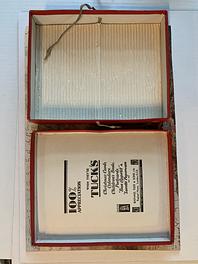
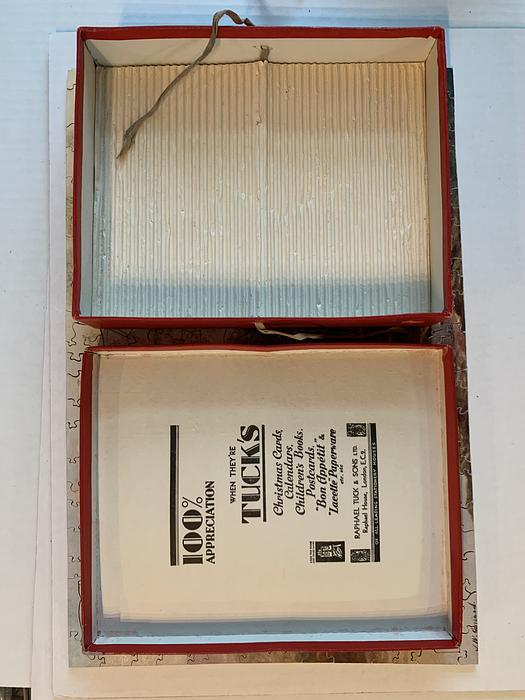
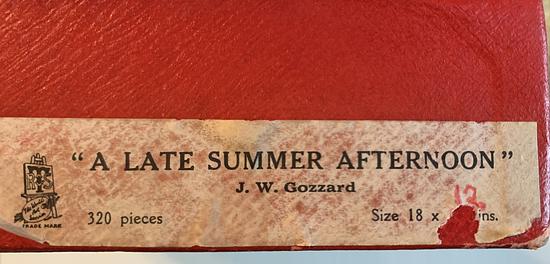
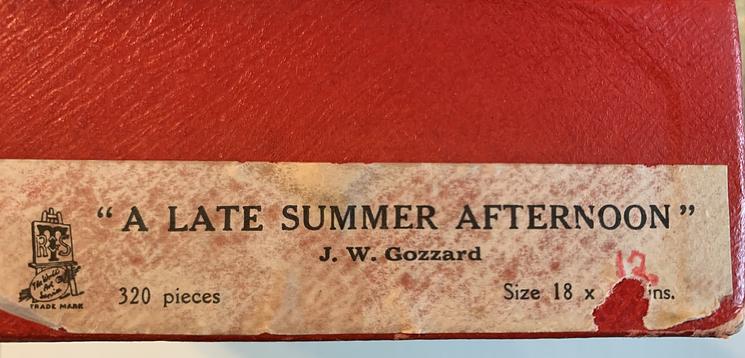
320 pieces, interlocking, many figurals, complete with box
|
|
|
|
Zag-Zaw line of puzzles was first produced in 1909, most incorporate figurals or whimsies, sold in red, orange, or occasionally green boxes with labels on the side or bottom of the box, most without guide pictures. Initially cut non-interlocking but by 1930's became more so. Puzzles have a different cuts so that the same image will come in several versions which means that missing pieces can not be taken from other puzzles with the same image. The puzzle labels are often hand written and come with minor variations in titles and details. Some have a DESIGN category on the label. From my readings this refers to the style of cut, wavy lines, figurals, etc. See also Bob Armstrong's website on old jigsaw puzzles
|
J. W. GOZZARD
|
|
18 x 12 in. or 46 x 31 cm
|
|
|
| |||
| 25631 |








|
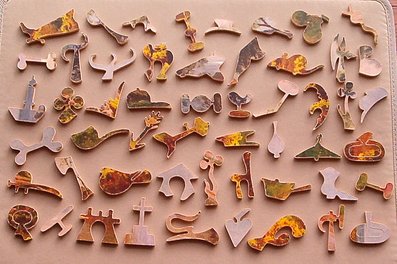
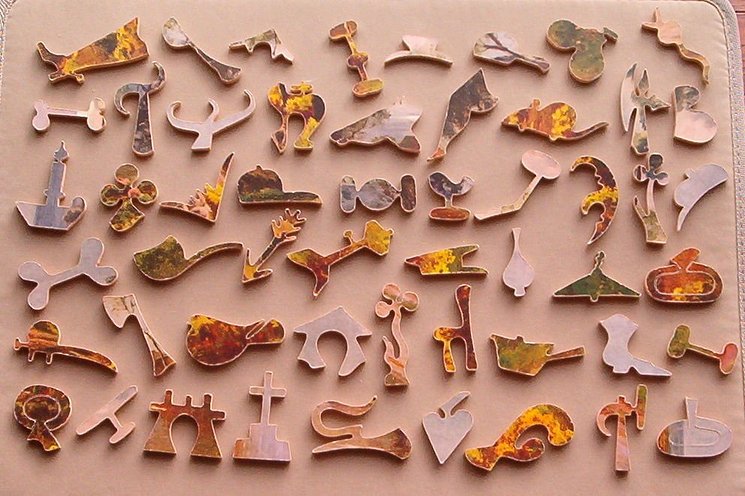
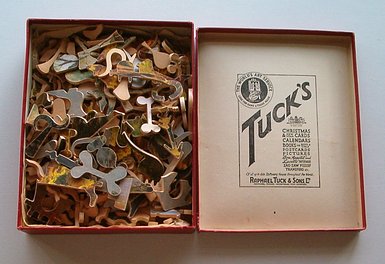
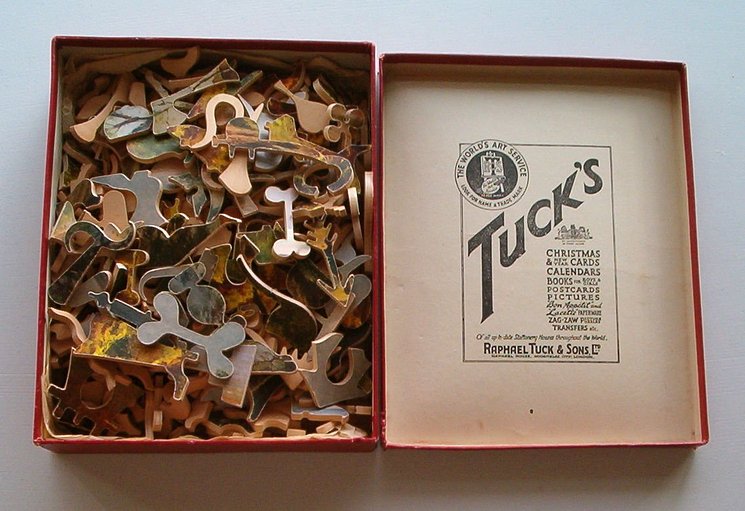
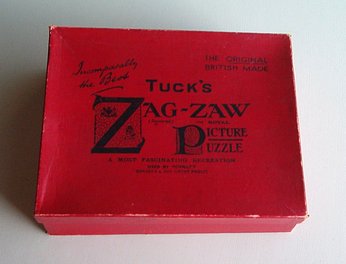
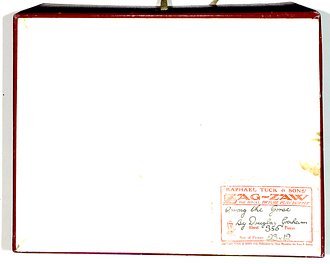
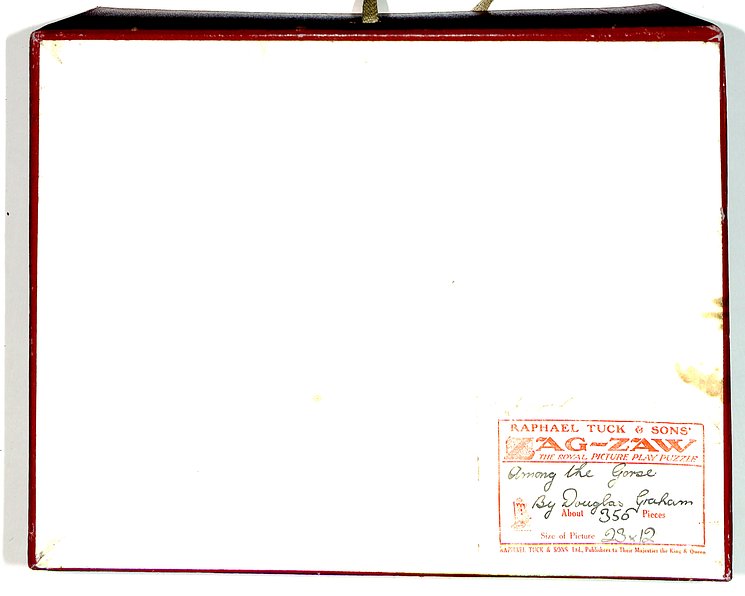
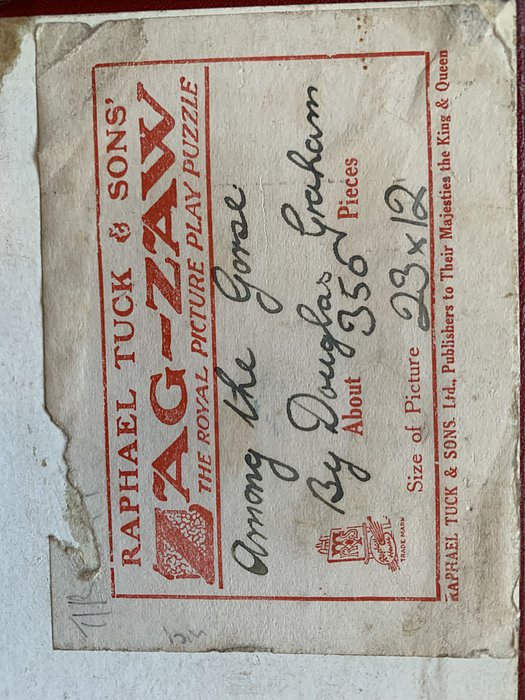
357 plywood push-fit pieces, many whimsies
|
|
|
|
Zag-Zaw line of puzzles was first produced in 1909, most incorporate figurals or whimsies, sold in red, orange, or occasionally green boxes with labels on the side or bottom of the box, most without guide pictures. Initially cut non-interlocking but by 1930's became more so. Puzzles have a different cuts so that the same image will come in several versions which means that missing pieces can not be taken from other puzzles with the same image. The puzzle labels are often hand written and come with minor variations in titles and details. Some have a DESIGN category on the label. From my readings this refers to the style of cut, wavy lines, figurals, etc. See also Bob Armstrong's website on old jigsaw puzzles
|
DOUGLAS GRAHAM
|
|
23 x 15 in.
|
|
|
| |||
| 25632 |


|
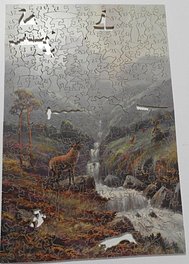
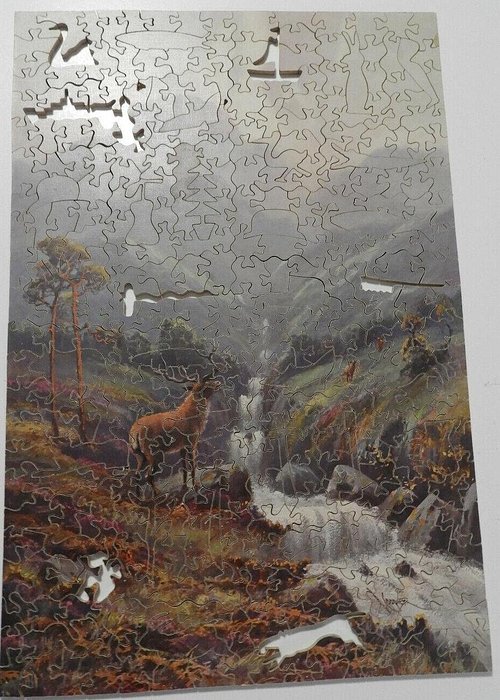
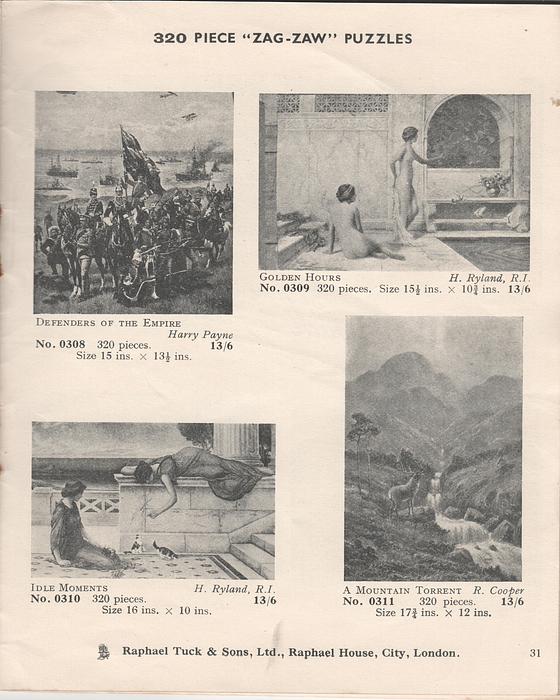
320 pieces, wooden, figurals, with box, 6 missing pieces, interlocking style, described and listed in the catalogs as number 0311
|
|
|
|
Zag-Zaw line of puzzles was first produced in 1909, most incorporate figurals or whimsies, sold in red, orange, or occasionally green boxes with labels on the side or bottom of the box, most without guide pictures. Initially cut non-interlocking but by 1930's became more so. Puzzles have a different cuts so that the same image will come in several versions which means that missing pieces can not be taken from other puzzles with the same image. The puzzle labels are often hand written and come with minor variations in titles and details. Some have a DESIGN category on the label. From my readings this refers to the style of cut, wavy lines, figurals, etc. See also Bob Armstrong's website on old jigsaw puzzles
|
|
|
|
|
|
| |||
| 25633 |





|
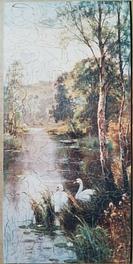
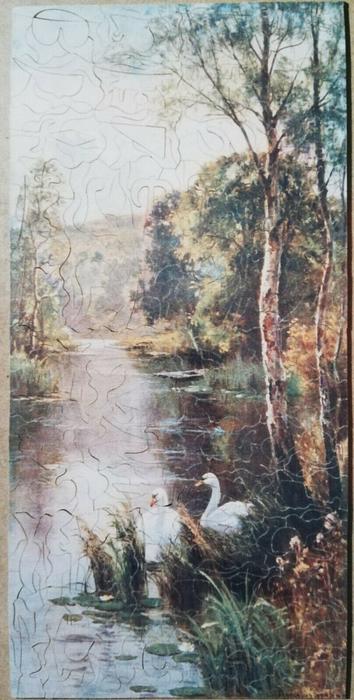
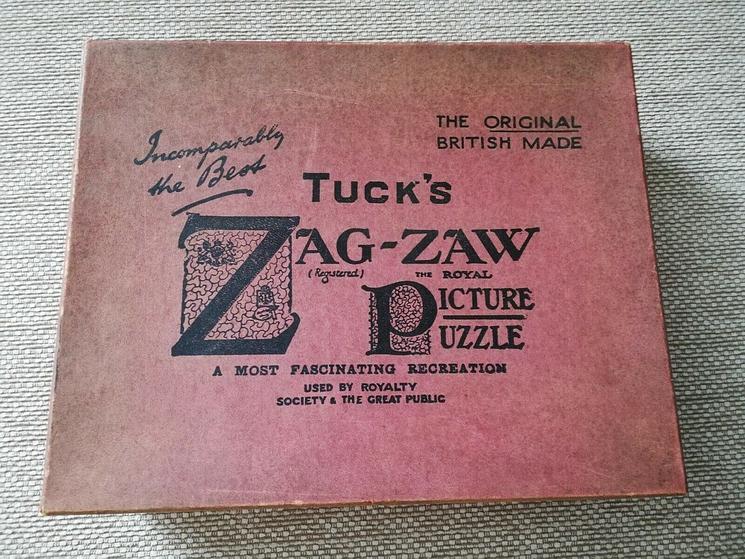
370 pieces, wooden, figuarls, interlocking in style but also comes push fit, listed and described in the catalogs as number 2413, different box labels give differing piece counts
|
|
|
|
Zag-Zaw line of puzzles was first produced in 1909, most incorporate figurals or whimsies, sold in red, orange, or occasionally green boxes with labels on the side or bottom of the box, most without guide pictures. Initially cut non-interlocking but by 1930's became more so. Puzzles have a different cuts so that the same image will come in several versions which means that missing pieces can not be taken from other puzzles with the same image. The puzzle labels are often hand written and come with minor variations in titles and details. Some have a DESIGN category on the label. From my readings this refers to the style of cut, wavy lines, figurals, etc. See also Bob Armstrong's website on old jigsaw puzzles
|
DOUGLAS GRAHAM
|
|
12 x 23 in.,
|
|
|
| |||
| 25634 |







|
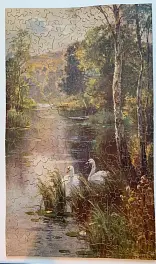
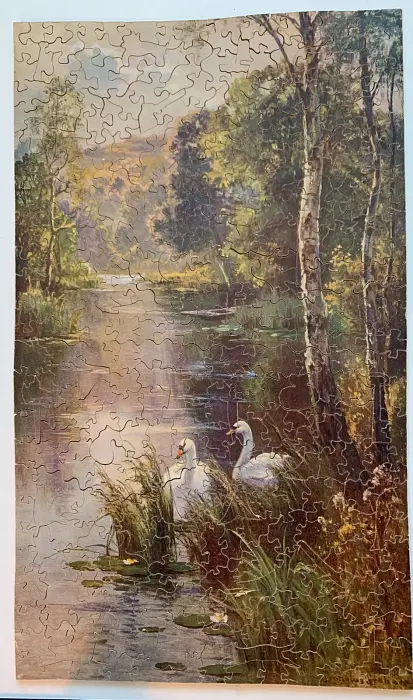
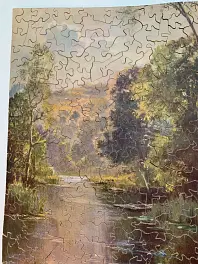
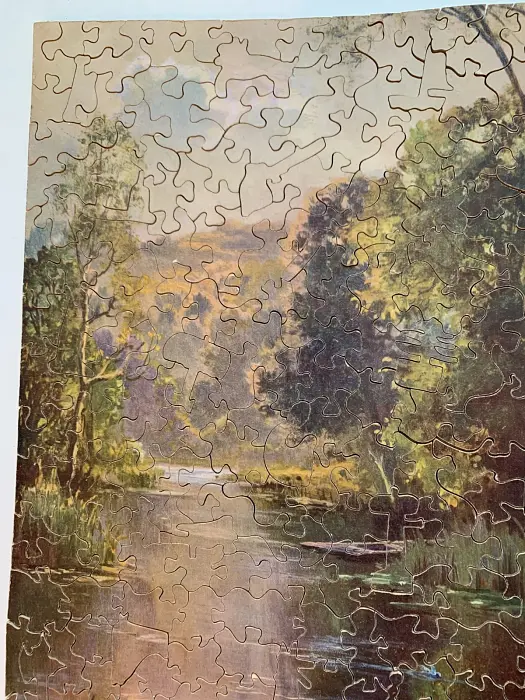
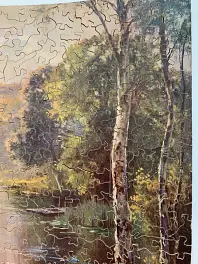
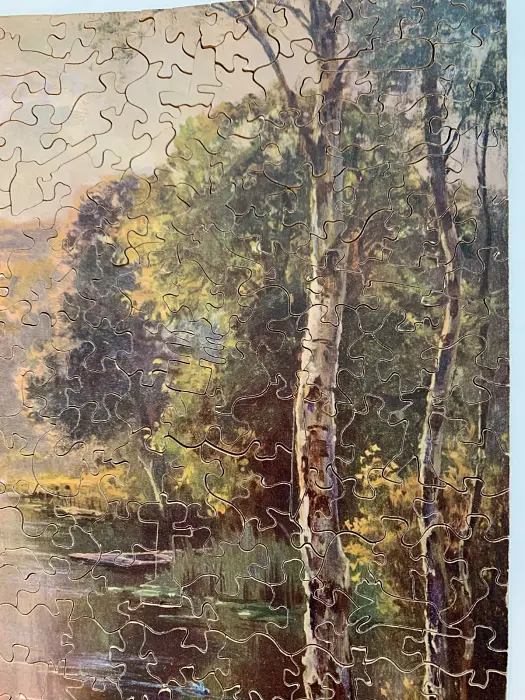
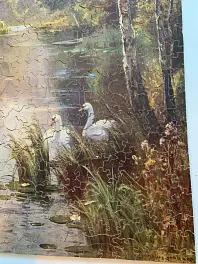
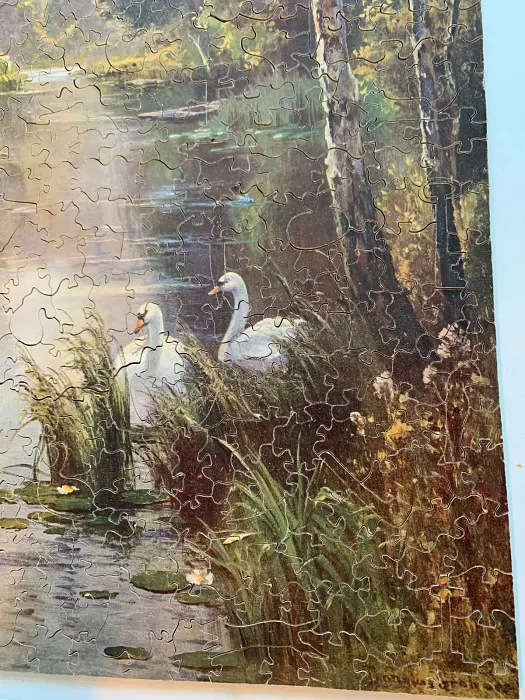
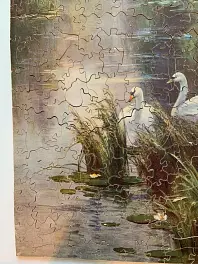
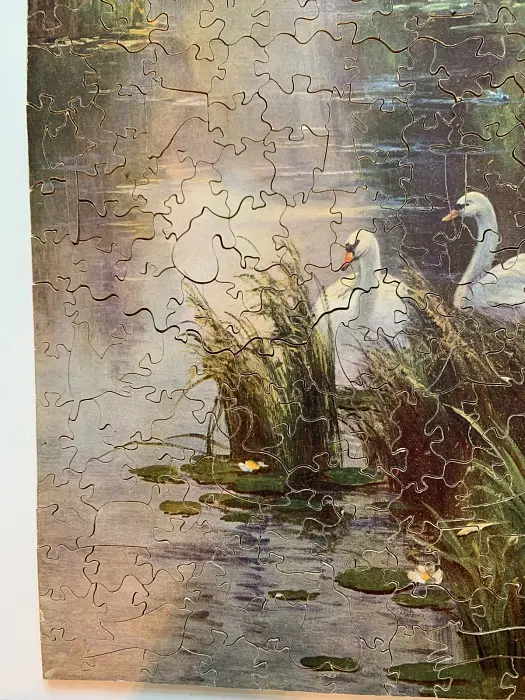
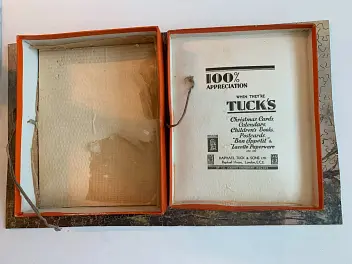
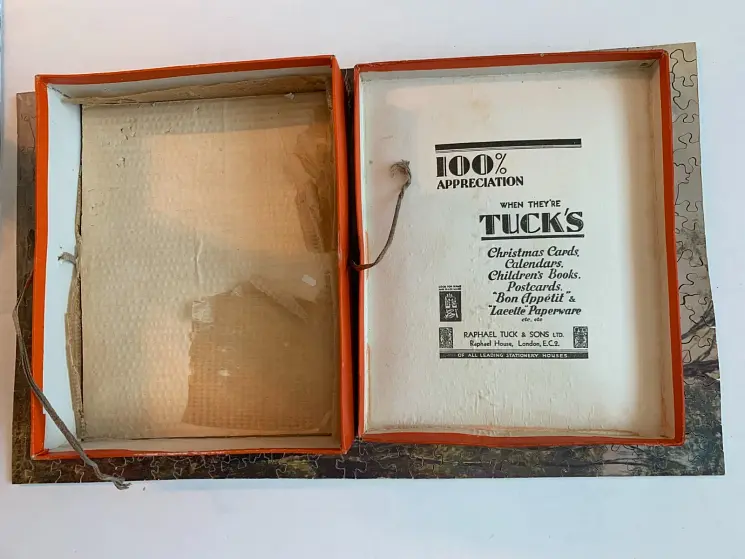
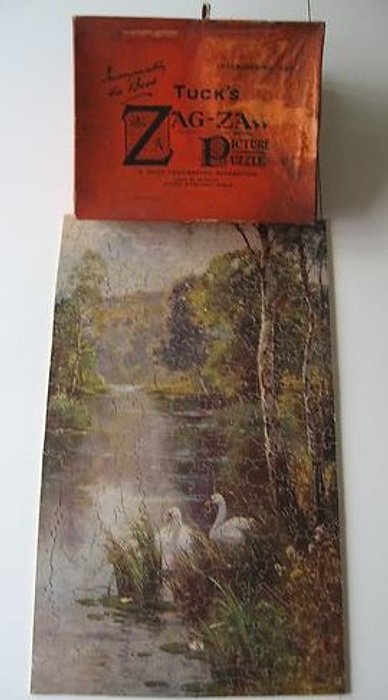
Swans in stream, many large trees, flowers at water's edge.
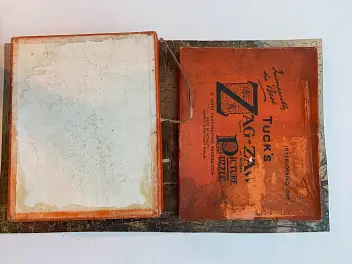
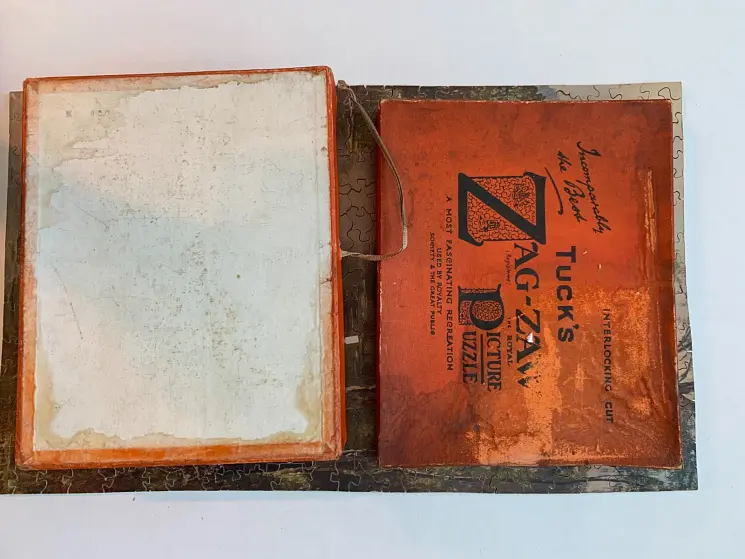
350 pieces, wooden, figuarls, interlocking in style but also comes push fit, listed and described in the catalogs as number 2413, different box labels give differing piece counts, different sizes
|
|
|
|
Zag-Zaw line of puzzles was first produced in 1909, most incorporate figurals or whimsies, sold in red, orange, or occasionally green boxes with labels on the side or bottom of the box, most without guide pictures. Initially cut non-interlocking but by 1930's became more so. Puzzles have a different cuts so that the same image will come in several versions which means that missing pieces can not be taken from other puzzles with the same image. The puzzle labels are often hand written and come with minor variations in titles and details. Some have a DESIGN category on the label. From my readings this refers to the style of cut, wavy lines, figurals, etc. See also Bob Armstrong's website on old jigsaw puzzles
|
DOUGLAS GRAHAM
|
|
11 1/2 x 20 in., actual measurement, same as box
|
|
|
| |||
| 25635 |





|
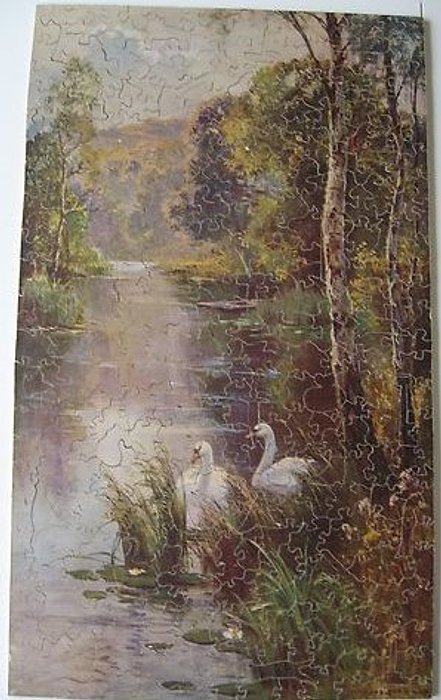
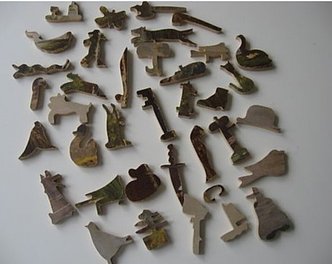
350 pieces, 370 pieces, wooden, figuarls, push fit and also comes interlocking in style, listed and described in the catalogs as number 2413
|
|
|
|
Zag-Zaw line of puzzles was first produced in 1909, most incorporate figurals or whimsies, sold in red, orange, or occasionally green boxes with labels on the side or bottom of the box, most without guide pictures. Initially cut non-interlocking but by 1930's became more so. Puzzles have a different cuts so that the same image will come in several versions which means that missing pieces can not be taken from other puzzles with the same image. The puzzle labels are often hand written and come with minor variations in titles and details. Some have a DESIGN category on the label. From my readings this refers to the style of cut, wavy lines, figurals, etc. See also Bob Armstrong's website on old jigsaw puzzles
|
|
|
11.5 x 20 in
|
|
|
| |||
| 25636 |












|
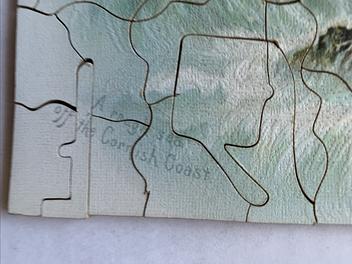
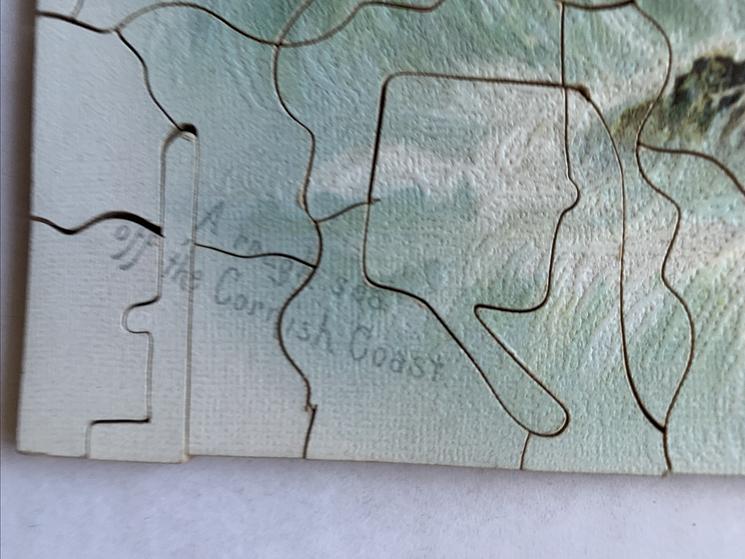
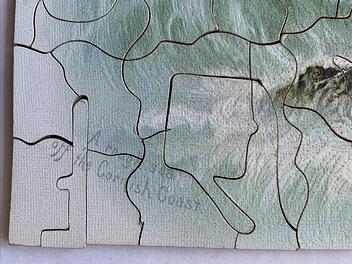
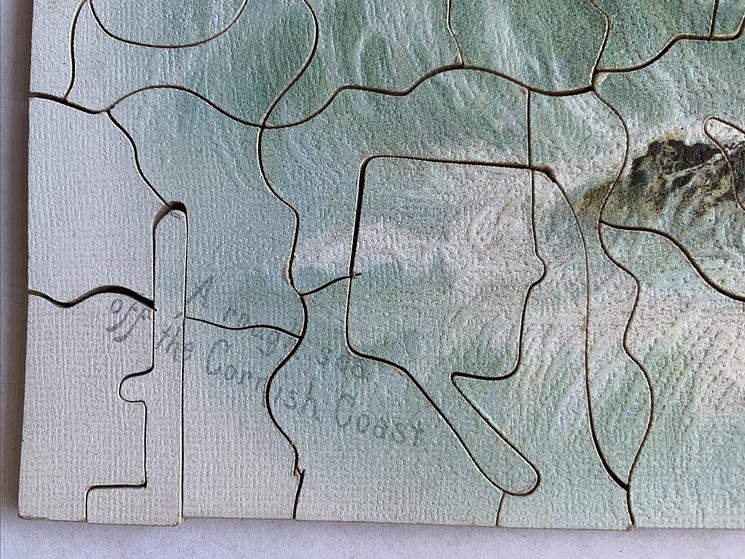
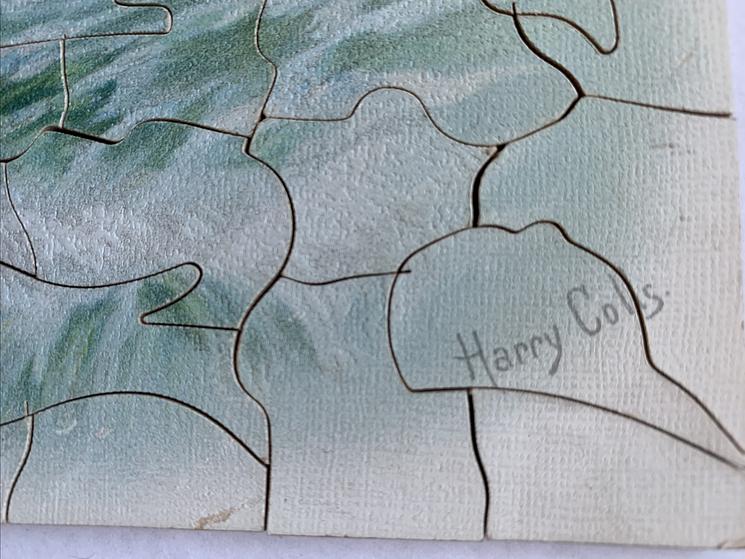
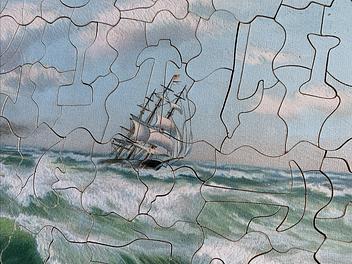
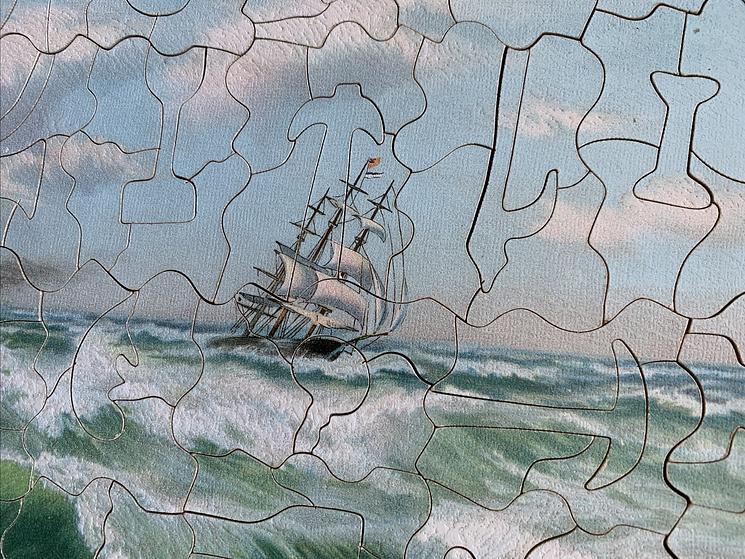
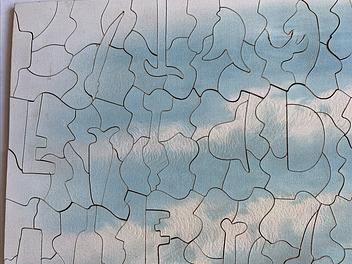
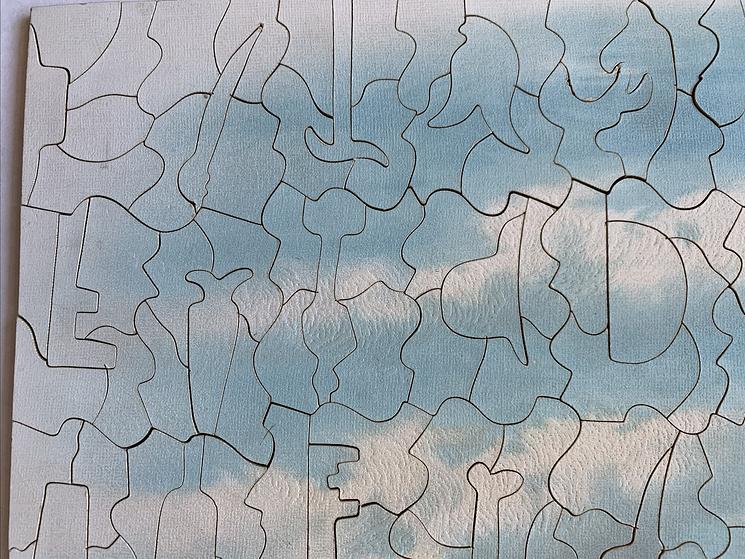
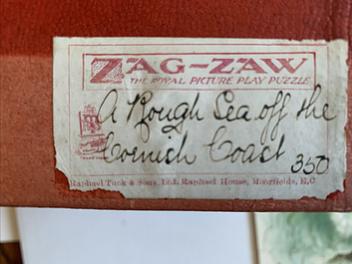
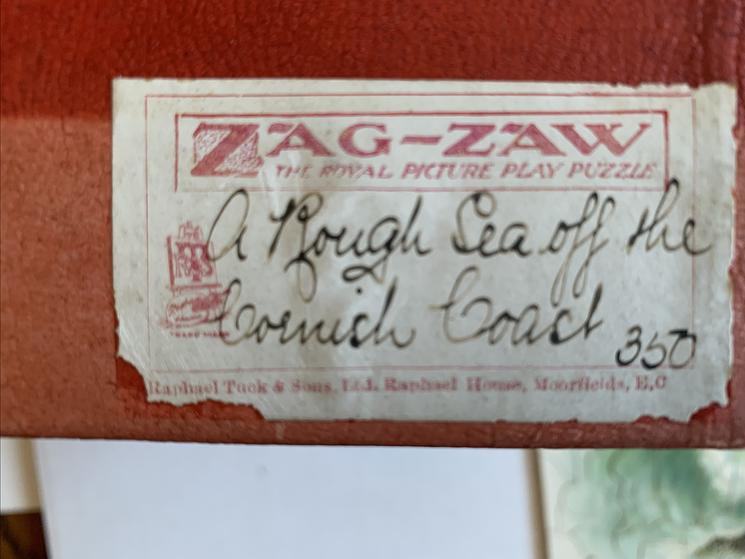
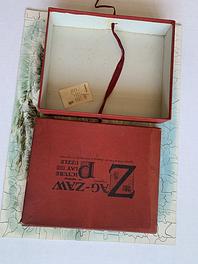
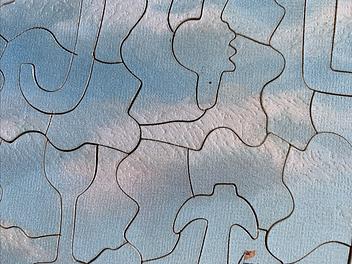
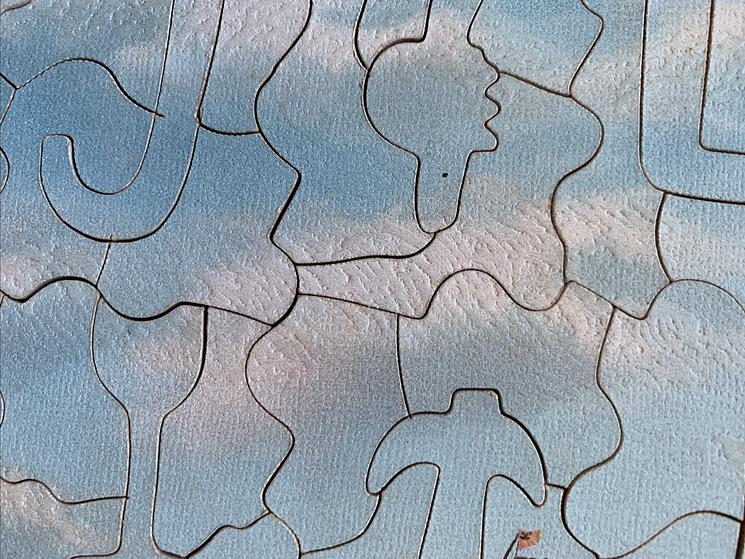
about 350 pieces, wooden with many figurals, push-fit in style, textured sky and waves to add depth to the image, complete with box
|
|
|
|
Zag-Zaw line of puzzles was first produced in 1909, most incorporate figurals or whimsies, sold in red, orange, or occasionally green boxes with labels on the side or bottom of the box, most without guide pictures. Initially cut non-interlocking but by 1930's became more so. Puzzles have a different cuts so that the same image will come in several versions which means that missing pieces can not be taken from other puzzles with the same image. The puzzle labels are often hand written and come with minor variations in titles and details. Some have a DESIGN category on the label. From my readings this refers to the style of cut, wavy lines, figurals, etc. See also Bob Armstrong's website on old jigsaw puzzles
|
HARRY COLLS
|
|
19 x 14 in. or 48 x 36 cm,
|
|
|
| |||
| 25637 |





|
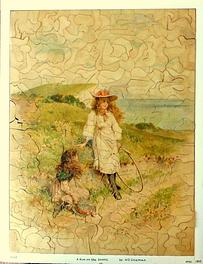
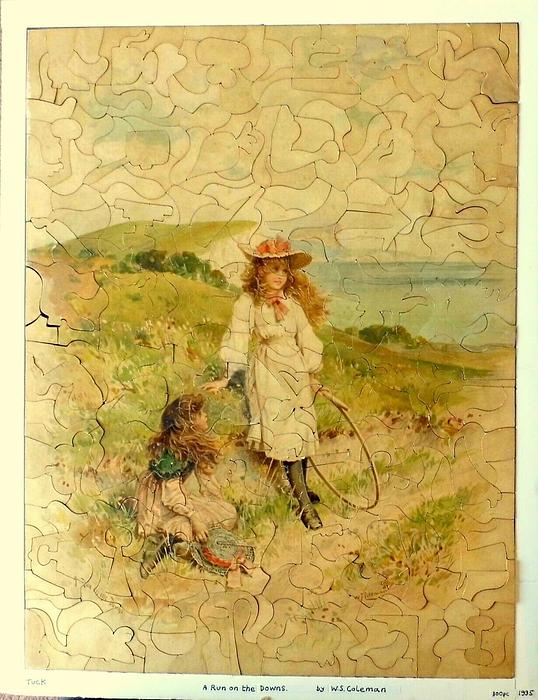
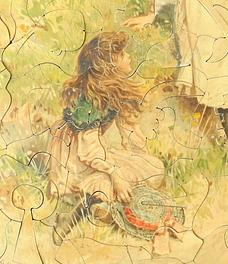
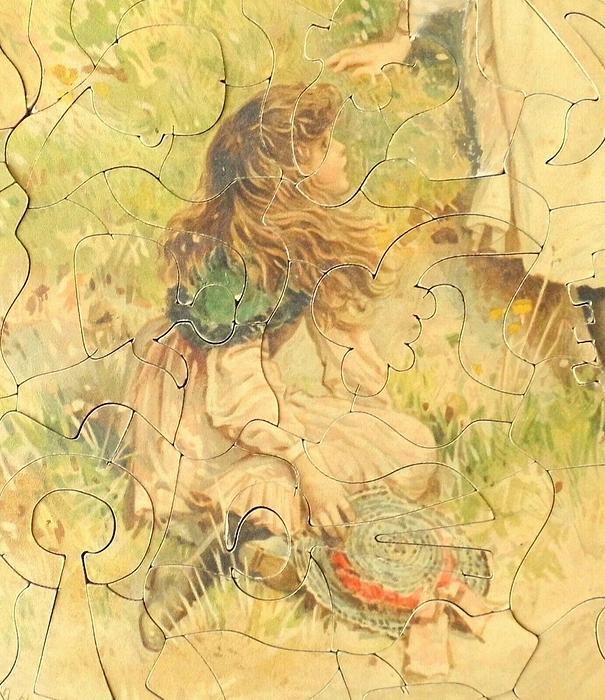
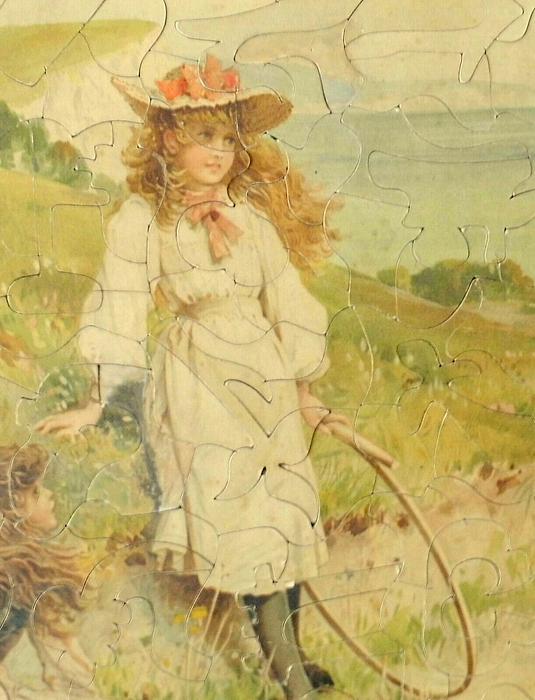
ABOUT 300 PIECES, with two replacement pieces, two young girls walk on the South downs with the "Seven Sisters" cliffs in the background. circa 1920's
|
|
|
|
Zag-Zaw line of puzzles was first produced in 1909, most incorporate figurals or whimsies, sold in red, orange, or occasionally green boxes with labels on the side or bottom of the box, most without guide pictures. Initially cut non-interlocking but by 1930's became more so. Puzzles have a different cuts so that the same image will come in several versions which means that missing pieces can not be taken from other puzzles with the same image. The puzzle labels are often hand written and come with minor variations in titles and details. Some have a DESIGN category on the label. From my readings this refers to the style of cut, wavy lines, figurals, etc. See also Bob Armstrong's website on old jigsaw puzzles
|
W. S. COLEMAN
|
|
14 x 19 in.
|
|
|
| |||
| 25638 |





|
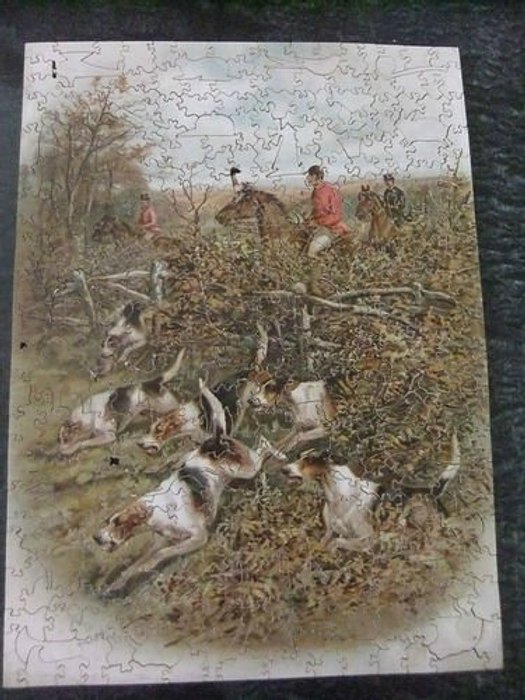
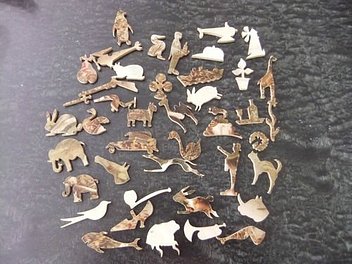
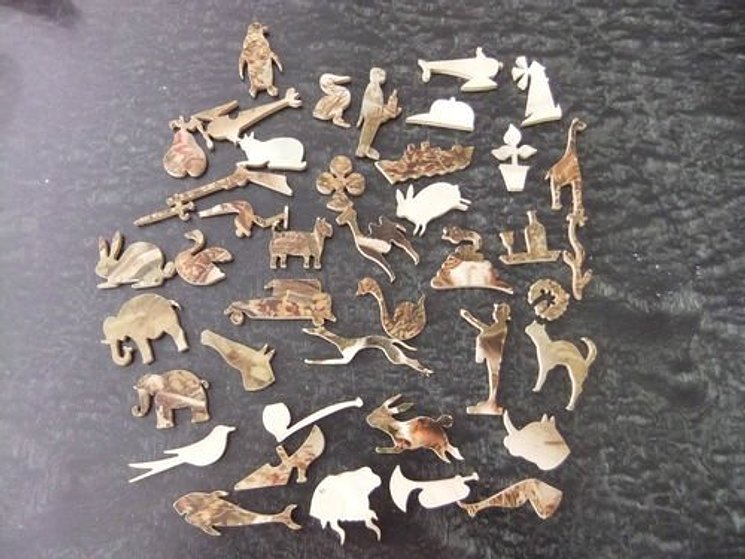
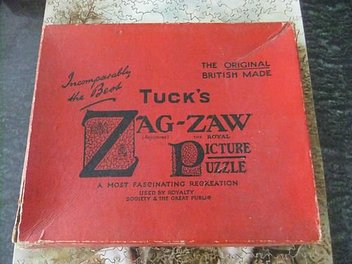
370 pieces, several whimsies also comes as a smaller puzzle with 300 pieces
|
|
|
|
Zag-Zaw line of puzzles was first produced in 1909, most incorporate figurals or whimsies, sold in red, orange, or occasionally green boxes with labels on the side or bottom of the box, most without guide pictures. Initially cut non-interlocking but by 1930's became more so. Puzzles have a different cuts so that the same image will come in several versions which means that missing pieces can not be taken from other puzzles with the same image. The puzzle labels are often hand written and come with minor variations in titles and details. Some have a DESIGN category on the label. From my readings this refers to the style of cut, wavy lines, figurals, etc. See also Bob Armstrong's website on old jigsaw puzzles
|
ARTHUR DAVIS
|
|
13 x 19 in.
|
|
|
| |||
| 25639 |






|
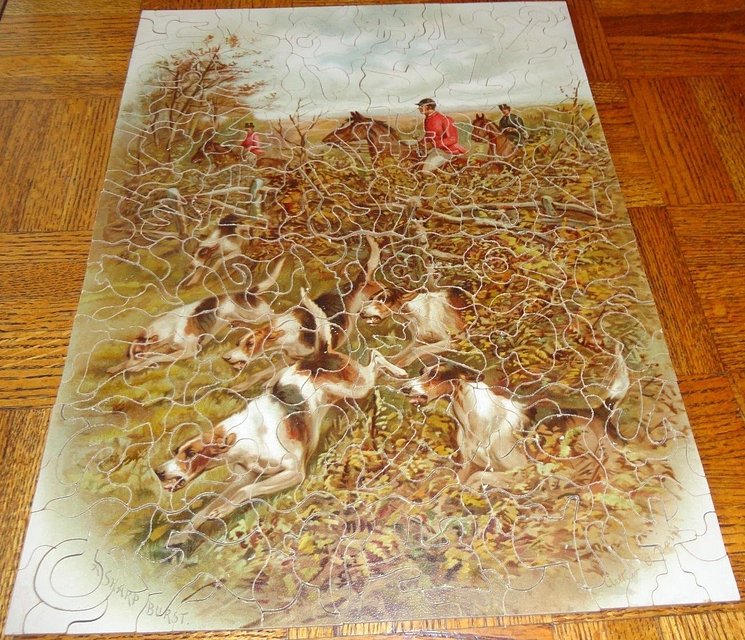
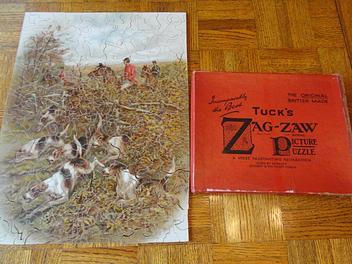
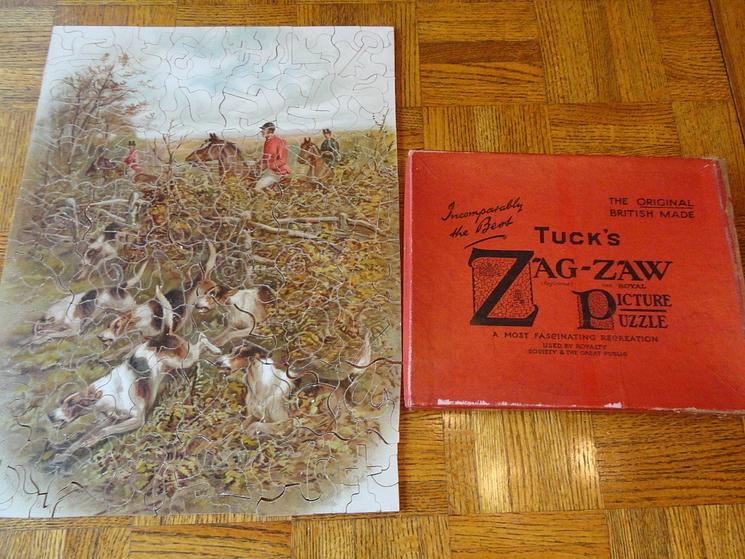
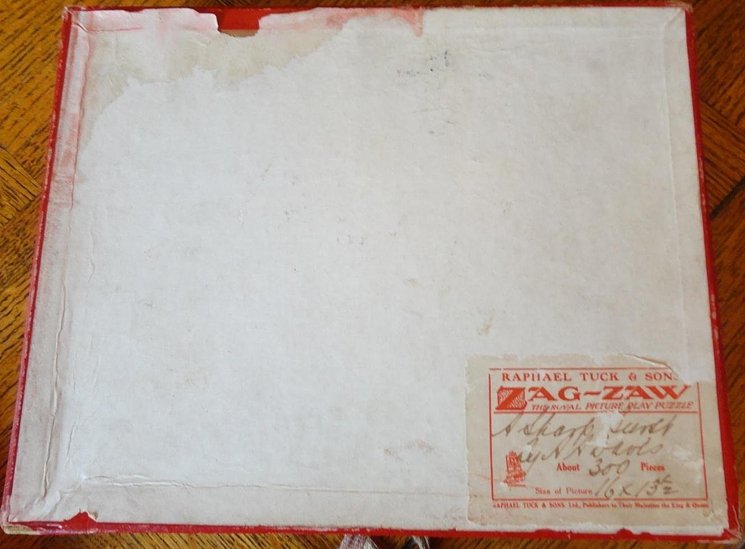
300 pieces, several whimsies also comes as a larger puzzle with 370 pieces and larger size
|
|
|
|
Zag-Zaw line of puzzles was first produced in 1909, most incorporate figurals or whimsies, sold in red, orange, or occasionally green boxes with labels on the side or bottom of the box, most without guide pictures. Initially cut non-interlocking but by 1930's became more so. Puzzles have a different cuts so that the same image will come in several versions which means that missing pieces can not be taken from other puzzles with the same image. The puzzle labels are often hand written and come with minor variations in titles and details. Some have a DESIGN category on the label. From my readings this refers to the style of cut, wavy lines, figurals, etc. See also Bob Armstrong's website on old jigsaw puzzles
|
ARTHUR DAVIS
|
|
13.5 x 16 in.
|
|
|
| |||
| 25640 |








|
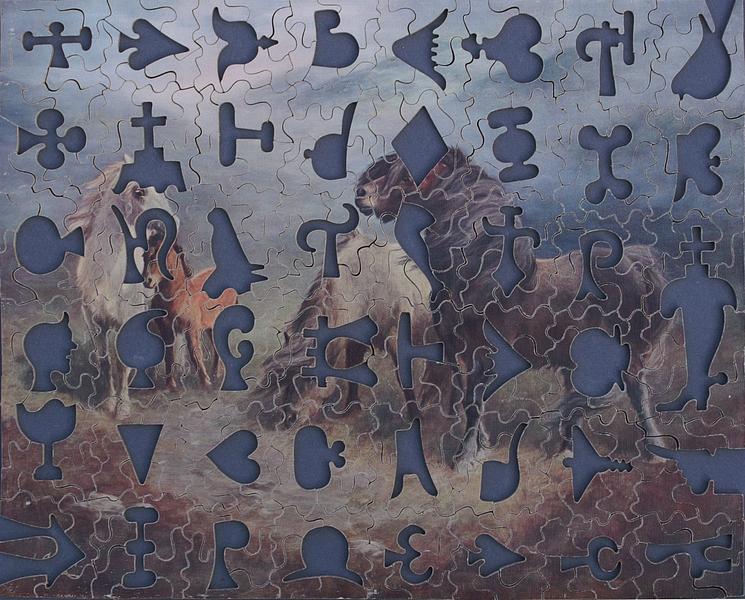
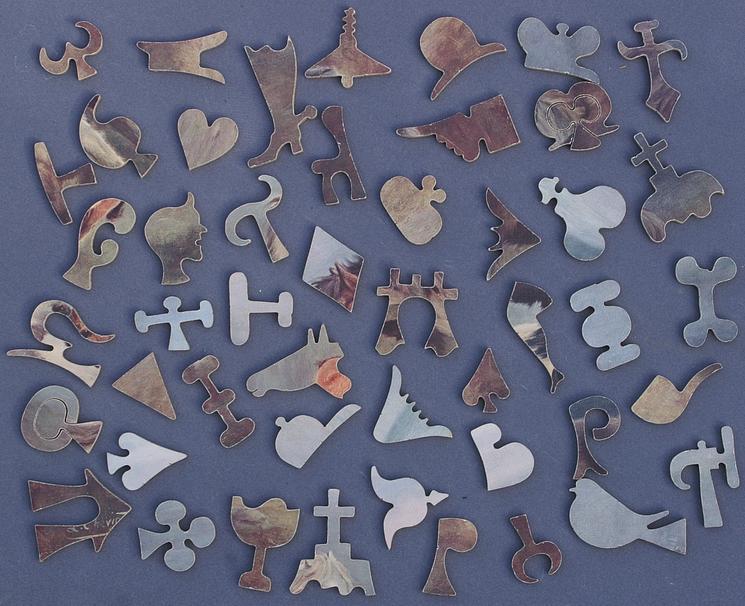
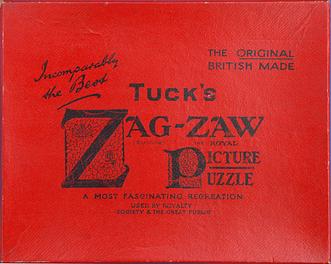
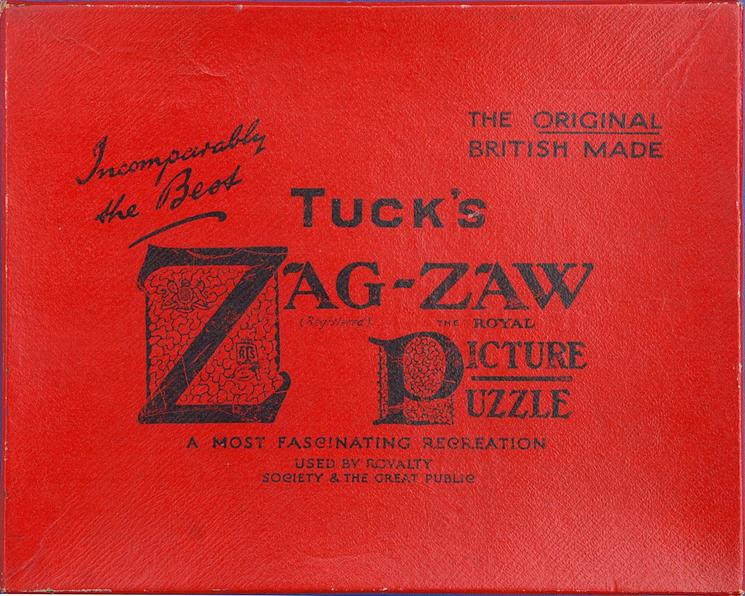
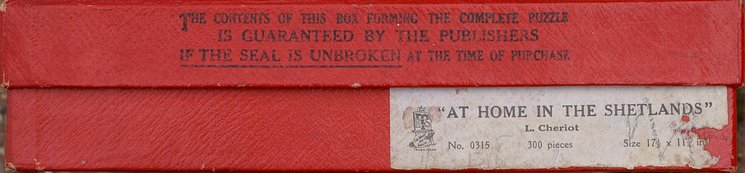
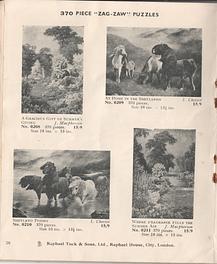
300 pieces, 48 whimsies, listed in Tuck catalog on page 28 but listed as having 370 pieces and a size of 16 x 13 1/4 in.
|
|
|
|
Zag-Zaw line of puzzles was first produced in 1909, most incorporate figurals or whimsies, sold in red, orange, or occasionally green boxes with labels on the side or bottom of the box, most without guide pictures. Initially cut non-interlocking but by 1930's became more so. Puzzles have a different cuts so that the same image will come in several versions which means that missing pieces can not be taken from other puzzles with the same image. The puzzle labels are often hand written and come with minor variations in titles and details. Some have a DESIGN category on the label. From my readings this refers to the style of cut, wavy lines, figurals, etc. See also Bob Armstrong's website on old jigsaw puzzles
|
CHEVIOT, LILIAN
|
|
17 x 12.75 in
|
|
|